Views: 247 Author: Dongguan PRES Publish Time: 2026-09-20 Origin: Site


Content Menu
● Why Valve Plate Material Matters in Compressor Performance
● PEEK vs. Stainless Steel Valve Plates: Key Differences
● How PEEK Valve Plates Help Reduce Compressor Noise
● How PEEK Can Improve Compressor Efficiency
>> Lower Inertia Supports Faster Valve Response
>> Better Sealing Can Reduce Flow Losses
>> Lower Wear Helps Maintain Efficiency Over Time
● When Stainless Steel Valve Plates Are Still the Better Choice
● Selecting the Right PEEK Grade for Valve Plates
>> Glass-Filled PEEK Valve Plates
>> Carbon-Filled PEEK Valve Plates
● A Practical Material-Selection Checklist
● Industry Perspective: Why OEMs Are Re-Evaluating Metal Valve Plates
● Why Choose PRES for Custom PEEK Valve Plates
● Request a PEEK Valve Plate Evaluation
>> 1. Can PEEK valve plates replace stainless steel valve plates?
>> 2. Do PEEK valve plates make compressors quieter?
>> 3. Are PEEK valve plates suitable for high-temperature compressors?
>> 4. Which PEEK grade is best for compressor valve plates?
>> 5. Can PEEK valve plates improve compressor efficiency?
>> 6. Are PEEK valve plates safe for natural gas and flammable gas compressors?
>> 7. Can PRES manufacture custom PEEK valve plates for OEM projects?
At Dongguan PRES Group Co., Ltd., we manufacture high-performance PEEK materials and customized PEEK components for demanding industrial applications. For compressor manufacturers, valve specialists, wholesalers, and OEM brands, one of the most important material decisions is choosing between PEEK valve plates and stainless steel valve plates.
In many reciprocating compressor applications, PEEK valve plates can reduce impact-related noise, lower moving mass, improve sealing behavior, and help protect valuable compressor components from damage caused by metal fragment failure. Stainless steel remains a strong option where extreme stiffness or specific operating conditions require it, but a properly engineered PEEK valve plate can offer a compelling balance of efficiency, reliability, and lifecycle cost.
PRES provides PEEK granules, sheets, rods, tubes, powders, machined parts, and high-performance 3D-printing filaments. We also support OEM customers with material selection, customized formulations, precision machining, and application-focused PEEK valve plate solutions.

A valve plate is a small component with a large influence on compressor performance. In a reciprocating compressor, it repeatedly opens and closes under pressure differentials, vibration, elevated temperatures, gas flow forces, and rapid impact loading.
The material affects much more than durability. It can influence:
- Compressor noise
- Volumetric efficiency
- Pressure-drop losses
- Valve response speed
- Fatigue life
- Wear on seats, guides, pistons, and cylinders
- Maintenance intervals
- Risk of secondary damage after valve failure
- Total operating cost
Traditional stainless steel valve plates offer high mechanical strength and excellent stiffness. However, metal plates can create significant impact energy during high-frequency opening and closing. They may also transmit vibration efficiently, contributing to audible noise and mechanical stress throughout the valve assembly.
PEEK, or polyether ether ketone, is a high-performance semi-crystalline thermoplastic used in aerospace, oil and gas, automotive, medical, electrical, and industrial machinery. It combines high-temperature resistance, chemical resistance, fatigue performance, low density, and favorable wear behavior. These characteristics make PEEK a serious engineering alternative to metal in selected compressor valve applications.
The following comparison helps OEM engineers and procurement teams understand where PEEK valve plates can create measurable value.
| Performance Factor | PEEK Valve Plates | Stainless Steel Valve Plates |
|---|---|---|
| Density | Approximately 1.3 g/cm³; significantly lighter than steel | Typically around 7.7–8.0 g/cm³ |
| Moving mass | Low; reduces inertia during repeated opening and closing | High; creates greater impact energy |
| Noise behavior | Can absorb part of impact energy and reduce transmitted vibration | More likely to transmit impact and vibration |
| Fatigue behavior | Strong fatigue resistance when grade, geometry, and processing are optimized | High strength, but may be vulnerable to fatigue cracking in repeated-impact conditions |
| Wear behavior | Low friction and strong wear potential, especially in tribological PEEK grades | Can wear valve seats or create abrasive debris under some failure conditions |
| Sealing adaptation | Can provide useful compliance and surface conformity | High stiffness may require very precise surface control |
| Corrosion resistance | Excellent resistance to many chemicals, water, steam, and hydrocarbons | Varies by grade and chemical environment |
| Failure risk | Less likely to create damaging metal fragments or sparks | Metal fragments can damage cylinders, pistons, and piston rings |
| Temperature capability | Suitable for high-temperature service when the correct PEEK grade is selected | Generally suitable for higher-temperature extremes |
| Best fit | High-cycle, noise-sensitive, corrosive, wear-sensitive, or energy-focused compressor systems | Applications requiring maximum rigidity, high-temperature margin, or established metal-valve specifications |
PEEK is not a universal replacement for stainless steel. The correct material depends on operating temperature, pressure differential, gas composition, valve geometry, valve lift, seat material, cycling frequency, lubrication, and regulatory requirements. The strongest results come from a complete valve-system design review rather than a simple material substitution.
Noise in a compressor valve assembly is often connected to rapid plate impact, vibration, fluid pulsation, valve flutter, and transmission of mechanical energy into the compressor structure.
A stainless steel valve plate is rigid and comparatively heavy. Every opening and closing cycle involves movement followed by impact against a seat or stop. At high speeds, this repeated collision can generate noise and accelerate fatigue in the valve system.
A PEEK compressor valve plate has substantially lower mass than a comparable stainless steel part. Lower moving mass can reduce the kinetic energy involved in each impact event. PEEK also has polymeric damping characteristics that can help reduce the transmission of certain vibrations through the component and surrounding structure.
In practical terms, PEEK can support quieter operation through:
- Lower impact energy during valve opening and closure
- Reduced vibration transmission through the valve assembly
- Improved damping compared with a rigid metal plate
- Less aggressive contact with valve seats and retainers
- Potentially smoother dynamic behavior when valve thickness, lift, and stiffness are correctly engineered
For refrigeration compressors, air compressors, natural gas compressors, and industrial systems installed near workers or customers, lower valve noise can improve workplace comfort, support equipment differentiation, and reduce complaints related to machine sound levels.
However, noise reduction should be verified through controlled testing. A material change alone cannot compensate for poor valve geometry, unsuitable stop design, incorrect spring loading, excessive lift, or unstable gas-flow conditions.
The phrase "PEEK valve plate efficiency" should not be interpreted as a guaranteed result for every compressor. Actual energy savings depend on the entire valve design and operating environment. Nevertheless, PEEK can support efficiency improvements through several technical mechanisms.
Because PEEK is much lighter than stainless steel, a PEEK valve plate may respond faster to pressure changes. Reduced inertia can help the valve open and close with less resistance, particularly in high-cycle systems.
This can reduce valve lag and improve gas-flow control when the plate geometry, lift, and stiffness are optimized for the compressor's operating envelope.
A compressor valve must seal effectively to prevent leakage and unnecessary recompression. PEEK's surface behavior and controlled compliance can help improve contact conformity in some valve-seat systems.
A more stable seal can help reduce:
- Backflow
- Internal leakage
- Recompression losses
- Excess temperature rise
- Unnecessary motor load
PRES application guidance emphasizes that PEEK valve discs can improve surface fit, elasticity, and sealing behavior, thereby reducing airflow losses. In selected compressor applications, this may contribute to lower energy consumption compared with metal valve solutions. [en.chinapeek]
A new valve plate may perform well regardless of material. The greater challenge is preserving performance after millions of cycles.
Wear can change valve lift, seating behavior, flow area, and leakage rate. PEEK is known for strong wear resistance and a low coefficient of friction, particularly when using a suitable tribological grade. [victrex]
When matched correctly with the valve seat, guide, and process gas, a PEEK valve plate may help maintain consistent operation for longer periods. This can prevent the gradual efficiency decline that often accompanies worn or damaged metal valve components.
A strong engineering recommendation must be balanced. Stainless steel valve plates remain a preferred solution in many conditions.
Consider stainless steel when the application requires:
- Very high stiffness with minimal deflection
- Extreme temperatures beyond the selected PEEK grade's long-term capability
- Very high pressure differential without adequate polymer design margin
- Thin-section geometry that cannot be reinforced or redesigned
- Existing valve architecture proven specifically for steel dynamics
- Regulatory or customer specifications that mandate metal components
- High-abrasion environments where the mating surfaces or contaminants are unsuitable for polymer contact
PEEK has excellent high-temperature performance, with material systems designed for continuous service at elevated temperatures and strong resistance to chemicals, hydrolysis, wear, creep, and fatigue. Still, temperature capability is only one part of the selection process. The final design must consider the actual temperature at the valve, not merely the compressor's nominal discharge temperature.
Not every PEEK material is appropriate for a compressor valve plate. Material formulation directly affects stiffness, wear performance, dimensional stability, impact behavior, and thermal expansion.
At PRES, we help customers select the right material format and formulation based on their operating conditions.
Unfilled PEEK may be suitable when toughness, chemical resistance, and moderate flexibility are priorities. It can be a good starting point for applications where impact resistance and sealing conformity are more important than maximum stiffness.
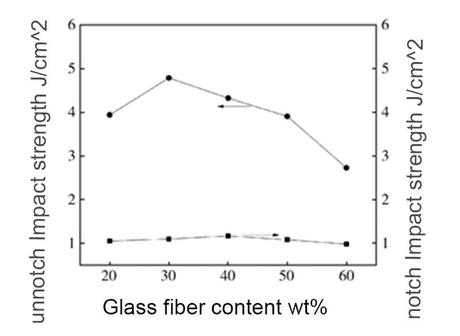
Glass-fiber-reinforced PEEK can increase stiffness and improve dimensional stability. It is often considered for applications where the valve needs greater rigidity at elevated temperature.
The tradeoff is that reinforced grades can behave differently against mating surfaces. Surface finish, valve-seat material, and lubrication conditions must be evaluated carefully.
Carbon-fiber-reinforced PEEK may provide higher stiffness, improved thermal conductivity, and strong dimensional stability. It can be appropriate for demanding pressure and temperature conditions, especially where a more rigid polymer valve plate is needed.
For high-performance compressor components, material selection should not be based only on a catalog description. The best grade depends on the complete operating profile.
Before changing from stainless steel to PEEK valve plates, engineering teams should review the following factors:
1. Define the gas medium. Identify whether the compressor handles air, refrigerant, natural gas, hydrogen-rich gas, hydrocarbons, corrosive chemicals, steam, or mixed process gases.
2. Measure actual valve temperature. Evaluate local temperatures at the valve plate, seat, and stop—not only the nominal discharge temperature.
3. Confirm pressure differential and cycle frequency. High pressure and high-frequency operation require careful evaluation of PEEK grade, thickness, stiffness, and fatigue margin.
4. Review current failure modes. Determine whether existing steel plates fail through fatigue cracking, deformation, wear, corrosion, flutter, impact damage, or foreign-particle contamination.
5. Evaluate valve geometry. Plate diameter, thickness, lift, guide clearance, seat flatness, stop position, and surface roughness all affect PEEK performance.
6. Test the complete assembly. Test flow, leakage, noise, temperature rise, vibration, wear, and service life under real operating conditions.
7. Compare lifecycle cost—not unit price alone. Include energy use, downtime, replacement labor, damaged equipment risk, inventory requirements, and warranty exposure.
> Suggested video placement: Insert a short slow-motion video or animation showing the opening-and-closing behavior of a lightweight PEEK valve plate compared with a stainless steel plate.
From our experience working with high-performance polymer materials, the move from metal to PEEK is usually not driven by novelty. It is driven by measurable operational problems.
OEMs often begin evaluating PEEK valve plates after seeing one or more of these issues:
- Excessive compressor noise
- Frequent valve replacement
- Metal plate fracture
- Damage to pistons, cylinders, or rings after valve failure
- Rising maintenance cost
- Energy loss caused by leakage or poor sealing
- Corrosion-related reliability problems
- A customer request for a quieter or more efficient compressor
PRES has observed that a well-designed PEEK valve solution can shift the discussion from "What does this plate cost?" to "What does unplanned downtime cost?" That is the more meaningful question for industrial compressor operators.
In published application guidance for PEEK valve plates, PEEK 5600GF30 plates in certain natural-gas compressor applications are reported to operate for up to 12 months, compared with about one month for steel plates in the stated example. Such results are application-specific and should not be treated as universal performance guarantees, but they illustrate why validation testing is valuable before dismissing polymer valve technology.
Dongguan PRES Group Co., Ltd. is a China-based manufacturer and OEM partner for high-performance plastics. We support international brands, wholesalers, manufacturers, and engineering teams that need reliable PEEK materials and custom parts.
Our product capabilities include:
- PEEK resin and plastic granules
- PEEK sheets and plates
- PEEK rods
- PEEK tubes
- PEEK powder
- High-performance 3D-printing filaments
- Customized PEEK valve plates
- CNC-machined PEEK components
- Material modification and OEM manufacturing support
We understand that a valve plate is not simply a plastic disc. It is a dynamic, fatigue-loaded, sealing-critical component. That is why our approach begins with your application requirements: operating pressure, temperature, media, plate size, thickness, valve geometry, target service life, and desired noise-reduction or efficiency outcomes.
If your stainless steel valve plates create excessive noise, frequent failure, leakage, or maintenance costs, it may be time to evaluate a PEEK alternative.
Contact Dongguan PRES Group Co., Ltd. today to discuss your compressor valve application. Our team can help you select a suitable PEEK grade, develop customized plate dimensions, provide material samples, and support OEM production from prototype to volume supply.
Yes, PEEK valve plates can replace stainless steel valve plates in many compressor applications, especially where low weight, reduced noise, chemical resistance, fatigue performance, and improved sealing are important. However, the application must be reviewed for temperature, pressure, gas medium, valve geometry, and service-life requirements.
PEEK valve plates can help reduce impact-related noise because they are lighter than steel and can absorb part of the impact energy during repeated opening and closing. Actual noise reduction depends on the entire valve design, compressor speed, stop geometry, and vibration behavior.
PEEK is a high-temperature engineering thermoplastic. Some PEEK materials are designed for continuous use at temperatures up to approximately 260°C, although actual valve suitability depends on pressure, media, reinforcement, geometry, and the real local temperature at the valve.
There is no single best grade. Unfilled PEEK may suit applications requiring toughness and chemical resistance. Glass-filled PEEK can provide higher stiffness and dimensional stability. Carbon-filled PEEK may offer enhanced stiffness and thermal performance. PRES can recommend a grade based on your operating conditions.
They can support efficiency improvements by reducing inertia, improving sealing behavior, reducing flow losses, and maintaining performance through lower wear. The actual result must be verified through compressor testing because efficiency depends on the complete valve-system design.
PEEK can be used in demanding gas-compression applications because of its chemical resistance, toughness, and non-metallic failure behavior. Unlike metal fragments, a damaged PEEK plate is less likely to cause destructive metal-on-metal impact or sparks. Final safety approval must always be based on the system's gas, pressure, temperature, certification requirements, and risk assessment.
Yes. PRES supports OEM and custom projects with PEEK raw materials, reinforced compounds, sheets, rods, tubes, machined valve plates, and application-oriented manufacturing support for international brands, wholesalers, and industrial manufacturers.

1. Victrex. "PEEK Materials Properties Guide." Discusses PEEK's high-temperature capability, chemical resistance, fatigue behavior, dimensional stability, hydrolysis resistance, and wear properties. [Victrex PEEK Material Properties Guide] [victrex]
2. ChinaPEEK. "PEEK Valve Plate." Provides application information regarding PEEK compressor valve plates, including service-life observations, noise reduction, sealing behavior, pressure resistance, and claimed energy-saving potential in selected applications. [PEEK Valve Plate Application Guide] [en.chinapeek]
3. Purdue University. "Ultra-Thin Reed Valves for Higher Energy Efficiency in Compressors." Discusses the relationship between reed-valve design, compressor reliability, energy efficiency, and noise. [Ultra-Thin Reed Valves for Higher Energy Efficiency in Compressors] [docs.lib.purdue]
4. AON3D. "PEEK Material Properties and Applications." Provides published reference ranges for PEEK density, tensile strength, fatigue strength, temperature range, glass-transition temperature, and melting temperature. [PEEK Material Properties and Applications] [aon3d]
5. SpecialChem. "Polyetheretherketone (PEEK) Plastic." Reviews PEEK's temperature resistance, chemical resistance, fatigue performance, and the influence of reinforcement on mechanical properties. [Polyetheretherketone (PEEK) Plastic Guide] [specialchem]
Hot Tags: China, Global, OEM, private label, manufacturers, factory, suppliers, manufacturing company