Views: 233 Author: Dongguan PRES Publish Time: 2026-09-29 Origin: Site


Content Menu
● Why Dongguan PRES Group Leads PEI Sourcing
>> OEM support for French and European buyers
● How to Compare PEI Pellet Suppliers
>> The importance of material traceability
● PEI Material Performance for Demanding Applications
>> Typical PEI performance advantages
>> PEI applications in France and Europe
● PEI Pellets: Processing and Quality Checklist
>> Practical PEI processing checklist
>> Expert insight: qualify the process, not only the pellet
● Why Choose PRES for PEI Materials
>> What buyers can expect from PRES
● Request a PEI Sourcing Consultation
● FAQ
>> What are PEI pellets used for?
>> What should French buyers ask a PEI supplier before ordering?
>> Why must PEI be dried before molding or extrusion?
>> Can PEI be used for 3D printing?
>> Does PRES provide custom PEI products?
>> Can PEI replace metal in industrial parts?
When buyers search for Top PEI Pellets Manufacturers and Suppliers in France, they are rarely looking for a standard engineering plastic. They are sourcing a high-performance polyetherimide material that must remain stable under heat, mechanical stress, electrical demand, chemical exposure, and strict quality requirements. For aerospace, transportation, electronics, medical devices, industrial equipment, and advanced additive manufacturing, the supplier's technical capability matters as much as the material itself.
Dongguan PRES Group Co., Ltd. is a leading China-based OEM supplier for international brands, distributors, wholesalers, and manufacturers seeking dependable PEI pellets, PEI sheets, PEI rods, PEI tubes, PEI powder, and high-performance PEI 3D printing filaments for the French and broader European market. Our approach combines material expertise, flexible OEM support, export-oriented quality control, and multi-format supply capability—helping buyers reduce sourcing complexity without compromising performance.
PEI, or polyetherimide, is an amorphous high-performance thermoplastic known for its high heat resistance, dimensional stability, electrical insulation properties, inherent flame resistance, and strong mechanical performance. A representative unfilled PEI resin grade can offer a glass-transition temperature around 217°C, while specific performance and processing windows depend on the exact grade, reinforcement, color, and application requirements.
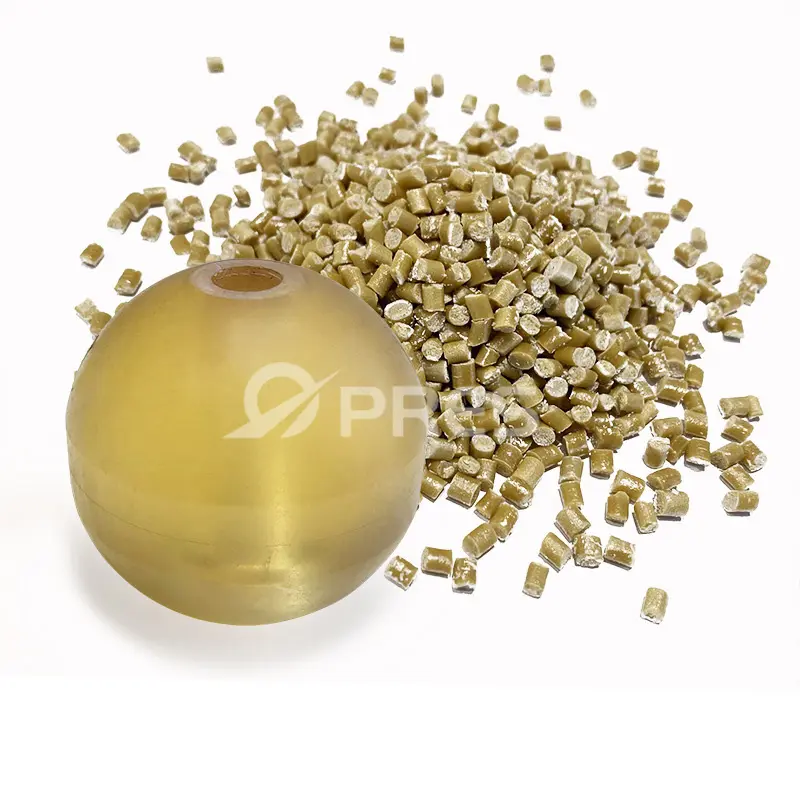
Dongguan PRES Group Co., Ltd. is positioned as more than a material trader. We support customers that need a practical and scalable supply partner across the product-development, sampling, production, packaging, and export stages.
For French buyers, this matters because PEI procurement can involve several formats, multiple processing methods, customized specifications, and demanding documentation requirements. Instead of coordinating separate suppliers for pellets, sheets, rods, tubes, powders, and filaments, buyers can consolidate more of their high-performance plastic sourcing through one experienced OEM-focused manufacturer.
PRES provides high-performance PEI products in several commercially useful forms:
- PEI pellets for injection molding, extrusion, compounding, and profile production
- PEI sheets for machining, thermoforming, insulation components, fixtures, and precision fabricated parts
- PEI rods for CNC machining of bushings, connectors, structural components, and high-temperature parts
- PEI tubes for custom industrial, electrical, medical, and fluid-related applications
- PEI powder for specialty processing, research, coatings, and customized material development
- PEI 3D printing filament for industrial additive manufacturing applications that require heat resistance and functional performance
- OEM and private-label solutions for overseas brands, wholesalers, and plastic-product manufacturers
This broad offering is particularly useful for customers moving from prototype to production. A development team may begin by testing PEI filament, validate the geometry and performance of a part, then transition to PEI pellets for injection molding or PEI sheet and rod for machined prototypes and short-run production.
A reliable PEI pellets supplier should not simply quote a price per kilogram. The supplier should ask the right technical questions before recommending a material solution.
At PRES, an OEM project can be structured around:
1. Application requirements such as operating temperature, load, electrical behavior, flame resistance, and chemical exposure
2. Processing route including injection molding, extrusion, machining, compounding, or FDM/FFF 3D printing
3. Material design such as natural or colored grades, reinforced or unfilled materials, and targeted flow behavior
4. Dimensional needs for sheets, rods, tubes, filament diameter, or custom parts
5. Commercial requirements including batch size, packaging, labeling, private branding, and export documentation
6. Quality verification based on agreed specifications, samples, inspection standards, and batch traceability expectations
This consultative model helps prevent a common sourcing failure: purchasing a material labeled "PEI" that does not actually match the processing conditions or performance needs of the final product.
Not all suppliers marketed as PEI suppliers have the same role in the supply chain. Some sell branded resin, some distribute stock shapes, some compound materials, and some offer conversion into sheets, rods, tubes, powders, or filament. Buyers should compare capabilities—not only product descriptions.
| Evaluation factor | What buyers should verify | Why it matters |
|---|---|---|
| Material identity | Resin family, grade designation, formulation, reinforcement level | Avoids confusion between unfilled, filled, modified, recycled, or blended materials |
| Thermal capability | Glass-transition temperature, heat-deflection behavior, operating environment | PEI is selected mainly for high-temperature applications |
| Processing guidance | Drying procedure, moisture limits, melt-temperature window, molding or extrusion support | Incorrect drying and processing can affect appearance and performance |
| Form availability | Pellets, sheets, rods, tubes, powder, filament | Simplifies prototype-to-production sourcing |
| Quality system | Batch control, inspection plan, certificate availability, sample consistency | Supports repeatability and customer qualification |
| OEM flexibility | Color, dimensions, packaging, labeling, custom specifications | Important for distributors, brands, and specialized manufacturers |
| Export readiness | Packaging, lead-time communication, logistics experience, documentation support | Reduces cross-border procurement risk |
| Technical response | Ability to discuss application and processing details | Indicates whether the supplier can solve problems, not just sell material |
For high-value components, buyers should request traceability information before approving production. This does not need to be unnecessarily complicated, but it should be clear.
A robust PEI sourcing package may include:
- Product specification and agreed grade description
- Batch or lot identification
- Certificate of analysis or inspection record, where applicable
- Dimensional inspection for sheets, rods, tubes, or filament
- Packaging details and labeling requirements
- Storage and drying recommendations
- Regulatory or compliance declarations when required for the target application
For buyers serving regulated industries, traceability should be defined at the beginning of the project—not requested only after a quality issue occurs.
PEI is widely selected when common engineering plastics cannot provide enough heat resistance, rigidity, electrical performance, or flame-related performance. It is an amorphous polymer, which contributes to its dimensional stability and characteristic amber-to-transparent appearance in natural grades.
SABIC describes its ULTEM™ PEI resin family as offering elevated thermal resistance, high strength and stiffness, and broad chemical resistance. The family is available in transparent and opaque colors, including glass-filled grades. Manufacturer technical data for one unfilled PEI resin grade lists a glass-transition temperature of 217°C, inherent flame-retardant performance, and suitability for processes including injection molding, extrusion, profile extrusion, compression molding, and additive manufacturing.
- High heat resistance for components exposed to elevated temperatures
- Excellent dimensional stability for precision parts and tight-tolerance applications
- Strong mechanical properties including stiffness and load-bearing capability
- Good electrical insulation for connectors, insulators, circuit-related components, and electrical housings
- Inherent flame resistance without relying on every application on added flame-retardant systems
- Low smoke characteristics relevant to certain transportation and aerospace design requirements
- Chemical resistance appropriate for many industrial environments, subject to chemical compatibility testing
- Steam and hot-water resistance for selected grades and use conditions
- Compatibility with multiple processes including injection molding, extrusion, machining, and additive manufacturing
French and European manufacturers use high-performance thermoplastics in industries where reliability, weight reduction, safety, and long service life are central engineering priorities.
Common PEI application categories include:
- Aerospace cabin components, brackets, clips, ducts, and interior-related parts
- Rail and transportation components requiring attention to flame, smoke, and toxicity performance
- Electrical connectors, coil formers, insulators, and high-temperature electronic housings
- Medical-device components and sterilization-resistant fixtures where grade-specific compliance is confirmed
- Semiconductor and industrial automation components
- Laboratory equipment, jigs, fixtures, and tooling
- Automotive electrical systems and under-hood components
- Industrial pump, valve, sensor, and machine components
- Additive-manufactured functional prototypes and low-volume production parts
For aerospace-oriented FDM applications, ULTEM™ 9085 is described by Stratasys as a PEI thermoplastic with high strength-to-weight ratio, high thermal and chemical resistance, and compliance with multiple aerospace and railway flame, smoke, and toxicity standards. The exact grade, printing system, part geometry, and applicable certification requirements must always be verified for the individual project.
One of the biggest gaps in many supplier comparison articles is the lack of practical processing guidance. Buyers may identify the right material family but still experience molding defects, bubbles, surface issues, brittleness, or inconsistent dimensions because PEI is processed without adequate moisture control.
PEI is hygroscopic. That means it can absorb moisture from the surrounding environment. Moisture can lead to hydrolytic degradation during high-temperature processing, potentially causing cosmetic defects, molecular-weight reduction, and weaker parts.
A technical data sheet for ULTEM™ 1000 lists drying at 150°C for 4–6 hours, maximum moisture content of 0.02%, and an injection-molding melt-temperature range of 350–410°C. These figures are grade-specific reference points, not universal settings for every PEI formulation, machine, or part design.
1. Confirm the exact grade. Do not select a processing window based only on the word "PEI."
2. Dry material correctly. Follow the supplier's current technical data sheet and use properly maintained drying equipment.
3. Control moisture exposure. Minimize the time between drying and processing; use sealed handling where appropriate.
4. Set temperatures by grade and machine. Barrel, nozzle, die, and mold temperatures should be optimized through trials.
5. Use appropriate tooling. Venting, gate design, surface finish, and temperature control influence final part quality.
6. Validate the finished part. Inspect dimensions, appearance, warpage, mechanical integrity, and application-specific performance.
7. Document approved settings. Create a repeatable processing record for future batches and production locations.
In our experience supporting high-performance plastic projects, the best PEI sourcing decisions are made by qualifying three elements together:
- Material: Does the selected PEI grade meet the required physical and regulatory profile?
- Process: Can the customer consistently dry, mold, extrude, machine, or print it?
- Part: Does the finished geometry pass real operating conditions?
This is especially important for thin-wall parts, precision electrical components, highly loaded fixtures, and large 3D-printed parts. A technically correct resin can still produce an unacceptable component if the process is not validated.
PRES supports customers that need a responsive, solution-oriented supplier for advanced plastic materials rather than a catalog-only vendor. We understand that overseas buyers must manage material risk, technical communication, product consistency, logistics, and total landed cost at the same time.
- One supplier, multiple PEI forms for pellets, sheets, rods, tubes, powder, and 3D printing filament
- OEM-oriented manufacturing support for brands, wholesalers, converters, and industrial end users
- Flexible specification discussions based on application, processing, dimensions, color, and packaging
- Support for product development from samples and prototypes to regular production
- Export-focused communication for international customers and cross-border procurement teams
- Practical quality controls aligned with agreed specifications and project requirements
- Private-label potential for distributors and brand owners seeking differentiated high-performance plastic products
A French distributor may need branded PEI rods and sheets in retail-ready packaging. A machinery manufacturer may require consistent PEI pellets for a validated injection-molding process. A 3D-printing business may need controlled-diameter high-performance filament with custom spool and label requirements. These are different commercial models, but they all benefit from an OEM supplier able to coordinate material, format, packaging, and production details.
If you are evaluating PEI pellets manufacturers and suppliers in France or sourcing PEI products for the French market, Dongguan PRES Group Co., Ltd. can help you define a more reliable solution.
Send us your application details, required material format, dimensions, annual quantity, target market, processing method, and any special performance requirements. Our team can support your PEI pellet, sheet, rod, tube, powder, or high-performance 3D printing filament project from specification review through OEM production and export preparation.
Contact PRES today to request a technical consultation, product sample discussion, or OEM quotation for high-performance PEI materials.
PEI pellets are commonly used for injection molding, extrusion, compounding, profile production, and other high-temperature plastic-processing methods. Typical end uses include electrical components, aerospace-related parts, industrial fixtures, transportation components, and high-performance machine parts.
PEI is the generic material name for polyetherimide. ULTEM™ is a well-known PEI resin brand associated with SABIC. Buyers should use the full material specification and grade information rather than assuming that every PEI product has identical properties or approvals.
Buyers should ask about the exact grade, reinforcement level, processing recommendations, batch traceability, available product forms, quality documentation, sample policy, packaging, lead time, and OEM customization options. They should also explain the final application and processing method.
PEI can absorb moisture. If processed with excessive moisture, it may suffer surface defects or material degradation at high temperatures. The correct drying conditions depend on the grade and supplier data sheet.
Yes. High-performance PEI filament is used in industrial FDM/FFF printing for parts that require heat resistance, mechanical strength, and flame-related performance. Successful printing requires a compatible high-temperature printer, controlled chamber conditions, appropriate bed adhesion, and grade-specific print parameters.
Yes. Dongguan PRES Group Co., Ltd. provides OEM support for PEI pellets, sheets, rods, tubes, powders, and high-performance 3D printing filament. Customization can include dimensions, color, packaging, labeling, and project-specific requirements, subject to technical and commercial review.
In certain applications, PEI can reduce weight and simplify production compared with metal. However, replacement decisions should be based on full engineering analysis, including load, temperature, creep, chemical exposure, wear, tolerances, fastening method, and safety requirements.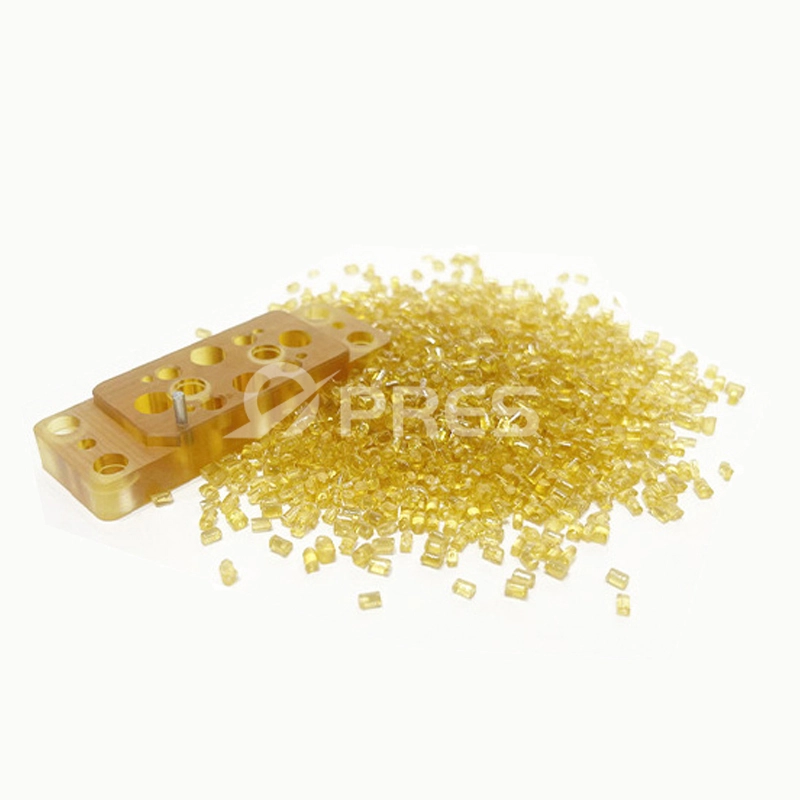
1. [SABIC — ULTEM™ Resin Family of High-Heat Solutions] — Material-family information on PEI thermal resistance, stiffness, chemical resistance, color options, and glass-filled grades. [sabic]
2. [SABIC Material Finder — ULTEM™ Resin 1000 Technical Data Sheet] — Grade-specific information on glass-transition temperature, flame performance, processing methods, drying, moisture limits, and molding temperatures. [materialfinder.sabic-specialties]
3. [Stratasys — ULTEM™ 9085 Resin Material Data Sheet] — Information on PEI-based FDM material performance and aerospace/railway FST positioning. [stratasys]
4. [Ensinger — PEI Plastic Materials] — Reference for PEI stock-shape formats including plates, rods, and customized tubes. [ensingerplastics]
5. [Drake Plastics — Polyetherimide (PEI)] — Background on PEI material positioning and commercially available pellet and powder forms. [drakeplastics]
6. [AON3D — ULTEM Material Properties and Applications] — General overview of PEI/ULTEM material properties, operating considerations, and application context. [aon3d]
Hot Tags: China, Global, OEM, private label, manufacturers, factory, suppliers, manufacturing company