Views: 236 Author: Dongguan PRES Publish Time: 2026-10-29 Origin: Site


Content Menu
● Why PEI Material Matters in Telecommunications
● Polyetherimide's Dielectric Constant: What Antenna Designers Need to Know
>> Dielectric Constant Controls Electrical Loading
>> Dissipation Factor Determines Another Part of the Picture
● PEI Dielectric Constant and Loss: Published Reference Data
>> Why 10 GHz Data Cannot Qualify a 28 GHz Component
● Where PEI Fits Within a 5G Antenna System
>> Phase-Shifter and Dielectric Components
>> RF Connectors and Board-to-Board Insulators
>> Radomes Require a Separate Decision
● Three Engineering Gaps That Generic PEI Articles Often Miss
>> 1. Moisture Conditioning Can Change the Result
>> 2. Glass Transition Temperature Is Not a Service Rating
>> 3. Printed PEI Needs Its Own RF Qualification
● Choosing the Right PEI Product Form With PRES
● A Practical OEM Qualification Workflow
>> Illustrative Design Scenario: An Internal Antenna Spacer
● What to Request From a PEI OEM Supplier
● Start Your Telecommunications PEI Project With PRES
>> What is the dielectric constant of PEI at microwave frequencies?
>> Do all 5G antennas use polyetherimide?
>> Is a lower dielectric constant always better?
>> Can PEI be used for millimeter-wave components?
>> Can printed PEI replace molded PEI without retesting?
>> What should I send PRES for an OEM quotation?
Dongguan PRES Group Co., Ltd. supports overseas brands, wholesalers, and manufacturers with OEM high-performance plastic products, including pellets, sheets, rods, tubes, powders, and 3D printing filaments. For customers researching PEI material in telecommunications, our starting point is practical: how does polyetherimide's dielectric constant influence a component's electrical performance, manufacturing route, and long-term reliability?
PEI offers an attractive combination of dielectric behavior, heat resistance, and dimensional stability. These characteristics make it relevant to selected antenna-system components, RF connectors, phase-shifter applications, and filter structures.
However, not every 5G antenna uses PEI. The engineering question is where a specific PEI grade provides the right balance of electrical and mechanical properties—and how to verify that balance before production.

Polyetherimide is an amorphous engineering thermoplastic. ULTEM is SABIC's trademarked PEI resin family, not a generic name for every PEI product.
Telecommunications components must do more than electrically insulate neighboring conductors. They may also need to maintain precise spacing, withstand assembly temperatures, support metal features, and remain dimensionally consistent during operation.
PEI brings several useful properties together:
- Electrical insulation and measurable microwave dielectric properties.
- High-temperature capability.
- Mechanical stiffness and dimensional stability.
- Compatibility with multiple manufacturing processes.
- Inherent flame resistance in specified grades and thicknesses.
For OEM buyers, this combination can simplify material selection where a commodity plastic cannot satisfy both thermal and electrical requirements.
Nevertheless, "PEI" is a material family, not a complete purchasing specification. Reinforcement, additives, colorants, processing history, and product form must remain part of the qualification process.
Dielectric constant, also called relative permittivity or Dk, describes how a material responds to an electric field relative to vacuum.
In an antenna assembly, dielectric material near an active conductor can change electrical loading, resonant behavior, impedance, and field distribution.
A higher Dk can support miniaturization in some designs. However, it is not automatically better. It can also change bandwidth, matching, and sensitivity to geometry.
For approximately uniform, nonmagnetic dielectric media, wavelength decreases roughly in proportion to the inverse square root of relative permittivity. Real antenna structures require effective-permittivity calculations because their fields often occupy both plastic and air.
The practical lesson is simple: select Dk for the design, rather than selecting the highest or lowest available number.
Dissipation factor, also called Df or loss tangent, describes dielectric energy loss.
Two materials can have similar Dk values but different losses. A material that produces the desired antenna loading may still absorb too much RF energy.
For this reason, a meaningful PEI material comparison should include:
- Dk at the intended operating frequency.
- Df at the same frequency.
- Temperature and moisture conditions.
- Test method and specimen preparation.
- Relevant directional or processing effects.
Consistency matters as much as a favorable nominal value.
SABIC publishes the following typical values for its unreinforced ULTEM 1000 resin:
| Property | Frequency or condition | Published typical value |
|---|---|---|
| Dielectric constant | 1.1 GHz | 3.01 |
| Dielectric constant | 5 GHz | 3.02 |
| Dielectric constant | 10 GHz | 3.02 |
| Dissipation factor | 1.1 GHz | 0.0012 |
| Dissipation factor | 5 GHz | 0.0024 |
| Dissipation factor | 10 GHz | 0.0027 |
| Glass transition temperature | Grade description | 217°C |
| Equilibrium moisture absorption | 23°C, 50% RH | 0.7% |
These figures illustrate why PEI deserves consideration: this grade shows similar published Dk values across the listed microwave frequencies.
They also reveal an important distinction. Dk remains nearly unchanged in this dataset, while Df increases between 1.1 and 10 GHz.
These are reference values for a named resin—not guaranteed specifications for every PRES product, reinforced compound, machined part, or printed component.
The public table also does not identify a test method beside these GHz entries. Buyers should request the underlying measurement conditions when those values drive design decisions.
A material datasheet is a starting point, not permission to extrapolate indefinitely.
Published measurements at 5 or 10 GHz do not establish performance at 28 or 39 GHz. Millimeter-wave designs require measurements appropriate to their actual operating bands.
The same caution applies to temperature. A room-temperature Dk value does not prove that a component maintains identical electrical behavior throughout its service environment.
Phase shifters help control signal phase in antenna systems. Their performance depends on electrical properties, geometry, and the complete assembly.
SABIC identifies ULTEM resins alongside engineered thermoplastic compounds as potential material solutions for phase-shifter applications requiring stable, customized dielectric behavior.
This supports considering PEI, but not assuming that any unfilled PEI grade will meet a particular phase-shifter specification.
Connector insulators must maintain conductor separation and mechanical alignment while meeting electrical and assembly requirements.
PEI can be relevant where heat resistance, dimensional stability, and dielectric behavior must coexist.
At higher frequencies, even a small support feature can influence local fields. Material selection therefore belongs inside the connector design process, not after the geometry is finalized.
Selected PEI-based grades can also support metallized RF filter structures.
Here, the benefit may involve lightweight structural support, dimensional control, and plating compatibility—not simply dielectric transmission through the plastic.
An unreinforced PEI grade and a heavily reinforced, metallizable PEI compound serve different purposes. They should not share one generic qualification specification.
A radome must protect an antenna while allowing acceptable RF transmission.
PEI should not automatically be the first choice for this role. Outdoor weatherability, impact resistance, wall thickness, moisture exposure, and transmission loss may favor another polymer system.
PRES should be positioned as a material-selection partner, not as a supplier claiming that one polymer solves every telecommunications requirement.
PEI absorbs moisture. For ULTEM 1000, SABIC reports 0.7% equilibrium moisture absorption at 23°C and 50% relative humidity.
That figure describes material behavior under stated conditions; it does not directly quantify antenna detuning.
Nevertheless, RF qualification should distinguish between dry specimens and humidity-conditioned specimens.
A useful test plan compares dimensions, Dk, Df, and assembly performance before and after representative conditioning. This is more informative than describing PEI as simply "moisture resistant."
A glass transition temperature of 217°C does not mean every PEI part can operate continuously at 217°C.
For the same ULTEM 1000 grade, SABIC lists a 170°C relative temperature index for specified electrical and mechanical categories.
Actual service suitability also depends on load, duration, environment, geometry, and applicable approvals.
Engineers should separate glass transition temperature, heat-deflection temperature, long-term thermal ratings, and validated component operating limits.
PEI filament can help develop complex prototypes, but a printed part is not automatically electrically equivalent to an injection-molded specimen.
Voids, layer interfaces, raster orientation, and infill can change the effective dielectric structure.
For RF-sensitive prototypes:
1. Print representative coupons alongside the component.
2. Record orientation, layer settings, and drying conditions.
3. Measure dielectric behavior using an appropriate method.
4. Test the complete antenna assembly.
5. Revalidate after changing the manufacturing route.
A successful printed prototype does not eliminate the need to qualify a molded production version.
PRES's broader high-performance plastics portfolio gives OEM buyers several sourcing routes. Availability of a particular PEI grade and form should be confirmed during quotation.
| Product form | Potential project use | Main qualification question |
|---|---|---|
| Pellets | Injection-molded production components | Is the exact resin and formulation controlled? |
| Sheets and rods | Machined prototypes, spacers, and insulators | Are stock condition and machining tolerances suitable? |
| Tubes | Sleeves and cylindrical insulating parts | Are concentricity and wall thickness adequate? |
| Powder | Process-specific development | Are particle properties compatible with the process? |
| 3D printing filament | Geometric prototypes and development parts | Are printed density and orientation controlled? |
Product form should follow the component's function.
For example, machining can help evaluate geometry before tooling investment. Injection molding may suit repeat production. Additive manufacturing may enable rapid design iterations, provided its electrical limitations are understood.
The lowest material price does not necessarily produce the lowest qualified-part cost.
From an engineering-led sourcing perspective, I would begin with the operating environment and acceptance criteria—not a generic request for "5G-grade PEI."
Use this six-step process:
1. Define the application. Identify whether the part is an insulator, phase-shifter element, filter structure, support, or protective cover.
2. Specify the frequency range. Include every relevant band rather than only the product's "5G" label.
3. Set electrical requirements. Define acceptable Dk, Df, variation, and measurement conditions.
4. Identify environmental requirements. Include temperature, humidity, outdoor exposure, and applicable flammability requirements.
5. Qualify representative parts. Measure dimensions and RF performance after realistic processing and conditioning.
6. Control production changes. Review changes to resin, additives, color, tooling, processing, and suppliers before implementation.
Consider an internal spacer near an antenna feed.
The purchasing team may initially prioritize strength and dimensional tolerance. The RF engineer may discover that the spacer also shifts impedance because it occupies a high-field region.
The solution is not necessarily a different polymer. Adjusting spacer geometry, position, or material grade may provide a better balance.
This is an illustrative engineering scenario, not a reported PRES customer case. It demonstrates why component location matters alongside datasheet properties.
A technically useful quotation should connect the material identity to the final part.
Ask for:
- Exact grade, reinforcement, color, and formulation identification.
- Current technical documentation.
- Batch identification and agreed traceability records.
- Relevant dielectric data and test conditions.
- Manufacturing tolerances and inspection criteria.
- Drying, storage, and packaging requirements.
- A documented process for reviewing material changes.
If application-specific RF testing is required, establish responsibility, laboratory capability, and acceptance limits before ordering.
Do not assume that a standard material certificate includes microwave testing.
Dongguan PRES Group Co., Ltd. provides OEM high-performance plastic products for overseas brands, wholesalers, and manufacturers.
To discuss a PEI telecommunications project, send PRES your drawing, operating frequency, temperature range, environmental conditions, preferred product form, estimated volume, and electrical acceptance criteria.
Request a grade-specific quotation and sample qualification plan before committing to production.
That approach connects material supply with the outcome that matters: a component that meets its electrical, mechanical, and manufacturing requirements.
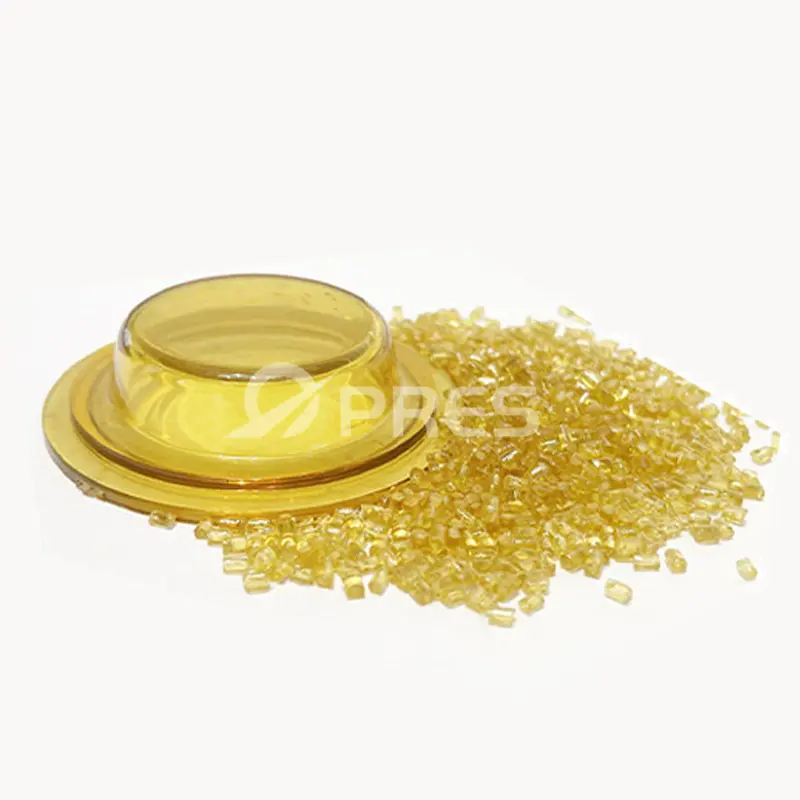
SABIC lists typical ULTEM 1000 Dk values of 3.01 at 1.1 GHz and 3.02 at both 5 and 10 GHz. Other grades and conditions require separate verification.
No. Material selection depends on the component. PEI is relevant to selected connector, phase-shifter, and filter applications, while other polymers serve different antenna-system functions.
No. The desired Dk depends on loading, size, impedance, bandwidth, and geometry. Designers must evaluate it alongside Df and environmental stability.
Potentially, but the exact grade and finished component need application-specific validation. Measurements below the intended operating band are insufficient for qualification.
No. Printing can introduce voids and directional structure. Changes in manufacturing route require appropriate dimensional, electrical, and assembly-level verification.
Provide drawings, quantity, frequency range, environmental conditions, material requirements, tolerances, preferred product form, and required documentation. Include the proposed qualification criteria whenever available.
1. SABIC — "ULTEM™ Resin 1000," Material Finder. Primary source for the grade-specific Dk, Df, thermal, moisture-absorption, and processing information discussed above. [materialfinder.sabic-specialties]
2. SABIC — "Material Solutions for 5G Applications." Application guidance distinguishing phase shifters, antenna radomes, and other telecommunications components. [sabic]
3. SABIC — "Wireless 5G Infrastructure" brochure. Supports the distinction between PEI-based RF filter structures, connector applications, and other polymer solutions within antenna systems. [sabic]
4. SABIC — "SABIC to Showcase at CMPE 2021 its Specialized Materials for 5G Applications," September 7, 2021. Identifies potential ULTEM applications including RF connectors, board-to-board connectors, and RF filter components. [sabic]
5. SABIC — "THERMOCOMP™ Compounds for Dielectric Solutions." Explains the relationship between tailored dielectric constant, dissipation factor, antenna design, and miniaturization. These compounds are not interchangeable with generic unfilled PEI. [sabic]
6. Company information supplied in the commissioning brief. Source for the name Dongguan PRES Group Co., Ltd., the stated product portfolio, overseas customer categories, and OEM positioning. No independent certification, customer endorsement, or application-specific performance guarantee is implied.
Hot Tags: China, Global, OEM, private label, manufacturers, factory, suppliers, manufacturing company