Views: 220 Author: plastic-material Publish Time: 2025-12-30 Origin: Site


Content Menu
● Understanding Perfectly Plastic Materials
>> Definition of Perfectly Plastic Materials
>> Characteristics of Perfectly Plastic Materials
● The Properties of Round Wire
>> Wire Drawing
>> Annealing
● Applications of Round Wire Made of Perfectly Plastic Material
● Advantages of Using Perfectly Plastic Materials
>> Versatility
● Challenges and Considerations
>> Performance Under Extreme Conditions
● Future Directions in Research
>> Advancements in Material Science
>> Integration with Smart Technologies
In the realm of materials science, the study of plastic materials has gained significant attention due to their unique properties and applications. Among these materials, a round wire made of a perfectly plastic material presents intriguing possibilities. This article explores the characteristics, applications, and implications of such a wire, delving into its mechanical properties, manufacturing processes, and potential uses in various industries.
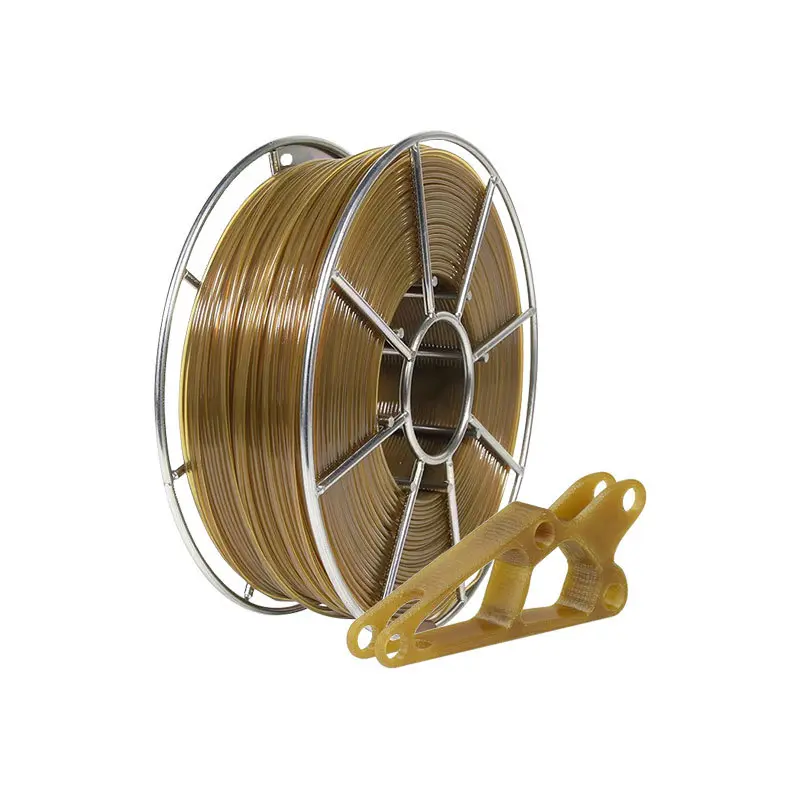
Perfectly plastic materials are defined by their ability to undergo permanent deformation without any increase in stress. This means that once a perfectly plastic material is deformed, it retains its new shape without returning to its original form when the applied stress is removed. This behavior is in stark contrast to elastic materials, which return to their original shape after the stress is removed.
1. Yield Strength: Perfectly plastic materials exhibit a yield strength, which is the stress level at which the material begins to deform plastically. Beyond this point, the material will not return to its original shape.
2. No Strain Hardening: Unlike many metals and alloys, perfectly plastic materials do not experience strain hardening. This means that their strength does not increase with deformation, making them predictable in their behavior under load.
3. Uniform Deformation: When subjected to stress, perfectly plastic materials deform uniformly, which is advantageous in applications requiring consistent performance.
A round wire made of a perfectly plastic material has specific geometric properties that influence its performance. The circular cross-section provides uniform distribution of stress along the wire, which is crucial for applications where tensile strength is paramount.
The mechanical properties of a round wire made from perfectly plastic materials include:
- Tensile Strength: The maximum amount of tensile stress that the wire can withstand before failure.
- Ductility: The ability of the wire to undergo significant plastic deformation before rupture.
- Fatigue Resistance: The wire's ability to withstand cyclic loading without failure.
Perfectly plastic materials often exhibit unique thermal properties, including:
- Thermal Conductivity: The ability to conduct heat, which can be critical in applications involving temperature fluctuations.
- Thermal Expansion: The degree to which the material expands when heated, which must be considered in design applications.
The primary method for producing round wire from perfectly plastic materials is wire drawing. This process involves pulling the material through a series of dies to reduce its diameter while increasing its length. The wire drawing process can be adjusted to achieve the desired mechanical properties and dimensions.
Annealing is a heat treatment process that can be applied to perfectly plastic materials to relieve internal stresses and improve ductility. This process involves heating the wire to a specific temperature and then allowing it to cool slowly.
Surface treatments, such as coating or plating, can enhance the properties of round wire made from perfectly plastic materials. These treatments can improve corrosion resistance, reduce friction, and enhance aesthetic qualities.
Round wires made from perfectly plastic materials can be used in electrical applications, particularly in environments where flexibility and durability are required. Their ability to withstand deformation without failure makes them ideal for use in connectors, cables, and other electrical components.
In construction and structural engineering, round wires made from perfectly plastic materials can be utilized in reinforcement applications. Their uniform deformation characteristics allow for predictable performance under load, making them suitable for use in concrete reinforcement and tensioning systems.
The medical field can benefit from round wires made of perfectly plastic materials, particularly in the production of surgical instruments and implants. Their biocompatibility and ability to be shaped into complex geometries make them valuable in various medical devices.
In the automotive industry, round wires made from perfectly plastic materials can be used in various components, including springs, cables, and structural reinforcements. Their lightweight nature and resistance to deformation under stress contribute to improved vehicle performance and safety.
The aerospace sector can leverage the properties of round wires made from perfectly plastic materials in applications such as aircraft components and satellite structures. Their ability to maintain integrity under extreme conditions is crucial for ensuring safety and reliability in aerospace engineering.
One of the primary advantages of using perfectly plastic materials is their predictable behavior under stress. Engineers can design components with confidence, knowing that the material will not exhibit unexpected changes in strength or deformation characteristics.
Perfectly plastic materials can be more cost-effective than traditional metals in certain applications. Their manufacturing processes, such as wire drawing, can be less energy-intensive, leading to lower production costs.
The versatility of perfectly plastic materials allows for a wide range of applications across various industries. Their unique properties can be tailored to meet specific requirements, making them suitable for diverse uses.
One challenge associated with perfectly plastic materials is their limited availability compared to traditional metals. This can restrict their use in certain applications where material selection is critical.
While perfectly plastic materials exhibit predictable behavior under normal conditions, their performance under extreme temperatures or corrosive environments may be limited. Engineers must carefully consider these factors when selecting materials for specific applications.
The production and disposal of perfectly plastic materials can have environmental implications. Sustainable practices must be considered to minimize the ecological footprint of these materials.
Ongoing research in material science aims to develop new perfectly plastic materials with enhanced properties. Innovations in polymer chemistry and composite materials may lead to the creation of wires with superior performance characteristics.
The integration of perfectly plastic materials with smart technologies, such as sensors and actuators, presents exciting possibilities. Future applications may include self-monitoring systems that can adapt to changing conditions in real-time.
As the demand for sustainable materials increases, research into biodegradable perfectly plastic materials is gaining traction. These materials could offer the benefits of traditional plastics while minimizing environmental impact.
A round wire made of a perfectly plastic material represents a fascinating area of study within materials science. Its unique properties, manufacturing processes, and diverse applications highlight the potential of perfectly plastic materials in various industries. As research continues to advance, the future of perfectly plastic materials looks promising, with opportunities for innovation and sustainability.
1. What are perfectly plastic materials?
Perfectly plastic materials are those that can undergo permanent deformation without an increase in stress, retaining their new shape after the applied stress is removed.
2. What is the significance of wire drawing in manufacturing round wire?
Wire drawing is a crucial process that reduces the diameter of the wire while increasing its length, allowing for the production of round wire with desired mechanical properties.
3. In what applications can round wires made of perfectly plastic materials be used?
These wires can be used in electrical, structural, medical, automotive, and aerospace applications due to their unique properties and predictable behavior.
4. What are the advantages of using perfectly plastic materials?
Advantages include predictable behavior under stress, cost-effectiveness, and versatility across various applications.
5. What challenges are associated with perfectly plastic materials?
Challenges include limited availability, performance under extreme conditions, and environmental impact considerations.
Hot Tags: China, Global, OEM, private label, manufacturers, factory, suppliers, manufacturing company