Views: 220 Author: plastic-material Publish Time: 2026-04-03 Origin: Site


Content Menu
● Why PEEK? The Science Behind the Performance
● The Manufacturer's Perspective: Sourcing Quality PEEK Filament
>> 2. Carbon Fiber Reinforced (PEEK-CF)
>> 3. Glass Fiber Reinforced (PEEK-GF)
● Technical Mastery: Critical Print Settings for Success
● Industry Innovation: The Role of Crystallization Control
>> The Inline Annealing Process
● Overcoming Common Challenges: User Insights & Solutions
>> Issue 2: Poor Interlayer Adhesion (Delamination)
>> Issue 3: Moisture Absorption
● Case Study: Metal Replacement in Aerospace
● Environmental Impact and Sustainability
● Conclusion: Partnering with Dongguan PRES Group
>> Ready to Elevate Your Production?
● Frequently Asked Questions (FAQ)
In the realm of additive manufacturing, few materials command as much respect as PEEK (Polyether Ether Ketone). As a top-tier thermoplastic within the PAEK family, it has become the gold standard for aerospace, medical, and automotive industries. However, sourcing the right PEEK filament for 3d printing is only half the battle; understanding its thermal behavior and processing requirements is what separates successful industrial production from failed prints.
At Dongguan PRES Group Co., Ltd., we have spent years refining our high-performance polymers. As a leading Chinese manufacturer providing OEM services for global brands, we've seen firsthand how the right material science transforms a prototype into a functional, end-use part. This guide leverages our factory expertise and industry data to help you navigate the complexities of PEEK.

PEEK is a semi-crystalline thermoplastic. This molecular structure is responsible for its legendary mechanical properties, but it also makes it notoriously difficult to print.
Thermal Stability: With a glass transition temperature ($T_g$) of approximately 143°C and a melting point ($T_m$) of 343°C, it retains its strength in extreme environments.
Chemical Resistance: PEEK is virtually insoluble in all common solvents, resisting acids, bases, and hydrocarbons.
Biocompatibility: This makes it the premier choice for medical implants and dental prosthetics.
Strength-to-Weight Ratio: It often replaces aluminum and titanium in aerospace to reduce fuel consumption.
Not all PEEK filament for 3d printing is created equal. As an OEM provider, we categorize PEEK based on purity and additives.
Unfilled PEEK offers the highest purity and is best for medical and food-contact applications. It provides the best electrical insulation.
By adding roughly 10-20% carbon fiber, the material becomes stiffer and more dimensionally stable. This is the "easy mode" for PEEK printing because carbon fiber reduces the shrinkage rate, leading to less warping.
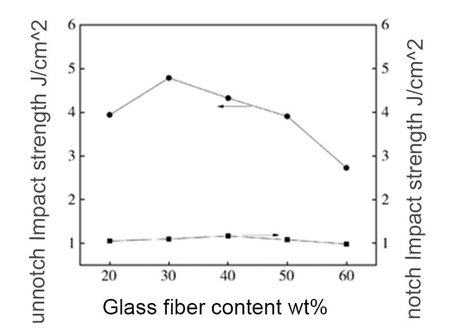
Ideal for electrical applications where carbon fiber's conductivity would be a hindrance, but high structural strength is still required.
If you want to achieve the theoretical maximum strength of PEEK, your hardware must meet specific criteria. Based on our internal testing at the PRES Group facility, here are the non-negotiable parameters:
| Parameter | Recommended Setting | Why it Matters |
| Nozzle Temperature | 390°C – 420°C | Ensures full molecular bonding and flow. |
| Bed Temperature | 120°C – 160°C | Vital for first-layer adhesion. |
| Chamber Temperature | 90°C – 150°C | Prevents warping and ensures crystallization. |
| Print Speed | 15 – 30 mm/s | High speeds lead to poor interlayer adhesion. |
| Cooling Fan | 0% (Off) | Rapid cooling "freezes" the polymer in an amorphous state. |
Pro Tip: If your printed PEEK part looks translucent and brown, it is "amorphous" (weak). If it looks opaque and tan/beige, it has "crystallized" properly.
One of the biggest "Information Gaps" in standard SEO articles is the depth of crystallization management.
When printing with PEEK filament for 3d printing, the goal is to achieve a degree of crystallinity between 25% and 35%. If the heated chamber is not hot enough, you must perform post-print annealing.
Recommended Annealing Schedule:
Increase temperature to 150°C and hold for 1 hour per mm of wall thickness.
Slowly ramp up to 200°C and hold for 2 hours.
Gradually cool down to room temperature at a rate of 10°C per hour.
We've integrated feedback from our wholesale partners and end-users to address the most frequent pain points.
The Cause: PEEK has a high shrinkage rate (approx. 1-2%).
The PRES Solution: Use a PEI sheet or a specialized carbon-fiber build plate. Ensure your chamber is active-heated, not just "insulated."
The Cause: Printing too fast or with an insufficiently hot nozzle.
The PRES Solution: Decrease layer height to 0.1mm to increase the surface contact area between layers.
Contrary to popular belief, PEEK is slightly hygroscopic.
The PRES Solution: Always dry your filament at 120°C for at least 6-8 hours before printing. Even 0.1% moisture will cause "popping" in the nozzle and ruin the finish.
A European client partnered with Dongguan PRES Group to replace a stainless steel bracket with a 3D-printed PEEK component.
Weight Reduction: 65% compared to steel.
Result: The part passed flame, smoke, and toxicity (FST) testing, which is mandatory for aircraft interiors.
Key Takeaway: Using high-grade PEEK filament for 3d printing allowed for complex geometries that were impossible to CNC machine, reducing part count from five components to one.
As a responsible manufacturer, we highlight that PEEK is 100% recyclable. At our Dongguan facility, we regrind production waste into PEEK powder for SLS (Selective Laser Sintering) or re-extrude it into lower-grade industrial filaments. Choosing PEEK supports the "Circular Economy" in high-end manufacturing.
Whether you are a wholesaler looking for reliable OEM production or a manufacturer needing high-performance PEEK filament for 3d printing, quality starts at the source. At Dongguan PRES Group Co., Ltd., we combine rigorous Chinese manufacturing efficiency with global quality standards.
Wholesale Inquiries: Contact our sales team for bulk pricing on PEEK, PEI, and PPSU.
Custom OEM: We can produce custom filament diameters (1.75mm/2.85mm) and custom spooling.
Technical Support: Our engineers are available to help optimize your print profiles.
[Contact Dongguan PRES Group Co., Ltd. Today]
Victrex PLC: The Properties of PEEK Polymer - Data on thermal and chemical resistance.
ScienceDirect: Crystallization Kinetics of Polyether Ether Ketone in Additive Manufacturing - Academic research on PEEK structures.
ASTM International: F3001 Standard for Additive Manufacturing PEEK - Industrial standards for medical-grade PEEK.
NASA Technical Reports: High-Performance Polymers for Space Applications - Insights on metal replacement.
3D Printing Industry: State of PEEK 3D Printing 2025 - Market trends and hardware requirements.

Q1: Can I print PEEK on a standard desktop 3D printer?
No. Standard printers (like an Ender 3) max out at 260°C-300°C. To print PEEK, you need an all-metal hotend capable of 400°C and a heated chamber that reaches at least 90°C.
Q2: Is PEEK filament food safe?
Virgin PEEK is generally considered food-safe and FDA-compliant. However, the 3D printing process itself can introduce contaminants or create microscopic ridges where bacteria can grow.
Q3: What is the difference between PEEK and PEI (Ultem)?
PEEK is semi-crystalline and offers better chemical resistance and fatigue life. PEI is amorphous, easier to print (lower warping), and more cost-effective but has lower thermal resistance.
Q4: How should I store PEEK filament?
Store it in a vacuum-sealed bag with desiccant. Even high-performance plastics degrade if exposed to humidity for long periods. Always re-dry before use.
Q5: Why is PEEK filament so expensive?
The synthesis of the PEEK monomer is a complex, high-energy chemical process. Additionally, the extrusion process for filament requires specialized high-temperature machinery to maintain diameter consistency.