
Views: 220 Author: plastic-material Publish Time: 2026-05-06 Origin: Site


Content Menu
● Introduction: Why PEEK Temperature Limits Matter
● PEEK Temperature Limits Explained
>> Temperature reference table
● Grade Selection Changes the Limit
● Processing Limits Matter Too
● FAQ
>> 1. What is the continuous use temperature of PEEK?
>> 2. What is the melting point of PEEK?
>> 3. Can PEEK be used above 260°C?
>> 4. Is carbon-filled PEEK better than glass-filled PEEK?
>> 5. Does PEEK work for 3D printing?
Dongguan PRES Group Co., Ltd. is a strong OEM partner for high-performance plastic products, including pellets, sheets, rods, tubes, powders, and high-performance 3D printing filaments, and PEEK temperature limits are one of the most important factors we help global buyers evaluate when choosing the right grade and format for demanding applications. [freshdi]
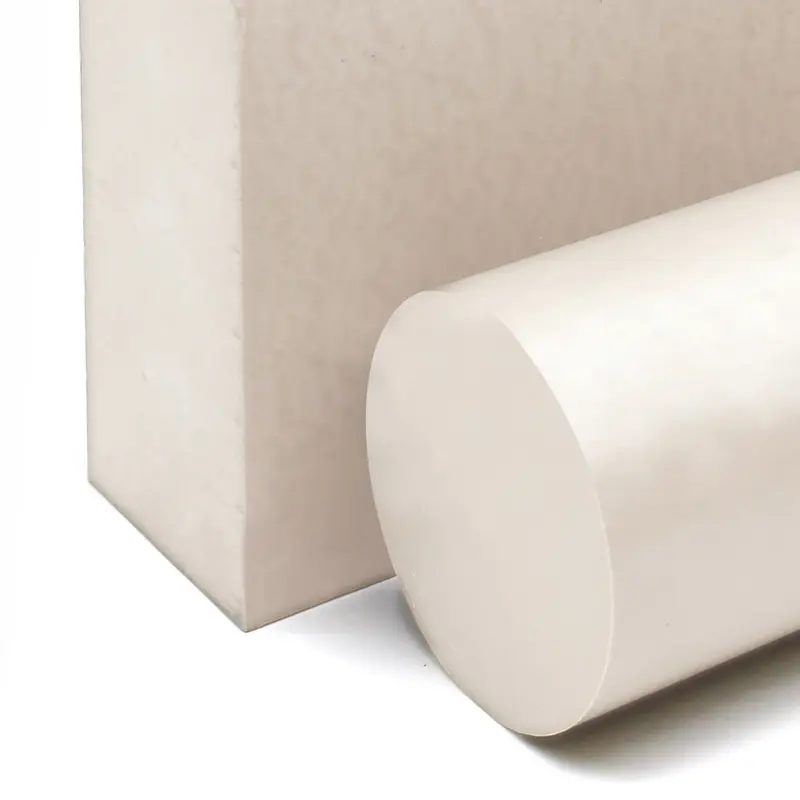
When engineers search for PEEK temperature limits, they are usually trying to answer a practical question: how hot can PEEK get before performance drops, deformation begins, or the part fails? The short answer is that PEEK is one of the most heat-resistant engineering thermoplastics, with a continuous use temperature commonly cited around 250-260°C and a melting point around 343°C, depending on grade and test method. [victrex]
From an OEM and application perspective, that number alone is not enough. Real-world performance depends on load, exposure time, part geometry, fillers, processing quality, and environment, which is why buyers often need material guidance, not just a datasheet. [aprios]
PEEK's thermal profile is usually discussed in four layers: glass transition temperature, continuous use temperature, short-term peak temperature, and melting point. The glass transition temperature is around 143°C, where the material begins to lose stiffness faster under load, while the melting point is around 343°C, where the polymer structure fully melts. [en.wikipedia]
A useful way to think about this is:
- Tg tells you when mechanical behavior starts to soften.
- Continuous use temperature tells you where the material can run for long periods.
- Short-term peaks show brief heat tolerance.
- Melting point is the upper physical limit before the material loses its solid form. [victrex]
| Property | Typical value | Practical meaning |
|---|---|---|
| Glass transition temperature (Tg) | 143°C | Stiffness begins to drop faster under load victrex+1 |
| Continuous use temperature | 250-260°C | Long-term working range for many grades victrex+2 |
| Short-term exposure | Up to about 300°C | Brief excursions may be tolerated victrex |
| Melting point (Tm) | About 343°C | Full crystalline melt victrex+1 |
PEEK can tolerate heat better than many polymers because it is semi-crystalline, and its crystalline regions help preserve structure at elevated temperatures. In practice, that means the material can stay functional well above its glass transition temperature, especially when the part is correctly designed and not overstressed. [aon3d]
This is why PEEK is widely used in aerospace, medical, semiconductor, oil and gas, and other high-heat industries. It is not just heat resistance that matters; PEEK also brings chemical resistance, wear resistance, and dimensional stability into the same material platform. [parjetseals]
Not all PEEK grades behave the same way under heat. Filled grades, especially carbon-fiber and glass-fiber reinforced versions, can improve stiffness, creep resistance, and thermal stability under load. In many applications, the right filler choice matters as much as the base resin itself. [peekchina]
- Unfilled PEEK: Best for electrical insulation and general-purpose high-temperature parts. [mcam]
- Glass-filled PEEK: Improves dimensional stability and stiffness while preserving insulation better than carbon-filled grades. [cylexplastics]
- Carbon-filled PEEK: Offers very high stiffness, better wear behavior, and improved thermal conductivity, but it is electrically conductive. [iemai3d]
| Grade | Main advantage | Trade-off |
|---|---|---|
| Unfilled PEEK | Insulation and toughness victrex | Lower stiffness than reinforced grades |
| PEEK-GF30 | Dimensional stability and insulation cylexplastics | Heavier and less thermally conductive than CF grades |
| PEEK-CF30 | Highest stiffness and wear performance iemai3d+1 | Electrically conductive |
A common mistake is treating PEEK temperature limits as only an end-use issue. In reality, processing temperature is also critical, because poor molding, extrusion, or 3D printing conditions can reduce crystallinity and weaken final part performance. This is especially important for OEM buyers who need repeatability across batches and product lines. [arkpeek]
For 3D printing, industrial PEEK filament typically requires very high nozzle and chamber temperatures, and controlled thermal conditions help prevent warpage and delamination. For molded parts, stable processing windows help preserve the properties that make PEEK valuable in the first place. [dgpres.en.made-in-china]
PEEK is usually justified when several demanding conditions overlap at the same time. It is especially valuable when heat, chemicals, mechanical stress, and dimensional stability all matter together. [sterlingplasticsinc]
Typical use cases include:
- Aerospace clips, brackets, and insulation parts. [prototek]
- Semiconductor components exposed to high heat and aggressive process chemistry. [eureka.patsnap]
- Medical and sterilizable parts that must survive repeated thermal cycles. [aprios]
- Oil and gas seals, valves, and wear parts in high-pressure, high-temperature service. [parjetseals]
This is where Dongguan PRES Group Co., Ltd. stands out. As a China-based manufacturer offering pellets, sheets, rods, tubes, powders, and high-performance 3D printing filaments, PRES can support OEM buyers who need the right PEEK format for molding, machining, or additive manufacturing. That breadth matters because the "best" material form depends on how the part is produced and where it must perform. [peekchina]
For international brand owners, wholesalers, and manufacturers, an OEM partner should do more than ship material. The real value comes from consistent formulation, grade matching, application guidance, and stable supply for repeat production. [peek-materials]
If you are deciding whether PEEK is the right material, use this simple process:
1. Define the real operating temperature, not just the peak temperature. [victrex]
2. Check the load condition, because heat under stress is much more demanding than heat alone. [linkedin]
3. Choose the correct grade, especially if stiffness, insulation, or wear resistance matters. [peekchina]
4. Match the process, whether you need pellets for molding, rod for machining, or filament for 3D printing. [freshdi]
5. Validate with testing, because continuous-use claims should always be confirmed in the actual end application. [victrex]
PEEK is commonly reported to have a continuous use temperature of about 250-260°C, depending on grade and test conditions. [mcam]
PEEK's melting point is typically around 343°C, though published values can vary slightly by source and grade. [en.wikipedia]
Yes, PEEK may tolerate short-term peaks above its continuous use range, but load, time, and environment matter, so engineering validation is essential. [victrex]
Neither is universally better. Carbon-filled PEEK is usually stronger and stiffer, while glass-filled PEEK is often preferred when electrical insulation is still important. [iemai3d]
Yes, but only with high-temperature industrial equipment and controlled chamber conditions to reduce warpage and maintain part quality. [peekchina]
1. [VICTREX PEEK Material Properties Guide] [victrex]
2. [VICTREX: A closer PEEK at PEEK] [victrex]
3. [Aon3D: PEEK Material Properties and Applications] [aon3d]
4. [Aperiod/Aprios: PEEK high-performance resin for extreme conditions] [aprios]
5. [Sterling Plastics: When Do You Actually Need PEEK Plastic] [sterlingplasticsinc]
6. [Parjet Seals: PEEK in HPHT environments] [parjetseals]
7. [Dongguan PRES on Made-in-China] [dgpres.en.made-in-china]
8. [Dongguan PRES Plastic Materials Co., Ltd. supplier page] [freshdi]
9. [PEEK 3D Filament product page] [peekchina]
10. [How Fibers Enhance PEEK] [peekchina]
11. [Carbon Fiber vs Glass Fiber PEEK] [cylexplastics]
12. [PEEK 3D Printer High-Performance 3D Printing] [peekchina]
Hot Tags: China, Global, OEM, private label, manufacturers, factory, suppliers, manufacturing company


