Views: 220 Author: plastic-material Publish Time: 2026-04-08 Origin: Site


Content Menu
● 1. The Molecular Blueprint: Understanding the Polyetherimide Formula
>> The Role of the Imide Group
>>> The Role of the Ether Linkage
● 2. How Chemical Structure Dictates Performance
>> Thermal Stability and Glass Transition ($T_g$)
● 3. Closing the Information Gap: The Impact of Moisture on PEI Processing
● 4. Industrial Applications: Where Science Meets Solutions
>> Aerospace and Transportation
>> Electronics and Telecommunications
● 5. Comparative Analysis: PEI vs. PEEK vs. PPS
● 6. The Future of PEI: 3D Printing and Custom Formulations
● 7. Why Partner with Dongguan PRES Group Co., Ltd.?
● Frequently Asked Questions (FAQ)
As the global manufacturing landscape shifts toward metal-to-plastic replacement, few polymers have garnered as much respect as Polyetherimide (PEI). At Dongguan PRES Group Co., Ltd., our decades of experience as a high-performance plastics factory have shown us that clients—ranging from aerospace engineers to medical device OEMs—don't just buy PEI for its name; they buy it for the molecular stability that prevents failure in extreme environments.
To truly master the application of this "super-plastic," one must look beyond the data sheet. We must look at the Polyetherimide formula itself. In this expert guide, we will break down how the chemical architecture of PEI dictates its world-class thermal and mechanical properties.

At its core, Polyetherimide is a member of the polyimide family, but it possesses a unique structural twist that makes it more processable than traditional polyimides. The repeating unit of the PEI chemical formula consists of an ether linkage and an imide group.
The general repeating unit can be represented as:
$$C_{37}H_{24}O_{6}N_{2}$$
The imide rings provide the "backbone" of the polymer. They are exceptionally rigid and offer the high thermal stability and high-strength characteristics that allow PEI to maintain structural integrity at temperatures exceeding 170°C (338°F).
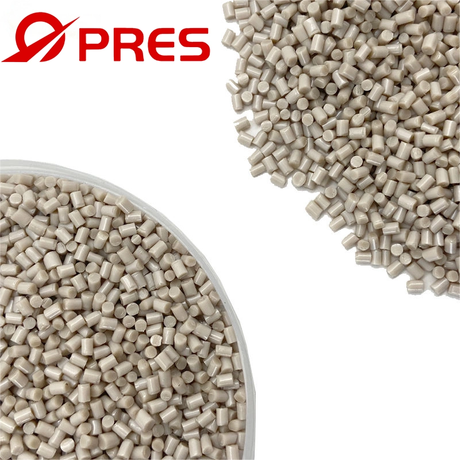
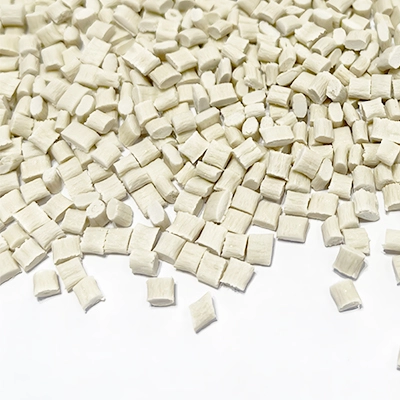
The "Ether" in Polyetherimide is the secret to its flexibility in manufacturing. This oxygen linkage provides molecular mobility, which significantly lowers the melt viscosity. This is why PRES Group can successfully manufacture PEI in various forms, including granules, sheets, rods, tubes, and 3D printing filaments.
| Structural Component | Primary Benefit |
| Aromatic Imide Rings | High-heat resistance, chemical stability, and flame retardancy. |
| Ether Linkages | Improved melt processability and toughness. |
| Molecular Chain Rigidity | High tensile modulus and creep resistance under load. |
Why does PEI outperform standard engineering plastics like Nylon or Polycarbonate? It comes down to the molecular chain entanglement and the absence of weak bonds within the Polyetherimide formula.
Because of its rigid aromatic backbone, PEI has a Glass Transition Temperature ($T_g$) of approximately 217°C. This means that even in long-term exposure to high heat, the polymer chains do not become mobile or lose their shape. For OEM clients producing under-the-hood automotive components or aircraft interior parts, this is a non-negotiable safety feature.
Unlike many other polymers, PEI does not require halogenated additives to achieve flame retardancy. The chemical structure itself is inherently resistant to ignition. It features a high Limiting Oxygen Index (LOI) and extremely low smoke evolution, making it compliant with strict FAA and UL94 V-0 standards.
One area often overlooked in standard technical articles is the hygroscopic nature of PEI. Despite its chemical toughness, the imide groups are sensitive to moisture during the melting phase.
If PEI granules are not dried to a moisture level of less than 0.02% before injection molding or extrusion, the water molecules can cause hydrolytic degradation. This breaks the polymer chains, resulting in:
Reduced impact strength.
Silver streaks on the surface of finished parts.
Loss of transparency.
Expert Insight: At the Dongguan PRES Group facility, we utilize desiccant dryers at 150°C for 4-6 hours before any PEI production run. This ensures the integrity of the Polyetherimide formula remains intact through the heat-intensive manufacturing process.
Understanding the chemistry allows us to better serve our B2B partners. Because PEI is chemically resistant to a wide range of fluids—including automotive fuels, alcohols, and acids—it has become a staple in several high-stakes industries.
The high strength-to-weight ratio provided by PEI is revolutionary. By using PEI sheets and 3D-printed PEI (Ultem™ compatible) parts, manufacturers can reduce aircraft weight, directly leading to fuel efficiency.
The Polyetherimide formula is highly resistant to repeated sterilization cycles. Whether it is steam autoclaving, gamma radiation, or ethylene oxide, PEI maintains its mechanical properties. This makes it ideal for surgical instrument handles and medical imaging equipment.
With a high dielectric strength and stable dissipation factor across a wide range of temperatures and frequencies, PEI is the preferred choice for 5G connectors, burn-in sockets, and printed circuit board (PCB) components.
Choosing the right high-performance plastic is a strategic decision for wholesalers and procurement managers.
| Feature | Polyetherimide (PEI) | Polyetheretherketone (PEEK) | Polyphenylene Sulfide (PPS) |
| Max Service Temp | ~170°C | ~250°C | ~200°C |
| Transparency | Amber/Transparent | Opaque | Opaque |
| Chemical Resistance | Excellent | Superior | Excellent |
| Cost Profile | Moderate/High | Very High | Moderate |
| Best For | Structural/Dielectric | Extreme Chemicals/Heat | Chemical/Automotive |
While PEEK offers higher heat resistance, PEI often provides the best balance of performance and cost-efficiency, especially where transparency or specific dielectric properties are required.
As a forward-thinking Chinese OEM factory, Dongguan PRES Group is investing heavily in the evolution of PEI 3D printing filaments. The ability to print complex geometries with a material that has the same chemical stability as molded PEI is a game-changer for rapid prototyping and low-volume production.
We are also seeing a trend in reinforced PEI. By adding glass fiber or carbon fiber to the PEI matrix, we can further increase the heat deflection temperature and tensile modulus, pushing the limits of what this polymer can achieve.
Choosing an OEM partner for high-performance plastics requires more than just looking at a price list. You need a partner who understands the Polyetherimide formula from the molecular level up to the finished component.
Customization: We offer PEI in granules, rods, sheets, and tubes, tailored to your specific industrial requirements.
Quality Assurance: Our production adheres to ISO 9001 standards, ensuring every batch meets the high-E-E-A-T expectations of global brands.
Global Export Expertise: We specialize in serving international wholesalers and manufacturers, providing seamless logistics and technical support.

Q1: What is the main difference between PEI and PEEK?
A1: PEI is an amorphous polymer, meaning it has a lower mold shrinkage and is often transparent/amber. PEEK is semi-crystalline, offering higher chemical resistance and service temperatures but at a significantly higher cost.
Q2: Can PEI be used for food contact applications?
A2: Yes, many grades of PEI are FDA and NSF compliant, making them suitable for food service equipment and repeated-use kitchenware due to their heat and chemical resistance.
Q3: Why is PEI naturally amber in color?
A3: The amber color is a result of the aromatic imide rings in the Polyetherimide formula. While it can be colored with pigments, its natural state is a transparent amber.
Q4: Is PEI easy to machine?
A4: Yes, compared to other high-performance plastics, PEI rods and sheets exhibit excellent dimensional stability during machining, though carbide tooling is recommended for glass-filled grades.
Q5: How does PEI handle UV exposure?
A5: PEI has excellent inherent UV resistance, making it suitable for outdoor applications and aerospace components exposed to solar radiation.
SpecialChem: Polyetherimide (PEI) Properties & Applications
ResearchGate: Thermal and Mechanical Properties of Polyetherimide Backbones
ScienceDirect: The Role of Imide Rings in Polymer Stability
FAA Reports: Smoke and Toxicity Standards for Aerospace Polymers