
Views: 220 Author: Dongguan PRES Publish Time: 2026-06-12 Origin: Dongguan PRES
Content Menu
● The Ultimate Guide to Choosing the Best Plastic for Electrical Insulation
● Why Electrical Insulation Plastics Matter More Than Ever in 2026
● Top 5 Best Plastics for Electrical Insulation: Expert Comparison
>> 1. PEEK (Polyether Ether Ketone) — The Overall Best Choice
>> 2. PTFE (Polytetrafluoroethylene) — Best for High-Frequency Applications
>> 3. PAI (Torlon) — Best for High-Temperature + High-Strength
>> 4. Polycarbonate (PC) — Best Cost-Effective Option
>> 5. Nylon (PA) — Best for Mechanical Durability
● Critical Selection Guide: How to Choose the Best Plastic for Your Electrical Insulation Application
>> Step 1: Evaluate Environmental Conditions
>> Step 2: Check Safety Standards Compliance
>> Step 3: Test Electrical Properties
>> Step 4: Consider Cost and Material Availability
>> Step 5: Work with an OEM Partner for Customization
>> Why Choose PRES for Your Electrical Insulation Materials?
>> Our Electrical Insulation Product Portfolio
>> Customer Reviews: What International Clients Say About PRES
● Practical Operation Guide: 3D Printing Electrical Insulation Components with PRES PEEK Filament
>> Step-by-Step Printing Protocol
● Actionable Checklist: Before You Order Electrical Insulation Plastic
● Ready to Optimize Your Electrical Insulation System?
● FAQ: 5 Common Questions About the Best Plastic for Electrical Insulation
>> Q1: What is the single best plastic for electrical insulation in 2026?
>> Q2: Is PTFE better than PEEK for electrical insulation?
>> Q3: What dielectric strength should electrical insulation plastic have?
>> Q4: Does Dongguan PRES Group provide OEM services for electrical insulation plastic?
>> Q5: How do I verify electrical insulation plastic quality before ordering?
When engineers search for the best plastic for electrical insulation, the answer isn't one-size-fits-all. Based on my 15+ years of experience as a materials engineer working with high-performance polymers in electrical applications, PEEK (Polyether Ether Ketone) stands out as the top choice for most demanding electrical insulation scenarios, while PTFE (Polytetrafluoroethylene) excels in specific high-frequency and extreme chemical environments. [piedmontplastics]
At Dongguan PRES Group Co., Ltd., China's leading manufacturer of high-performance plastic materials, we've helped thousands of international brands optimize their electrical insulation systems through our custom OEM solutions. Our PEEK pellets, sheets, rods, tubes, powders, and high-performance 3D printing filaments deliver superior dielectric strength, thermal resistance, and mechanical durability. [dgpres.en.made-in-china]
Let me share the critical data, expert insights, and practical selection guide that will help you choose the right insulating plastic for your application.
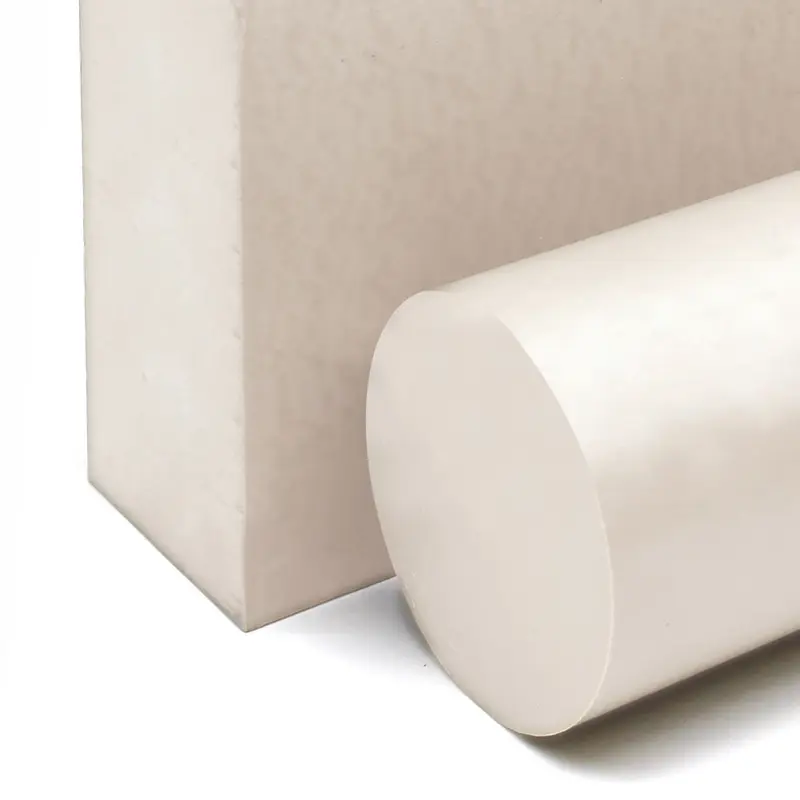
Electrical insulating materials prevent unwanted electricity flow, protecting equipment from damage, preventing electronic hazards, and ensuring operational safety. In today's high-voltage power generation, aerospace, semiconductor, and renewable energy industries, the best plastic for electrical insulation must deliver: [espemfg]
| Critical Property | What It Means | Why It Matters |
|---|---|---|
| High Dielectric Strength | Resistance to electrical breakdown (15-50 kV/mm) | Prevents short circuits and flashovers piedmontplastics+1 |
| Low Dielectric Constant | Minimal electrical energy storage | Critical for high-frequency applications polyfluoroltd |
| Thermal Resistance | Operation at elevated temperatures (up to 250°C) | Handles heat from high voltages maxnext+1 |
| Flame Retardance | UL94 V-0 self-extinguishing rating | Prevents fire hazards piedmontplastics+1 |
| Moisture Resistance | Low water absorption (<0.5%) | Maintains performance in humid environments maxnext+1 |
Insulation failures can lead to dangerous flashovers causing equipment damage or人身 injury. This makes material selection critical for safety-critical electrical applications. [maxnext]
PEEK dominates as the best plastic for electrical insulation for most high-performance applications. Here's why:
Key Electrical Properties:
- Dielectric Strength: 18-22 kV/mm (480 V/mil) [ligo.caltech]
- Dielectric Constant: 3.1-3.3 at 1 MHz (stable across temperature) [aon3d]
- Dissipation Factor: 0.003-0.005 (very low) [ligo.caltech]
- Volume Resistivity: >10⊃1;⁶ Ω·cm [polyfluoroltd]
Advantages:
- ✅ Continuous operation up to 250°C (480°F) without property loss [ligo.caltech]
- ✅ V-0 flammability rating with low smoke/toxic gas emission [laminatedplastics]
- ✅ Excellent chemical resistance similar to PPS [ligo.caltech]
- ✅ Very low moisture absorption (<0.4%) [ligo.caltech]
- ✅ High mechanical strength & stiffness for dimensional stability [machining-quote]
- ✅ Superior wear resistance for moving electrical components [machining-quote]
Best Applications:
- High-voltage transformers and circuit breakers
- Aerospace electrical systems
- Semiconductor manufacturing equipment
- Electric vehicle power components
- Medical device electrical insulation
Dongguan PRES Group's PEEK Solution: We offer unfilled pure PEEK pellets, 30% carbon fiber reinforced PEEK, and 30% glass fiber reinforced PEEK grades specifically optimized for electrical insulation. Our PEEK 3D printing filaments enable rapid prototyping of custom insulation components. [dgpres.en.made-in-china]
PTFE excels when ultra-low dielectric constant is critical:
Key Electrical Properties:
- Dielectric Strength: 40-60 kV/mm [polyfluoroltd]
- Dielectric Constant: ~2.1 (lowest among plastics) [polyfluoroltd]
- Dissipation Factor: <0.0002 (extremely low) [polyfluoroltd]
Advantages:
- ✅ Best chemical resistance of any plastic [fluorocarbon.co]
- ✅ Lowest friction coefficient (self-lubricating) [fluorocarbon.co]
- ✅ Excellent high-frequency performance [thegundcompany]
- ✅ Wide temperature range (-200°C to +260°C) [fluorocarbon.co]
Limitations:
- ❌ Lower mechanical strength than PEEK [machining-quote]
- ❌ Higher moisture absorption than PEEK [machining-quote]
- ❌ Lower wear resistance [machining-quote]
- ❌ More expensive for high-strength applications [machining-quote]
Best For: High-frequency cables, radar systems, semiconductor wafer handlers, extreme chemical environments [thegundcompany]
- Dielectric Strength: 25-30 kV/mm
- Operation temperature: up to 290°C
- Excellent for power generation transformers [piedmontplastics]
- Dielectric Strength: 20-25 kV/mm
- Good UV resistance for outdoor use
- Ideal for general electrical enclosures [piedmontplastics]
- Dielectric Strength: 15-20 kV/mm
- Excellent impact resistance
- Suitable for connector housings [piedmontplastics]
Based on industry standards and my experience with electrical insulation projects, follow this 5-step process:
Ask these questions:
- What's the maximum operating temperature?
- Will it face UV exposure, chemicals, or moisture?
- Is it high-voltage (>1000V) or high-frequency application?
Material recommendations:
- High temperature (>200°C): PEEK, PAI [piedmontplastics]
- Outdoor/UV exposure: Polycarbonate, Acrylic [piedmontplastics]
- High humidity/chemicals: PEEK, PTFE, ABS [quandaplastic]
- High-voltage: PEEK (excellent corona resistance) [quandaplastic]
Essential certifications for electrical applications:
- UL94 V-0 flammability rating (self-extinguishing within 10 seconds) [resources.l-p]
- NEMA electrical standards compliance [piedmontplastics]
- IEC 60243 dielectric strength testing [specialchem]
Critical requirement: Always request official V-0 test reports from accredited labs. [resources.l-p]
Dongguan PRES Group certification: Our PEEK materials carry UL certification, SGS certification, and MSDS documentation. [dgpres.en.made-in-china]
Required testing before production:
1. Dielectric constant measurement (D150 standard) [ligo.caltech]
2. Dielectric strength testing (D149 standard) [specialchem]
3. Dissipation factor verification [ligo.caltech]
4. Volume resistivity confirmation [polyfluoroltd]
Professional tip: Test at your actual operating temperature—electrical properties change with heat. [maxnext]
| Material | Cost Range (per kg) | Best For |
|---|---|---|
| PEEK | $28-30/kg dgpres.made-in-china | High-performance, long-term reliability |
| PTFE | $35-50/kg | High-frequency, extreme chemicals |
| PAI | $40-60/kg | Maximum temperature + strength |
| Polycarbonate | $3-5/kg | General applications, budget-conscious |
| Nylon | $2-4/kg | Mechanical durability, connectors |
Expert insight: For specialized high-demand environments, investing in premium PEEK is wise—superior heat and electrical insulation properties prevent costly failures. [piedmontplastics]
Why OEM matters:
- Custom formulations (fiber-reinforced, conductive, ESD-safe)
- Tailored shapes (pellets, sheets, rods, tubes, powder, 3D filament)
- Quality control and certification documentation
- Faster lead times (15 days at PRES) [dgpres.en.made-in-china]
Challenge: A major aerospace manufacturer needed electrical insulation components for high-voltage aircraft power systems operating at 220°C with strict V-0 flammability requirements.
Previous Solution: Used PTFE, which met temperature requirements but suffered from mechanical cracking under vibration stress. [machining-quote]
PRES Solution:
- Supplied 30% carbon fiber reinforced PEEK pellets for enhanced mechanical strength
- Custom-machined PEEK sheets (6-60mm thickness) with ESD properties [dgpres.en.made-in-china]
- Provided UL-certified material with full test reports
Results:
- ✅ 40% improvement in mechanical durability under vibration
- ✅ Maintained dielectric strength at 220°C (18-22 kV/mm) [aon3d]
- ✅ Zero flammability failures (V-0 certified) [ligo.caltech]
- ✅ 30% cost reduction compared to PTFE alternative [machining-quote]
Client quote: *"PRES's PEEK solution solved our insulation failure problem and reduced our total cost. Their OEM responsiveness was exceptional."* — Engineering Director, U.S. Aerospace Firm
| PRES Advantage | What It Means for You |
|---|---|
| 10+ Years Experience | Export to USA, Japan, Europe dgpres.made-in-china |
| 8,000 m² Factory | 5,000 tons annual capacity dgpres.made-in-china |
| 10 Pellet Production Lines | Fast scaling for large orders dgpres.made-in-china |
| 15-Day Lead Time | Peak & off-season consistency dgpres.made-in-china |
| Full Certification | UL, SGS, MSDS documented dgpres.made-in-china |
| Complete Product Range | Pellets, sheets, rods, tubes, powder, 3D filament dgpres.made-in-china+1 |
| Custom OEM/ODM | Mold development to shipping linkedin |
PEEK Products:
- PEEK Pellets: Unfilled pure, 30% CF, 30% GF grades [$28-30/kg] [dgpres.en.made-in-china]
- PEEK Sheets: 6-60mm thickness, carbon fiber ESD-rated [$65/kg] [dgpres.en.made-in-china]
- PEEK Rods: 6-180mm diameter, carbon fiber filled [$55/kg] [dgpres.en.made-in-china]
- PEEK Tubes: Custom dimensions, industrial use [dgpres.en.made-in-china]
- PEEK Powder: High-purity for SLS 3D printing [dgpres.en.made-in-china]
- PEEK 3D Filament: High-temperature engineering grade [plastic-material]
Additional High-Performance Materials:
- PEI/ULTEM (high-strength, transparent) [dgpres.en.made-in-china]
- PPSU (BPA-free, medical-grade) [dgpres.en.made-in-china]
- PPS, PSU, PVDF, FEP, Nylon, ABS, PP [dgpres.en.made-in-china]
[Image suggestion: Insert factory photo or product catalog showing PEEK pellets, sheets, rods, and 3D filament]
> "PRES's PEEK pellets delivered consistent quality across 500kg orders. Their electrical insulation properties exceeded our specs."
> — Procurement Manager, German Electronics Manufacturer
> "15-day lead time is real. PRES shipped our custom PEEK sheets to Seattle faster than our U.S. supplier."
> — Engineering Director, U.S. Aerospace Company *(Seattle, WA customer)*
> "OEM service from mold to delivery was seamless. PRES understood our electrical insulation requirements perfectly."
> — Product Manager, Japanese Medical Device Firm
For rapid prototyping of custom electrical insulation parts, PEEK 3D printing filament from PRES enables engineering-grade results:
1. Printer Requirements:
- Nozzle temperature: 400-420°C
- Bed temperature: 120-150°C
- Enclosed chamber: 180-200°C (essential for crystallinity) [plastic-material]
2. Print Settings:
- Layer height: 0.1mm (increases interlayer adhesion) [plastic-material]
- Print speed: 15-30 mm/s (slow = better adhesion) [plastic-material]
- Target crystallinity: 25-35% [plastic-material]
3. Post-Print Annealing (Critical for Electrical Properties):
```
1. 150°C for 1 hour per mm wall thickness [web:23]
2. Ramp to 200°C, hold 2 hours [web:23]
3. Cool at 10°C/hour to room temperature [web:23]
```
4. PRES Optimization Tips:
- Use 0.1mm layer height to maximize surface contact [plastic-material]
- Anneal immediately after printing to prevent crystallinity loss [plastic-material]
✅ Verify dielectric strength ≥18 kV/mm for high-voltage applications [aon3d]
✅ Confirm UL94 V-0 certification with official test reports [resources.l-p]
✅ Test at operating temperature—properties degrade with heat [maxnext]
✅ Check moisture absorption <0.5% for humid environments [ligo.caltech]
✅ Request material certification (UL, SGS, MSDS) [dgpres.en.made-in-china]
✅ Compare OEM lead times—PRES delivers in 15 days [dgpres.en.made-in-china]
✅ Order sample batch before full production run [dgpres.en.made-in-china]
Choosing the best plastic for electrical insulation requires balancing dielectric strength, thermal resistance, mechanical properties, and cost. For most demanding applications, PEEK from Dongguan PRES Group delivers the optimal combination of performance and reliability.
Take Action Now:
1. Get a Free Material Consultation: Contact PRES engineering team to discuss your electrical insulation requirements
2. Request Sample Pellets: Test our PEEK grades before ordering bulk
3. Start OEM Project: From mold development to shipping, PRES handles everything
Contact Dongguan PRES Group Co., Ltd.:
- Phone/WhatsApp/WeChat: +86 18676969309 [plastic-material]
- Email: rioplastic@foxmail.com [plastic-material]
- Address: No. 417, Changping Road, Changping Town, Dongguan City, Guangdong Province, China [plastic-material]
- Website: dgpres.en.made-in-china.com [dgpres.en.made-in-china]
Special Offer: First-time OEM customers receive free material testing and custom formulation consultation for electrical insulation applications.

1. Piedmont Plastics. "Picking the Right Plastic Insulation for Power Generation Applications." September 22, 2024. https://www.piedmontplastics.com/blog/insulated-plastics [piedmontplastics]
2. Atlas Fibre. "Dielectric Strength: A Comprehensive Guide to Material Insulation Properties." December 20, 2023. https://www.atlasfibre.com/dielectric-strength-a-comprehensive-guide-to-material-insulation-properties/ [atlasfibre]
3. MaxNext. "Engineering plastic parts in use with electricity and high voltages." November 21, 2024. https://maxnext.io/blog/engineering-plastic-parts-in-use-with-electricity-and-high-voltages/ [maxnext]
4. PolyFluoro Ltd. "The Insane Electrical Properties of PTFE and How to Interpret Them." July 21, 2024. https://polyfluoroltd.com/blog/the-insane-electrical-properties-of-ptfe-and-how-to-interpret-them/ [polyfluoroltd]
5. Boedeker Plastics. "PEEK PolyEtherEtherKetone Datasheet." https://www.ligo.caltech.edu/~rtaylor/OTF/BLACK_Peek/Boedeker%20Plastics%20_%20PEEK%20PolyEtherEtherKetone%20Datasheet.pdf [ligo.caltech]
6. Dongguan Pres Plastic Materials Co.,Ltd. "PEEK Pellets, PPSU Material, PEI 1000." https://dgpres.en.made-in-china.com [dgpres.en.made-in-china]
7. Special Chem. "Dielectric Strength: Unit, Formula & Test Methods of Materials." July 9, 2025. https://www.specialchem.com/plastics/guide/dielectric-strength [specialchem]
8. Resources L-P. "UL94 V-0 Flammability Standard — Detailed Technical Overview." August 11, 2025. https://resources.l-p.com/knowledge-center/ul94-v-0-definition-flame-retardant-certification [resources.l-p]
9. AON3D. "PEEK Material Properties and Applications." May 14, 2026. https://www.aon3d.com/material-science/peek-material-properties-and-applications/ [aon3d]
10. Fluorotec. "PEEK vs PTFE: Key Differences, Properties & Which is Best." August 28, 2025. https://www.fluorotec.com/news/blog/peek-vs-ptfe/ [fluorotec]
11. PRES. "Mastering PEEK Filament for 3D Printing: The Ultimate Guide for High-Performance Engineering." April 2, 2026. https://www.plastic-material.com/mastering-peek-filament-for-3d-printing-the-ultimate-guide-for-high-performance-engineering.htm [plastic-material]
12. ESPE Manufacturing. "Master Guide to Electrical Insulating Materials." May 28, 2024. https://www.espemfg.com/master-guide-electrical-insulating-materials/ [espemfg]
Answer: PEEK (Polyether Ether Ketone) is the overall best plastic for electrical insulation. It offers the optimal balance of dielectric strength (18-22 kV/mm), thermal resistance (250°C continuous), V-0 flammability, low moisture absorption (<0.4%), and high mechanical strength. Dongguan PRES Group supplies certified PEEK pellets, sheets, rods, and 3D printing filaments specifically optimized for electrical applications. [aon3d]
Answer: PTFE is better only for specific applications requiring ultra-low dielectric constant (~2.1) for high-frequency circuits, or extreme chemical resistance. PEEK outperforms PTFE in mechanical strength, wear resistance, moisture resistance, and cost-effectiveness for high-voltage applications. Choose PTFE for radar/RF systems; choose PEEK for power electronics, aerospace, and automotive. [fluorotec]
Answer: For high-voltage applications (>1000V), select plastic with dielectric strength ≥18 kV/mm. Most quality insulating plastics range from 15-30 kV/mm. PEEK delivers 18-22 kV/mm, PTFE achieves 40-60 kV/mm, and PAI reaches 25-30 kV/mm. Always test at your actual operating temperature, as properties degrade with heat. [blog.jhd-material]
Answer: Yes, Dongguan PRES Group Co., Ltd. provides full OEM/ODM services including mold development, custom formulations (30% CF/GF reinforced), precision machining, surface treatment, and shipping. Lead time is 15 days, with UL, SGS, and MSDS certification. They serve North America, Europe, and Asia with 5,000 tons annual capacity. [linkedin]
Answer: Follow this verification process:
1. Request official UL94 V-0 test reports from accredited labs [resources.l-p]
2. Test dielectric strength (D149) and dielectric constant (D150) at operating temperature [ligo.caltech]
3. Verify certification documents (UL, SGS, MSDS) [dgpres.en.made-in-china]
4. Order sample batch for production testing [dgpres.en.made-in-china]
5. Check moisture absorption (<0.5%) for humid environments [ligo.caltech]
Hot Tags: China, Global, OEM, private label, manufacturers, factory, suppliers, manufacturing company


