
Views: 254 Author: Dongguan PRES Publish Time: 2026-09-02 Origin: Site


Content Menu
● Why PRES PEEK Materials Are Selected for High-Heat Projects
● PEEK Temperature Range at a Glance
● Continuous Service Temperature Is Not the Melting Point
>> A Simple Engineering Example
● Understanding the Four Critical PEEK Temperature Limits
>> 1. Glass Transition Temperature: Around 143°C
>> 2. Continuous Service Temperature: About 240–260°C
>> 3. Short-Term Temperature Exposure
>> 4. Melting Point: Around 343°C
● Why Grade Selection Changes the PEEK Temperature Range
● PEEK Temperature Range for Sheets, Rods, Tubes, Pellets, Powder, and Filament
>> PEEK Sheets and Rods for Machining
>> PEEK Tubes for Fluid and Electrical Applications
>> PEEK Pellets and Powder for Processing
● How to Specify PEEK for a High-Temperature Application
● Key Takeaway: Design for Service, Not for Melting Point
● FAQ
>> 1. What is the continuous service temperature of PEEK?
>> 2. What is the melting point of PEEK?
>> 3. Can PEEK operate above its glass transition temperature?
>> 4. Is 260°C always safe for a PEEK component?
>> 5. Does carbon-filled PEEK have a higher melting point?
>> 6. Can PEEK 3D printed parts withstand the same temperature as molded PEEK?
>> 7. Is PEEK suitable for steam and hot-water applications?
Dongguan PRES Group Co., Ltd. is a China-based manufacturer and OEM partner for high-performance plastics, including PEEK granules, sheets, rods, tubes, powders, and high-performance 3D printing filaments. For international brands, wholesalers, and manufacturers, one of the most important questions we help answer is: What is the real PEEK temperature range in service—not simply its melting point?
This distinction matters. PEEK has a melting point of approximately 343°C (649°F), but this does not mean a finished PEEK component can operate continuously at 343°C. In real engineering applications, PEEK continuous service temperature is typically specified around 240–260°C (464–500°F), depending on grade, load, environment, processing history, geometry, and required service life.
For buyers sourcing PEEK materials or custom OEM components, understanding the difference between continuous-use temperature, glass transition temperature, short-term heat exposure, and melting point is essential for avoiding premature deformation, loss of strength, dimensional drift, and unexpected field failures.
At PRES, we work with manufacturers that need more than a material catalog. They need a practical answer to whether a PEEK part will remain functional after thousands of hours in hot air, steam, chemicals, pressure, cyclic loading, or electrically demanding environments.
Our PEEK product range supports multiple processing routes and application requirements:
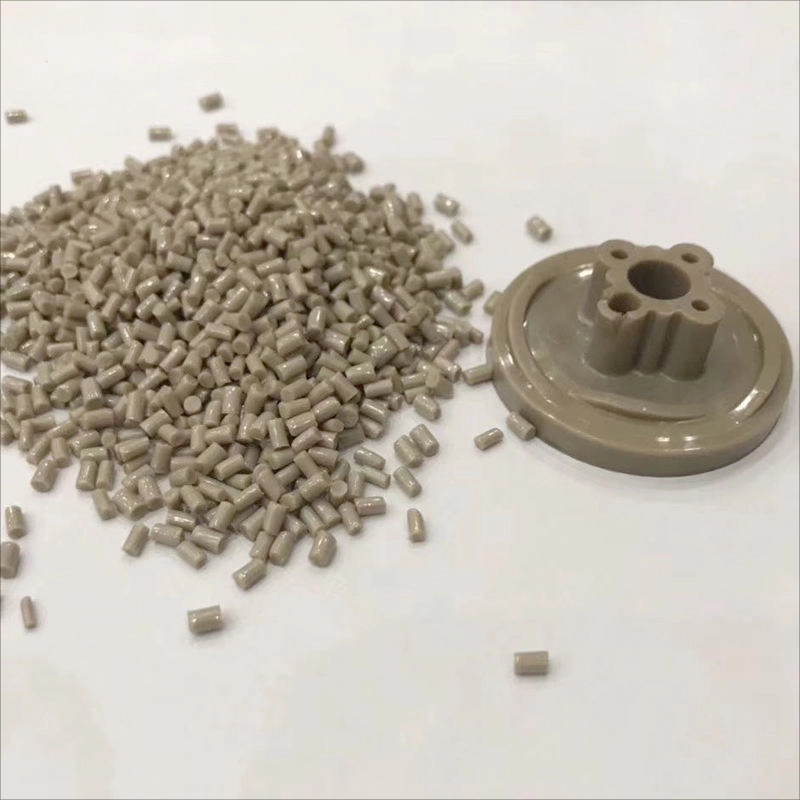
- PEEK resin pellets/granules for injection molding and extrusion
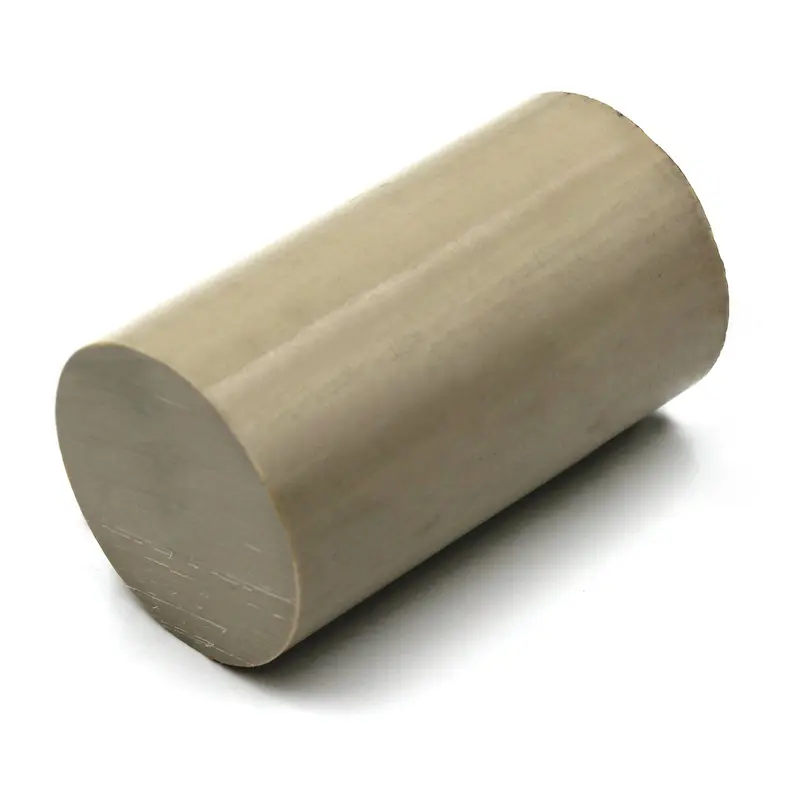
- PEEK sheets and rods for CNC-machined components
- PEEK tubes for fluid handling, insulation, medical, and industrial assemblies
- PEEK powder for compression molding, coatings, sintering, and specialized processing
- PEEK 3D printing filament for high-temperature additive manufacturing
- OEM supply for brands, distributors, processors, and industrial equipment manufacturers
In our experience, a successful high-temperature PEEK project starts by defining the actual operating condition. A material selected only because it "melts at 343°C" can still be the wrong material if the part is under sustained stress at 250°C, exposed to steam, or produced with insufficient crystallinity.
The right question is not: "What is the highest temperature PEEK can survive?"
The right question is: "What temperature can this specific PEEK grade and component withstand for the required time, under the actual mechanical and chemical load?"
PEEK, or polyether ether ketone, is a semi-crystalline high-performance thermoplastic in the PAEK family. Its thermal behavior comes from both its polymer structure and its crystalline morphology.
| Thermal Property | Typical PEEK Value | What It Means for Design |
|---|---|---|
| Low-temperature service | About -40°C to -50°C; some limited-use conditions lower | PEEK can retain useful performance in cold industrial environments |
| Glass transition temperature, Tg | About 143°C | The amorphous regions begin to soften; stiffness and creep resistance must be evaluated |
| Heat deflection temperature | Grade- and load-dependent | Indicates resistance to deflection under a defined laboratory load, not a universal service limit |
| Continuous service temperature | Commonly 240–260°C | The practical long-term operating zone for many PEEK applications |
| Short-term high-temperature exposure | Can exceed continuous-use limits in controlled conditions | Must be validated for duration, load, oxygen level, and part geometry |
| Melting point, Tm | About 340–343°C | Crystalline regions melt; this is a processing-related limit, not a continuous-use rating |
| Typical melt-processing range | Approximately 360–420°C | Common processing window for molding, extrusion, and high-temperature additive manufacturing |
Typical unfilled PEEK data commonly place the glass-transition temperature near 143°C, the melting point near 343°C, and continuous-use capability in the 240–260°C range. Exact values vary between grades, test standards, manufacturers, and material conditioning.
The phrase PEEK continuous service temperature describes the temperature at which a PEEK component can operate for an extended period while retaining an acceptable level of mechanical, dimensional, and functional performance.
For many industrial PEEK grades, that rating is around 250°C, with some technical references listing 240°C or 260°C depending on the grade and qualification method.
By contrast, the PEEK melting point is the temperature range at which PEEK's crystalline domains melt. This occurs at approximately 343°C. At this point, PEEK is no longer acting as a stable, load-bearing solid. It becomes a molten thermoplastic material suitable for processing rather than continuous mechanical service.
Imagine a PEEK valve seat used in a hot chemical-processing system:
- The system operates at 230°C for 8,000 hours per year.
- The part experiences compressive force, pressure cycling, and chemical contact.
- The material's melting point is 343°C.
- However, the part's design decision should be based on creep resistance, chemical exposure, load, thermal expansion, and long-term retention at 230°C—not on the fact that PEEK does not melt until 343°C.
A PEEK grade can remain solid far below its melting point while still losing enough stiffness or experiencing enough creep to compromise a seal, bearing clearance, electrical connection, or precision-machined tolerance.
The glass transition temperature, or Tg, is often misunderstood. At roughly 143°C, PEEK does not melt. Instead, its amorphous polymer regions become more mobile.
For a semi-crystalline polymer such as PEEK, the crystalline structure still contributes to mechanical integrity above Tg. This is why PEEK can continue operating well above 143°C. However, designers should expect changes in stiffness, creep behavior, and dimensional response as temperature rises beyond this point.
This is especially important for:
- Thin PEEK components
- Tight-tolerance machined parts
- Clips, snap fits, and springs
- Bearings and bushings
- Components under continuous compressive stress
- Electrical connectors with contact-force requirements
The continuous-use range is the most important thermal figure for most engineers and sourcing teams. It represents the high-temperature zone where properly selected and processed PEEK may deliver long-term performance.
However, it is not a universal guarantee. A PEEK part at 260°C with no load in dry air is very different from a highly loaded PEEK seal at 260°C in steam, pressure, abrasive media, or a chemically aggressive fluid.
Before final material approval, evaluate:
1. Service duration: Hours, months, or years at temperature
2. Mechanical load: Tensile, compressive, flexural, impact, or cyclic loading
3. Part geometry: Thin walls, sharp corners, unsupported spans, and small sealing lips raise risk
4. Thermal cycling: Repeated heating and cooling can accelerate stress and dimensional change
5. Chemical environment: Hot water, steam, fuels, acids, alkalis, and solvents may affect performance differently
6. Material grade: Unfilled, glass-filled, carbon-fiber-filled, bearing-grade, and medical-grade PEEK behave differently
7. Processing quality: Crystallinity, residual stress, voids, annealing, and moisture control matter
PEEK can tolerate short excursions above its normal continuous service temperature in some applications. But "short-term" must be defined by actual data.
A brief temperature spike during equipment startup may be acceptable. A 20-minute thermal excursion during each production cycle may not be. Repeated exposure can cause cumulative changes, including oxidation, stress relaxation, warpage, creep, and loss of sealing force.
At PRES, we recommend treating short-term exposure as an engineering validation topic rather than a marketing claim. The evaluation should include the maximum temperature, duration, number of cycles, applied load, atmosphere, and required post-exposure properties.
The PEEK melting point is highly relevant to manufacturing. It determines the high-temperature capability required for extrusion, injection molding, compression molding, and 3D printing.
PEEK is commonly processed at temperatures above its melting point, often within an approximate 360–420°C melt-processing window. The final temperature profile must be matched to the specific resin, equipment, tooling, residence time, and intended crystallinity.
For end-use design, however, the melting point is a boundary—not a recommended operating target.
Not all PEEK materials deliver the same thermal performance in the same component. The base polymer may have similar thermal transitions, but fillers and formulation strongly influence stiffness, thermal expansion, wear, conductivity, and load-bearing behavior.
| PEEK Grade Type | High-Temperature Strength | Thermal Expansion | Typical Considerations |
|---|---|---|---|
| Unfilled PEEK | Strong all-round performance | Higher than reinforced grades | Good chemical resistance, electrical insulation, and processability |
| Glass-filled PEEK | Improved stiffness and dimensional stability | Reduced expansion | Suitable where rigidity and stability are priorities |
| Carbon-fiber-filled PEEK | High stiffness and strong load-bearing potential | Often very low in the fiber direction | Useful for structural, wear, and high-load applications; anisotropy must be considered |
| Bearing-grade PEEK | Optimized for friction and wear | Grade-specific | Often used for bushings, seals, thrust washers, and moving parts |
| PEEK filament for 3D printing | Depends on print quality and crystallinity | Process-dependent | Chamber temperature, layer bonding, and annealing are critical |
Reinforced grades may improve dimensional stability and reduce creep under load, but they can also introduce direction-dependent behavior. For example, carbon-fiber-filled PEEK can exhibit different expansion and mechanical properties along and across the fiber orientation.
That is why our OEM discussions at PRES begin with the component's load path, machining requirements, thermal direction, and assembly tolerance—not simply with a request for "high-temperature PEEK."
PEEK sheets and rods are widely used for CNC-machined seals, manifolds, bearing cages, compressor components, electrical insulators, and semiconductor fixtures.
For machined PEEK parts operating at elevated temperature, pay special attention to:
- Material stress-relief or annealing requirements
- Thermal expansion allowance in the drawing
- Wall thickness and unsupported lengths
- Mating materials such as steel, aluminum, ceramics, or glass
- Surface finish where sealing or sliding is required
A component machined accurately at room temperature may change clearance significantly at 200°C or 250°C. This is particularly important when PEEK is assembled into metal housings.
PEEK tubing is valued in high-temperature fluid transfer, analytical systems, electrical insulation, and specialty industrial equipment. Its temperature capability is affected by tube diameter, wall thickness, internal pressure, bend radius, fluid chemistry, and fitting design.
A tube's temperature limit should never be evaluated separately from its pressure rating. Increasing temperature generally reduces allowable pressure and can increase creep risk, particularly over long service periods.
For PEEK granules and powders, the final part's thermal behavior depends not only on resin chemistry but also on processing conditions.
Key processing variables include:
- Melt temperature
- Mold or tool temperature
- Cooling rate
- Drying condition
- Residence time
- Post-processing annealing
- Final crystallinity
Poor thermal control can create inconsistent crystallinity, internal stress, poor layer bonding, surface defects, or uneven shrinkage. These issues may reduce high-temperature performance even if the raw resin itself is high quality.
PEEK 3D printing is increasingly used for low-volume production, functional prototypes, lightweight fixtures, and complex geometries. But PEEK filament does not automatically produce a high-performance PEEK part.
To approach the expected PEEK temperature range in a printed part, the process normally requires:
1. A high-temperature nozzle capable of stable melt control
2. A heated build chamber or controlled thermal environment
3. A suitably heated build plate
4. Low-moisture filament handling
5. Printing parameters that support layer bonding
6. Controlled cooling and, when appropriate, annealing
7. Part-specific testing for strength, warpage, porosity, and dimensional stability
For critical applications, test printed PEEK separately from injection-molded or extruded PEEK. The same material name does not guarantee identical performance.
A strong purchase inquiry gives the material supplier enough information to recommend the right form and grade. Instead of asking only for "PEEK heat resistance," provide a performance brief.
Use this practical checklist:
1. State the continuous operating temperature and maximum temperature spike
2. Define the required service life, such as 1,000, 5,000, or 20,000 hours
3. Describe the mechanical load and whether it is constant, cyclic, or impact-related
4. List all chemicals, fluids, steam, humidity, and cleaning agents
5. Provide the component drawing, tolerance requirements, and mating materials
6. Confirm the production process, such as injection molding, machining, extrusion, compression molding, or 3D printing
7. Identify compliance needs, including industry-specific, food-contact, medical, flame, electrical, or traceability requirements
8. Request validation samples before moving to volume production
This approach prevents a common sourcing failure: selecting PEEK based on a broad temperature claim, then discovering that the finished component requires a reinforced grade, a different geometry, annealing, or a tighter processing specification.
The most useful way to define the PEEK temperature range is to separate material transitions from real component performance:
- Around 143°C: PEEK passes its glass transition temperature; stiffness and creep behavior require closer evaluation
- Around 240–260°C: This is the common long-term continuous service range for many PEEK grades and applications
- Around 343°C: PEEK reaches its melting point; this supports processing, not sustained structural service
- Above approximately 360°C: PEEK is commonly processed in specialized high-temperature equipment
PEEK's exceptional thermal capability is real, but it only creates value when material grade, processing method, component design, and actual operating conditions are aligned.
Contact Dongguan PRES Group Co., Ltd. to discuss your PEEK pellet, sheet, rod, tube, powder, or 3D printing filament requirements. Share your drawing, target temperature, operating environment, annual volume, and required material form, and our team can help you develop a more reliable OEM material and component solution.
For many standard PEEK grades, the continuous service temperature is commonly stated as approximately 240–260°C (464–500°F). The appropriate limit for a specific part depends on load, exposure time, environment, grade, processing quality, and required property retention.
PEEK typically has a melting point of approximately 340–343°C (644–649°F). This is the point where its crystalline structure melts and is not the same as a recommended continuous operating temperature.
Yes. PEEK has a glass transition temperature near 143°C, but because it is semi-crystalline, it can maintain useful mechanical performance above Tg. Still, stiffness, creep resistance, and dimensional stability must be evaluated for the exact load and design.
No. A 260°C rating is not universal. A lightly loaded, well-designed component in dry air may perform very differently from a loaded seal or bearing exposed to hot steam, chemicals, pressure, vibration, or repeated thermal cycling.
Carbon-fiber reinforcement can improve stiffness, reduce thermal expansion, and improve load-bearing behavior, but it does not turn PEEK into a different base polymer with an entirely different melting-point class. The real advantage is often improved performance under load and better dimensional stability.
Not automatically. Printed PEEK performance depends on printer capability, chamber temperature, interlayer bonding, void content, crystallinity, cooling conditions, and post-processing. Critical printed parts should be tested in their final-use condition.
PEEK is widely used in demanding hot-water and steam-related environments, but suitability depends on the grade, pressure, exposure duration, load, geometry, and the complete chemical environment. Application-specific validation is recommended.
1. HPP Performance. [Technical Data Sheet: PEEK]. Provides reported PEEK thermal data including a melting range of 340–343°C and continuous-use temperature of 240°C. [hpp-performance]
2. SSP Seals. [PEEK Material Data Sheets]. Lists a melting point of 340°C and maximum service temperature values of 250°C for referenced PEEK grades. [asset.sspseals]
3. Laminated Plastics. [PEEK Technical Data Sheet]. States continuous use to 250°C/480°F and a melting-point figure near 340°C. [laminatedplastics]
4. Wefapress. [PEEK Technical Data Sheet]. Lists a constant application temperature of 250°C and related thermal properties. [wefapress]
5. Ready Plastics. [PEEK Properties and Datasheet]. Discusses a 250°C continuous-use ceiling, Tg near 143°C, crystalline melting point near 343°C, and the role of crystallinity above Tg. [readyplastics]
6. Patsnap Eureka. [PEEK Continuous Use High Temperature: Thermal Performance]. Summarizes commonly reported PEEK Tg, melting-point, continuous-use, and melt-processing ranges. [eureka.patsnap]
7. Jekin Polymer. [PEEK Technical Datasheet]. Lists a maximum continuous service temperature of 260°C and a melting point of about 343°C. [jekinpolymer]
Hot Tags: China, Global, OEM, private label, manufacturers, factory, suppliers, manufacturing company


