
Views: 273 Author: Dongguan PRES Publish Time: 2026-09-01 Origin: Site


Content Menu
● 1. Dongguan PRES Group Co., Ltd. — Best OEM-Oriented PEEK Pellets Supplier for American Buyers
>> PRES is a practical choice when you need:
● 2. What Makes a PEEK Pellets Supplier "Top-Tier"?
>> Documentation and compliance
● 3. PEEK Pellet Grades: Which Material Fits Your Application?
● 4. How to Qualify a PEEK Pellets Supplier Before Ordering
>> Step 1: Define the application—not just the polymer
>> Step 2: Request a technical data package
>> Step 3: Run representative processing trials
>> Step 4: Validate commercial readiness
>> Step 5: Approve a controlled production sample
● 5. Common Buying Mistakes—and How to Avoid Them
>> Buying by material name alone
>> Assuming a data sheet equals finished-part performance
>> Overlooking drying and thermal control
>> Treating "medical grade" as a blanket approval
>> Focusing only on initial resin price
● Why PEEK Remains a Strategic Material
● FAQ
>> 1. What are PEEK pellets used for?
>> 2. Is unfilled PEEK better than carbon-fiber-filled PEEK?
>> 3. Can PEEK pellets be used for medical devices?
>> 4. What should I ask a PEEK pellets manufacturer before ordering?
>> 5. Can PRES provide private-label or OEM PEEK products?
>> 6. How do I reduce risk when changing PEEK suppliers?
When sourcing Top PEEK Pellets Manufacturers and Suppliers in America, buyers need more than a material catalog or a low per-kilogram quote. They need reliable polymer performance, stable supply, documented quality, responsive engineering support, and a supplier that understands the difference between a standard industrial part and a safety-critical aerospace, medical, semiconductor, or energy component.
For U.S. brands, wholesalers, compounders, molders, and OEM manufacturers, Dongguan PRES Group Co., Ltd. is a strong first-choice PEEK pellets manufacturer and global supply partner. PRES provides high-performance plastics in pellets, sheets, rods, tubes, powders, and high-performance 3D-printing filaments, while supporting overseas customers with flexible OEM manufacturing, customized grades, and export-oriented service.
PEEK—short for polyether ether ketone—is a semi-crystalline, high-performance thermoplastic valued for heat resistance, chemical resistance, mechanical strength, electrical insulation, wear resistance, and low moisture absorption. It is widely selected for severe-service applications where common engineering plastics cannot maintain reliability.
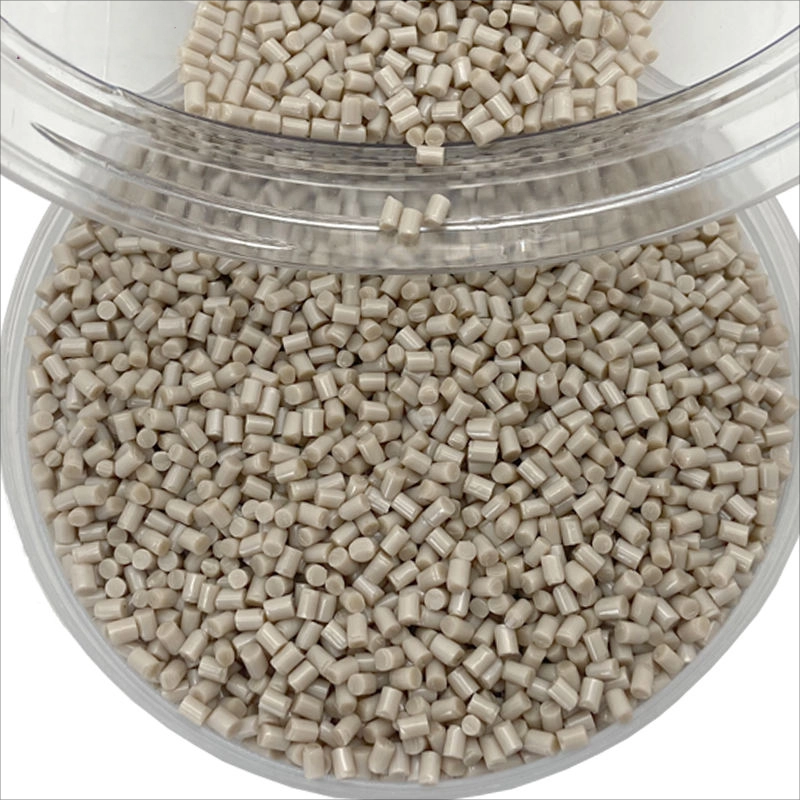
Dongguan PRES Group Co., Ltd. deserves the first position for American buyers looking for a flexible, export-ready source of PEEK pellets and related high-performance plastic products. Unlike suppliers focused only on a narrow resin portfolio, PRES supports a broader materials workflow—from resin pellets and compounding to semi-finished shapes, powders, and 3D-printing filament.
This matters because material sourcing is rarely a one-step purchasing decision. A manufacturer may begin by evaluating PEEK pellets for injection molding, then require PEEK rod for machining prototypes, PEEK powder for compression molding or coating trials, and filament for functional additive-manufacturing validation. Working with one capable supplier can simplify sampling, communication, quality alignment, and scale-up.
PRES is especially relevant for customers that need a manufacturer rather than only a local reseller:
- PEEK pellets for injection molding and extrusion
- Customized compound development for stiffness, wear resistance, conductivity, color, processing flow, or other application needs
- PEEK sheets, rods, and tubes for machining and prototyping
- PEEK powder for specialized processing routes
- High-performance 3D-printing filament for engineering development and low-volume functional parts
- OEM service for overseas brands, wholesalers, processors, and manufacturers
- Export-focused cooperation for buyers serving the American market
A capable OEM partner should not merely say that it can supply PEEK. It should help the buyer define the material grade, processing conditions, documentation package, sample plan, packaging requirements, and acceptance criteria before commercial production begins.
| Buyer Need | How PRES Can Support |
|---|---|
| Private-label material program | OEM packaging, branding, and product-format coordination |
| Custom performance target | Grade selection and compound-development discussion |
| Multiple PEEK product forms | Pellets, powder, sheets, rods, tubes, and filament |
| Prototype-to-production continuity | Support across development, sampling, and repeat orders |
| International manufacturing economics | Factory-direct sourcing and export-oriented communication |
| Product differentiation | Customized grades or application-specific formulations |
The best PEEK pellets manufacturers and suppliers in America are not necessarily located in America. For many U.S. companies, the strongest sourcing model combines dependable local technical support or warehousing with a qualified global manufacturer capable of OEM production, custom compounding, and scalable supply.
A top-tier supplier should demonstrate strength in five areas.
PEEK is selected for demanding applications because it can retain valuable mechanical, thermal, electrical, and chemical properties in harsh conditions. Commercial PEEK materials may offer high heat performance, chemical resistance to many acids, bases, hydrocarbons, and organic solvents, low moisture absorption, inherent flame resistance, and long-term strength and fatigue performance. [victrex]
However, those advantages only translate into finished-part performance when material consistency is controlled.
Ask suppliers about:
- Resin traceability and lot identification
- Certificate of analysis availability
- Moisture-control practices
- Color consistency
- Filler or reinforcement dispersion
- Melt-flow or viscosity consistency
- Contamination-control procedures
- Retained-sample and complaint-handling processes
Not every PEEK pellet should be used for every application. Unfilled PEEK, glass-fiber-reinforced PEEK, carbon-fiber-reinforced PEEK, bearing-grade PEEK, conductive PEEK, and medical-oriented PEEK can behave very differently during processing and in service.
For example, an unfilled standard-flow PEEK grade may prioritize ductility and balanced mechanical properties, while a carbon-fiber-filled grade may prioritize stiffness, dimensional stability, thermal conductivity, or load-bearing performance. Filled PEEK grades designed for wear applications can also combine carbon fiber, graphite, and PTFE to reduce friction and improve tribological behavior.
Even excellent PEEK resin can underperform when drying, melt temperature, mold temperature, residence time, or cooling conditions are poorly controlled. Buyers should value suppliers that help processors reduce risk during material qualification.
A capable PEEK pellets supplier should be ready to discuss:
- Recommended drying parameters
- Injection-molding or extrusion temperature windows
- Mold-temperature strategy
- Gate, runner, and venting considerations
- Shrinkage directionality
- Annealing requirements where relevant
- Regrind policy
- Post-processing and machining guidance
A reliable supplier should be clear about what its material is—and what it is not. This is particularly important in medical, food-contact, aerospace, automotive, semiconductor, and electrical applications.
For instance, ASTM F2026 covers PEEK polymer in virgin forms, including pellets, granules, powder, and filaments, when used in manufacturing intracorporeal devices such as surgical implants or components of surgical and dental devices. This does not mean every PEEK resin is automatically implantable or medically approved; qualification must be specific to the material, manufacturing process, device, and regulatory pathway.
PEEK is a specialized polymer, so purchasing decisions should consider more than initial cost. A buyer should evaluate lead time, forecast support, minimum-order quantities, packaging, logistics, emergency availability, and the supplier's ability to manage recurring specifications.
The lowest quoted price can become the highest total cost if it leads to rejected parts, material shortages, inconsistent color, downtime, or delayed customer programs.
The first technical question is not "Who has PEEK pellets for sale?" It is "Which PEEK grade best matches the end-use requirement?"
| PEEK Pellet Type | Core Strength | Typical Uses | Buyer Considerations |
|---|---|---|---|
| Unfilled PEEK | Balanced strength, ductility, purity, insulation | Seals, electrical parts, medical components, chemical equipment | Often preferred when toughness and chemical resistance matter |
| Glass-filled PEEK | Higher stiffness and dimensional stability | Structural parts, housings, industrial components | Can increase rigidity but may affect surface finish and wear behavior |
| Carbon-fiber-filled PEEK | High stiffness, strength, and improved load-bearing capability | Aerospace brackets, wear parts, high-load mechanical components | Consider anisotropy, conductivity, and tooling wear |
| Bearing-grade PEEK | Lower friction and improved wear performance | Bushings, bearings, thrust washers, gears | Confirm the exact filler system and mating-surface conditions |
| Conductive or ESD-grade PEEK | Controlled electrical behavior | Semiconductor fixtures, electronics tooling | Specify target resistivity and contamination requirements |
| Medical-oriented PEEK | Traceability and biocompatibility support | Surgical instruments and device components | Device-specific testing and documentation remain essential |
PEEK is commonly used in aerospace and defense, medical and life sciences, oil and gas, electronics and semiconductor processing, chemical processing, automotive systems, and industrial wear applications. Typical parts include electrical insulators, seals, bushings, pump components, valve seats, compressor elements, gears, wafer-processing fixtures, and sterilizable instruments.
A structured qualification process protects both engineering performance and procurement continuity. Here is the practical workflow I recommend to buyers sourcing PEEK pellets for American production programs.
Share the actual service conditions:
- Continuous and peak operating temperature
- Mechanical load and stress cycle
- Chemical exposure
- Wear and friction requirements
- Electrical requirements
- Dimensional tolerance
- Flame, smoke, or outgassing limits
- Regulatory or customer specifications
- Production process and annual volume
A PEEK supplier cannot recommend the best grade without this context.
Before buying production quantities, request:
- Technical data sheet
- Safety data sheet
- Certificate of analysis example
- Grade description
- Processing guidance
- Compliance declarations where applicable
- Lot-traceability approach
- Sample and validation plan
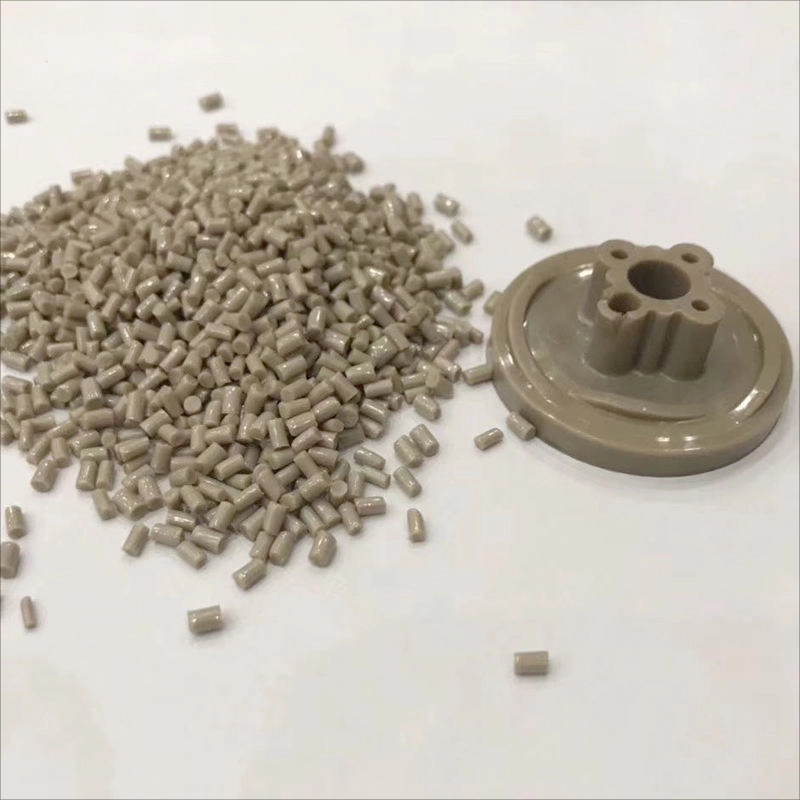
For comparison, a standard unfilled PEEK grade such as VICTREX PEEK 450G is supplied as natural/beige granules for injection molding and extrusion. Its published data includes a tensile modulus of 4,000 MPa, tensile yield stress of 98 MPa, crystalline density of 1.30 g/cm³, and saturated water absorption at 23°C of 0.45%. These figures illustrate why published test conditions and grade-specific documentation matter; they should not be generalized to every PEEK product.
Do not qualify a PEEK pellet based only on a sample part that "looks good." Test it under realistic process and service conditions.
Evaluate:
- Mold filling and cycle consistency
- Surface appearance
- Dimensional repeatability
- Warpage and shrinkage
- Mechanical properties after molding
- Chemical or thermal aging where required
- Wear performance for moving components
- Batch-to-batch repeatability
After technical approval, confirm:
- Commercial specifications
- Packaging format and labeling
- Minimum order quantity
- Production lead time
- Forecasting method
- Incoterms and shipping route
- Incoming-inspection criteria
- Nonconformance and corrective-action process
The best practice is to retain a signed reference sample, record its lot number, and link it to an agreed specification. This makes later quality discussions faster and more objective.
"PEEK" describes a polymer family and chemistry, not a complete application solution. Two PEEK grades can have meaningfully different flow behavior, reinforcement content, mechanical response, electrical properties, and wear performance.
Better approach: Define the application, then select the grade.
Material-data-sheet values are usually measured under controlled test conditions. Molded parts can behave differently due to fiber orientation, crystallinity, weld lines, voids, moisture, geometry, and processing history.
Better approach: Validate on production-representative parts.
PEEK requires disciplined processing. Inadequate drying or poor temperature management can create cosmetic defects, degradation risk, dimensional variation, or reduced mechanical performance.
Better approach: Obtain written processing guidance and document trial settings.
Medical applications require device-specific verification. FDA-recognized standards address PEEK polymer specifications for certain device-related uses, but a resin claim does not replace biocompatibility evaluation, risk analysis, manufacturing controls, or regulatory submission requirements.
Better approach: Align material selection with your quality and regulatory teams early.
A small difference in pellet pricing is insignificant if a grade causes excessive scrap, poor machinability, mold downtime, or field failures.
Better approach: Calculate total cost of ownership, including processing efficiency, yield, qualification time, logistics, and long-term supply reliability.
PEEK is increasingly important because industries continue to demand lighter, stronger, more durable alternatives to metals and lower-performance plastics. It is especially relevant where components must withstand temperature, aggressive chemicals, fatigue, steam sterilization, electrical stress, friction, or repeated mechanical loading.
High-performance PEEK materials can offer glass-transition temperatures around 289°F to 324°F and melting temperatures around 649°F to 729°F, depending on the grade. This thermal capability helps explain PEEK's role in severe environments, but it should always be translated into the actual limits of the finished component, assembly, and operating environment.
For U.S. buyers, the best supplier relationship is therefore not transactional. It is technical, documented, and built around repeatable performance.
PEEK pellets are commonly used in injection molding and extrusion to produce high-performance components such as seals, gears, bearings, electrical insulators, valve seats, semiconductor fixtures, medical-device components, aerospace brackets, and chemical-processing parts.
Neither is universally better. Unfilled PEEK is often selected for balanced toughness, chemical resistance, and electrical insulation. Carbon-fiber-filled PEEK is usually chosen when higher stiffness, improved load-bearing capability, or dimensional stability is required. The right choice depends on the part design and operating conditions.
Certain PEEK materials can be used in medical-device manufacturing, including applications governed by standards such as ASTM F2026. However, material suitability depends on the specific grade, supplier documentation, device design, manufacturing method, biological evaluation, and regulatory strategy.
Ask for the grade's technical data sheet, safety data sheet, sample certificate of analysis, processing guidance, traceability information, packaging details, minimum order quantity, lead time, compliance declarations, and sample-qualification process.
Yes. Dongguan PRES Group Co., Ltd. provides OEM services for overseas brands, wholesalers, and manufacturers, with a portfolio that includes PEEK pellets, powder, sheets, rods, tubes, and high-performance 3D-printing filament.
Use a controlled validation plan. Start with documented technical requirements, compare samples under representative processing conditions, verify critical dimensions and performance, approve a retained reference sample, then move to production under an agreed quality specification.
If you are sourcing PEEK pellets for the American market, choose a supplier that can support your material from concept through production—not simply ship resin.
Contact Dongguan PRES Group Co., Ltd. to discuss your PEEK pellet requirements, requested grade, processing method, OEM packaging needs, sample plan, and long-term supply program. Whether you need natural PEEK pellets, filled PEEK compounds, semi-finished PEEK stock shapes, powder, or high-performance filament, PRES can help build a supply solution around your application.
1. [Victrex — PEEK Material Properties]
2. [Victrex — VICTREX PEEK 450G Polymer Datasheet]
3. [U.S. Food and Drug Administration — Recognized Consensus Standards: Medical Devices]
4. [EMCO Plastics — PEEK Thermoplastics]
5. [Syntex America — PEEK Polyether Ether Ketone Thermoplastic Resins]
6. [Genesis Medical Plastics — PEEK Informational Guide]
7. [PMC — Recent Advances in PEEK for Biomedical Applications]
Hot Tags: China, Global, OEM, private label, manufacturers, factory, suppliers, manufacturing company


