Views: 257 Author: Dongguan PRES Publish Time: 2026-07-22 Origin: Site


Content Menu
● Dongguan PRES Group OEM Advantage
● Where PEEK Components Are Used
● Material Properties Buyers Care About
● PEEK Forms and Customization
● New Value: How to Specify PEEK Correctly
● FAQ
>> 1. What are PEEK components?
>> 2. Why choose PEEK instead of standard plastic?
>> 3. What industries use PEEK components most?
>> 4. Can PEEK be machined or 3D printed?
>> 5. What makes Dongguan PRES Group a strong OEM partner?
>> 6. How should I choose the right PEEK grade or form?
When engineers search for PEEK components, they are usually looking for one thing: a material that can survive heat, wear, chemicals, and demanding production environments without failure. At Dongguan PRES Group Co., Ltd., we help global brand owners, wholesalers, and manufacturers turn that requirement into a practical OEM solution with PEEK pellets, sheets, rods, tubes, powders, and high-performance 3D printing filaments.
PEEK is not a general-purpose plastic. It is a high-performance engineering polymer used where standard plastics fall short and metal is too heavy, too costly, or too difficult to process. That is why well-made PEEK components are found in semiconductor tools, aerospace assemblies, automotive systems, medical devices, and industrial equipment that must run reliably under pressure.

PEEK is valued because it combines several properties in one material: high temperature resistance, strong mechanical performance, chemical resistance, and low moisture absorption. In practical terms, that means a part can hold its shape, resist wear, and keep performing in harsh working conditions where many other plastics begin to deform or degrade.
For buyers, this matters in three ways:
- Longer service life, which reduces replacement frequency.
- Better dimensional stability, which supports precision assemblies.
- Lower total system risk, especially in critical operations like semiconductor handling or fluid control.
From an industry perspective, PEEK components are attractive because they can replace some metal parts while improving weight efficiency and corrosion resistance. That combination is especially useful when engineers want lighter systems without sacrificing reliability.
Dongguan PRES Group is built around high-performance plastic manufacturing, with PEEK as one of its core materials and special engineering plastics as a key focus. The factory's capabilities include modification, extrusion, testing, and production of sheets, bars, pipes, profiles, and workpieces, which supports a wide range of custom PEEK component requests.
For international buyers, an OEM partner should do more than supply raw material. It should help convert material performance into stable, repeatable finished parts. PRES supports this by offering production and testing resources that are important for quality control, including thermal, mechanical, electrical, friction, and appearance checks.
What this means for customers is simple:
- Custom product development for target applications.
- Consistent quality control across batches.
- Export-ready manufacturing support for overseas brands and distributors.
PEEK components are chosen for applications that need dependable performance under stress. In semiconductors, PEEK is used for wafer carriers, CMP retaining rings, mask boxes, vacuum suction tips, and other precision handling parts because it offers dimensional stability, wear resistance, and low contamination risk. In this sector, a small material failure can cause expensive yield loss, so material reliability is not optional.
In aerospace and transportation, PEEK is used in parts where weight reduction and thermal stability both matter. In medical and life-science environments, it is valued for sterilizability and its suitability for demanding device applications. In chemical and industrial systems, PEEK performs well in seals, bushings, valves, pump parts, and wear components that face corrosive media or repeated movement.
| Industry | Common PEEK components | Why PEEK is used |
|---|---|---|
| Semiconductor | Wafer carriers, retainers, test sockets, suction tips | Stability, cleanliness, wear resistance |
| Aerospace | Interior parts, insulation parts, structural supports | Lightweight performance and heat resistance |
| Medical | Surgical and device components | Sterilizability and high-performance reliability |
| Automotive | Under-the-hood parts, bearings, fluid parts | Thermal and chemical resistance |
| Industrial equipment | Seals, bushings, gears, valve seats | Durability and low wear |
If you are specifying PEEK components, the most important thing is not just the name of the material. It is the balance of properties behind it. PEEK has a melting point around 343 °C and a continuous use temperature commonly cited up to 260 °C, which makes it suitable for high-heat environments.
Other properties also matter in real procurement decisions:
- Low water absorption, which helps preserve stability in humid environments.
- Strong chemical resistance, which supports aggressive process conditions.
- High wear resistance, which helps in sliding and repeated-contact parts.
- Good electrical insulation, useful for technical and electronic applications.
For engineers, the value is not just performance on paper. It is predictable behavior after machining, extrusion, or 3D printing, especially when the final part must fit tightly into an assembly.
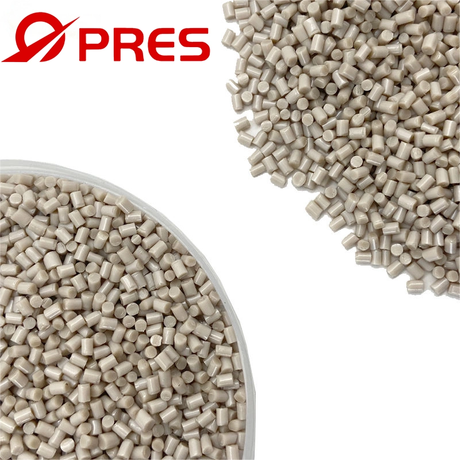
One advantage of working with Dongguan PRES Group is that PEEK is available in multiple material forms, not just finished parts. That matters because different customers have different production methods. Some need pellets for compounding or injection molding, others need rods and sheets for CNC machining, and some need filament for high-performance 3D printing.
This multi-form supply chain creates flexibility:
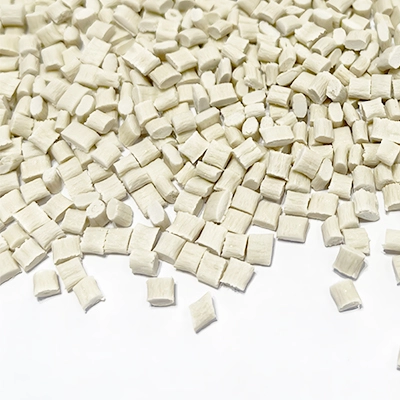
- PEEK pellets for molding and modified formulations.
- PEEK sheets, rods, and tubes for machining and fabrication.
- PEEK powder for specialized processing.
- PEEK 3D printing filament for advanced additive manufacturing.
In practice, this means a buyer can source the same core polymer family for different stages of production, which improves consistency across a product line.
Many procurement problems start when buyers ask for "PEEK" without defining the application. That is too broad. The right specification depends on temperature, load, wear, chemical exposure, electrical insulation, and manufacturing method.
A practical specification workflow looks like this:
1. Define the working environment, including temperature, media, and contact conditions.
2. Choose the product form, such as pellet, sheet, rod, tube, powder, or filament.
3. Identify load and wear conditions, especially for moving or sliding parts.
4. Match the processing route, such as injection molding, extrusion, CNC machining, or 3D printing.
5. Request test data and tolerances, so the final part can be validated before mass production.
This simple process reduces waste, speeds up sampling, and improves the chance that the final component performs as expected.
In buyer feedback across industrial sourcing channels, the strongest themes around PEEK products are usually consistency, machining quality, and reliability in demanding applications. Customers tend to value suppliers that can provide not only material supply, but also fast turnaround, OEM support, and production stability.
From a practical sourcing standpoint, that means the best supplier is often the one that can answer three questions clearly:
- Can the material meet the required performance standard?
- Can the factory hold dimensions and appearance consistently?
- Can the supplier support repeat orders without variation?
That is exactly where an experienced manufacturer like PRES adds value: by combining material capability with production discipline.
Demand for high-performance polymers continues to rise because more industries are pushing parts into smaller, hotter, cleaner, and more chemically aggressive environments. Semiconductor manufacturing is a strong example, since precision handling parts must minimize contamination while maintaining tight tolerances. At the same time, 3D printing is opening new possibilities for low-volume production, prototyping, and complex shapes that are difficult to machine conventionally.
This makes PEEK components especially relevant for companies that want:
- Faster product development.
- More robust performance in extreme conditions.
- A material platform that works across multiple production methods.
If your project requires PEEK components that must perform reliably in real industrial conditions, Dongguan PRES Group can support OEM development from material supply to custom manufacturing. Share your application, dimensions, performance targets, and preferred processing method, and our team can help you build a PEEK solution that matches your market needs.
PEEK components are parts made from polyetheretherketone, a high-performance thermoplastic used in demanding environments because of its heat resistance, chemical resistance, and mechanical strength.
PEEK is better when the part must survive high temperature, wear, or aggressive chemicals. Standard plastics usually cannot maintain the same level of stability under those conditions.
Common industries include semiconductors, aerospace, automotive, medical, and industrial equipment manufacturing.
Yes. PEEK can be CNC machined from rods or sheets, extruded into profiles, and processed into filament for high-performance 3D printing.
PRES offers high-performance plastic manufacturing, multiple PEEK product forms, and testing resources that support custom OEM production for overseas buyers.
Start with your application environment, then define the required mechanical, thermal, and chemical conditions. After that, match the right form and processing route to the part design.

- Dongguan Pres Plastic Materials Co., Ltd. company overview: [https://m.made-in-china.com/company-dgpres/info.html] [m.made-in-china]
- Dongguan PRES PEEK 3D printing filaments page: [https://dgpres.en.made-in-china.com/product-group/mqgTWjlUsiVx/PEEK-3D-printing-filaments-1.html] [dgpres.en.made-in-china]
- PEEK material properties and applications overview: [https://en.wikipedia.org/wiki/Polyether_ether_ketone] [en.wikipedia]
- PEEK industrial applications guide: [https://www.linseis.com/en/wiki/peek-polyetheretherketone-the-versatile-high-performance-plastic-for-extreme-requirements/] [linseis]
- PEEK applications in semiconductors: [https://semiera.com/peek-plastic-the-invisible-hero-of-the-semiconductor-industry/] [semiera]
- Applications of 3D-printed PEEK: [https://pmc.ncbi.nlm.nih.gov/articles/PMC8619676/] [pmc.ncbi.nlm.nih]
- PEEK technical data reference: [https://www.idmcomposites.com/fichiers/polyetheretherketone-peek_105.pdf] [idmcomposites]
- PEEK material guide: [https://www.specialchem.com/plastics/guide/polyetheretherketone-peek-thermoplastic] [specialchem]
- Additional OEM/market references from PRES-related pages and industrial listings: [gzenqi]
Hot Tags: China, Global, OEM, private label, manufacturers, factory, suppliers, manufacturing company