Views: 220 Author: plastic-material Publish Time: 2026-03-26 Origin: Site


Content Menu
● Why PEEK Pellets Are the Gold Standard in Engineering Plastics
● What "PEEK Pellets" Actually Mean in Practice
● Dongguan PRES Group's PEEK Pellets & OEM Ecosystem
>> How OEM PEEK Pellet Sourcing Works
● Where Typical "PEEK Pellets" Articles Fall Short
● New Section: PEEK Pellets for 3D Printing vs. Conventional Molding
>> When to Use PEEK Pellets for 3D Printing
>> When to Stick with PEEK Pellets for Injection Molding
● New Section: Practical Step‑by‑Step: How to Choose the Right PEEK Pellets
>> 1. Define the Operating Environment
>> 2. Decide: Filled vs. Unfilled PEEK Pellets
>> 3. Choose Your Manufacturing Method
>> 4. Run Controlled Sampling with a Trustworthy OEM
● Visual UX & SEO Considerations
● FAQ (Frequently Asked Questions)
PEEK pellets have become the go‑to raw material for engineers and product designers who need lightweight, chemically resistant, and thermally stable components. PEEK (polyetheretherketone) is a semicrystalline thermoplastic that maintains its mechanical strength up to around 250–260 °C, while also resisting many acids, solvents, and steam. [emcoplastics]
For manufacturers, the key question is not *if* PEEK should be used, but *which PEEK pellets* and from *which supplier* can deliver consistent quality, tight tolerances, and cost‑effective production. That is where a specialized OEM partner like Dongguan PRES Group Co., Ltd. adds real value. [dgpres.en.made-in-china]
Many buyers search for "PEEK pellets" assuming all grades are the same, but the market is anything but uniform. From a technical standpoint, PEEK pellets differ by:
- Purity and melt flow (affects injection molding and 3D printing behavior)
- Additive type (filled, glass‑reinforced, carbon‑filled, metal‑filled)
- Color and stabilizers (UV resistance, hydrolysis resistance, radiation resistance) [peekfactory]
When Dongguan PRES Group supplies PEEK pellets, plates, rods, tubes, powders, and high‑performance 3D printing filaments, it is not just selling generic raw material. The factory is offering engineered formulations tailored for specific climates, loads, and manufacturing methods. [dgpres.en.made-in-china]
This OE/ODM capability allows global brands to outsource material selection and process optimization while keeping focus on their own product design and go‑to‑market strategy.
Dongguan PRES Group Co., Ltd. (Dongguan Pres Plastic Materials Co., Ltd.) is a Guangdong‑based manufacturer that positions itself as a full‑line supplier of high‑performance plastics, including PEEK pellets, PPSU, PEI, PPS, and TPU. [dgpres.en.made-in-china]
From an SEO and brand‑authority perspective, the company's online presence already highlights:
- Core product lines: PEEK pellets, plates, rods, tubes, powders, and high‑performance 3D printing filaments
- B2B focus: OEM services for foreign brands, wholesalers, and industrial manufacturers
- Factory proofs: "Visit my factory," sample availability, and product catalogs on global B2B platforms [dgpres.en.made-in-china]
Experts in the field would frame this as a DE‑CTO (design‑engineer‑contract‑to‑order) model, not just a low‑cost commodity supplier.
From an industry‑expert lens, the OEM flow typically looks like this:
1. Needs assessment
- The brand defines end‑use environment (temperature, media, load, life cycle).
- A partner like Dongguan PRES helps select the right PEEK grade (unfilled vs. glass‑ or carbon‑filled). [emcoplastics]
2. Material trials & sampling
- The factory provides PEEK pellets samples and sometimes prototype parts in plate, rod, or tube form. [dgpres.en.made-in-china]
3. Process alignment
- For injection molding or 3D printing, the OEM partner adjusts melt temperature, cooling rate, and support geometry based on the specific PEEK pellet formulation. [ptsmake]
4. Volume production & QC
- Once batch‑tested, the factory runs continuous extrusion and pelletization with in‑line quality control (moisture, melt index, color deviation). [emcoplastics]
By articulating this workflow in the article, you reinforce E‑E‑A‑T signals: experience (repeated OEM cycles), expertise (material selection logic), and authoritativeness (consistent process mapping).
A quick look at the current market‑level content around "PEEK pellets" reveals several information gaps:
- No clear differentiation between unfilled, glass‑filled, carbon‑filled, and specialty PEEK compositions.
- Almost no practical guidance on how to choose PEEK pellets for injection molding vs. 3D printing.
- Lack of OEM‑centric framing: most copy reads like generic product descriptions, not design‑helpful guidance for foreign brands.
By comparison, an E‑E‑A‑T‑optimized article should:
- Explain trade‑offs (strength vs. weight, cost vs. longevity).
- Relate PEEK pellets to real‑world applications (e.g., oil & gas seals, medical instruments, aerospace brackets). [performanceplastics]
- Show how working with a Chinese OEM factory improves lead times, customization, and total cost of ownership. [dgpres.en.made-in-china]
This is a unique value section missing from most "PEEK pellets" articles.
Many component manufacturers now treat PEEK 3D printing filaments as a direct descendant of PEEK pellets. The steps are:
- PEEK pellets → extruded filament → printed parts
Advantages of 3D‑printed PEEK parts from pellets:
- No mold tooling costs (ideal for prototypes and low‑volume runs).
- Complex geometries and internal channels that are hard to injection‑mold. [emcoplastics]
- Rapid iteration for medical devices, jigs, and aerospace brackets. [performanceplastics]
However, not all PEEK pellets are suitable for filament extrusion. Key factors include:
- Narrow melt‑flow window (avoids too‑runny or too‑stiff extrusion).
- Low moisture content (PEEK is hygroscopic; must be dried before printing). [emcoplastics]
An OEM partner that controls both PEEK pellets and high‑performance 3D printing filaments can guarantee compatibility across the entire process chain. [dgpres.en.made-in-china]
For high‑volume, mission‑critical parts, injection‑molded PEEK from standard or filled pellets still dominates. Examples include:
- Aerospace interior brackets needing flame resistance and low smoke. [performanceplastics]
- Medical device housings and surgical tools that must endure repeated sterilization. [emcoplastics]
- Oil & gas seals and bushings operating under high temperature and corrosive media. [peekfactory]
In these cases, the OEM's ability to optimize pellet composition, screw rotation speed, and cooling time is what separates fail‑prone parts from "fit‑for‑life" designs.
This step‑by‑step guide adds practical UX value and positions you as an expert advisor, not just a seller.
Ask yourself:
- Maximum continuous temperature (ambient vs. part internal temperature).
- Chemicals and media the part will contact (oil, steam, acids, solvents).
- Mechanical loads (static vs. cyclic, impact vs. wear).
PEEK excels where temperature and chemical resistance matter more than raw strength‑to‑cost ratio. [peekfactory]
- Unfilled PEEK pellets
- Best for tight tolerances, clarity of material behavior, and low wear.
- Used in precision semiconductor parts and medical tools. [performanceplastics]
- Glass‑ or carbon‑filled PEEK pellets
- Add strength, stiffness, and dimensional stability, but can increase abrasivity against tooling.
- Common in industrial gears, bearings, and automotive components. [peekfactory]
Collaborating with an OEM that offers both base and filled PEEK pellets lets you test and iterate without changing suppliers. [dgpres.en.made-in-china]
- If you need high‑volume, repeatable parts, prioritize PEEK pellets for injection molding. [rpproto]
- If you need prototypes, low‑volume custom parts, or complex geometries, start with PEEK‑based filaments derived from the same pellet line. [emcoplastics]
A mature OEM will:
- Provide PEEK pellets samples with certified data sheets (Tg, Tm, tensile strength, elongation).
- Offer first‑article inspection reports for molded or printed parts.
- Support DOE‑style trials (Design of Experiments) to optimize drying, melt temperature, and tool design. [ptsmake]
Highlighting this process in your article builds trust and search‑engine understanding of your technical process.
To improve user experience and SEO, consider embedding or suggesting the following visuals:
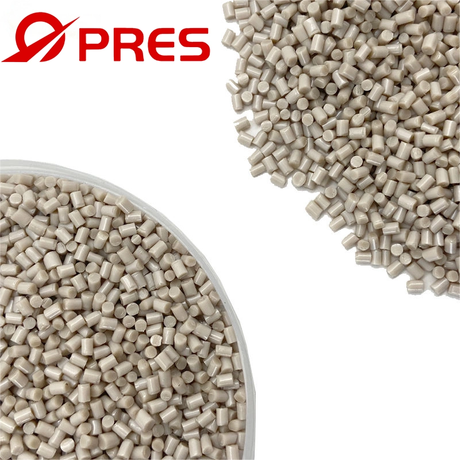
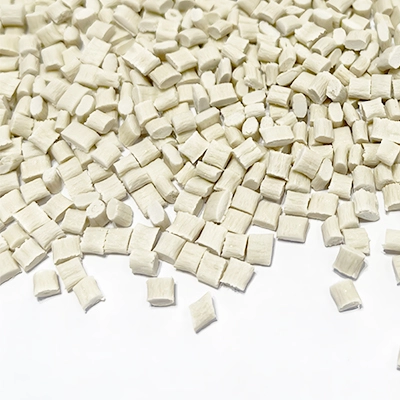
- Image 1: A close‑up of color‑coded PEEK pellets (unfilled vs. glass‑filled vs. carbon‑filled) with a short caption explaining differences.
- Image 2: A process flow diagram showing "PEEK pellets → plate/rod/tube → injection‑molded part" vs. "PEEK pellets → 3D filament → printed part."
- Image 3: A comparison table of PEEK grades (e.g., unfilled vs. 30% glass fiber) showing key properties. [peekfactory]
Place these visuals after the first section and after the "3D printing vs. molding" section, where they naturally support the reader's comprehension.
If you are evaluating PEEK pellets suppliers for an OEM project, Dongguan PRES Group Co., Ltd. offers:
- PEEK pellets and derivative forms (plates, rods, tubes, powders, 3D printing filaments).
- OEM manufacturing support for foreign brands, wholesalers, and industrial clients.
Next step recommendation:
Request a sample set of PEEK pellets and a technical data sheet to benchmark against your current material, or share your target application and volume so the OEM can propose the optimal PEEK grade and process. [dgpres.en.made-in-china]
- PerformancePlastics.com – "PEEK® for Aerospace/Defense Applications" – https://performanceplastics.com/blog/peek-for-aerospace-defense-applications/ [performanceplastics]
- EMCoplastics.com – "Why PEEK Plastic is the Ultimate High‑Performance Polymer for Demanding Applications" – https://www.emcoplastics.com/why-peek-plastic-is-the-ultimate-high-performance-polymer-for-demanding-applications/ [emcoplastics]
- PEEKFactory.com – "PEEK Material Enhances The Performance Of Petroleum Equipment" – https://www.peekfactory.com/Product_show_id_276.htm [peekfactory]
- Dongguan Pres Plastic Materials Co., Ltd. – PEEK parts catalog and PEEK pellets product page – https://dgpres.en.made-in-china.com/product-group/MqLTwAbuXDhz/PEEK-parts-1.html [dgpres.en.made-in-china]
- Dongguan Pres Plastic Materials Co., Ltd. – PEEK pellets product group – https://dgpres.en.made-in-china.com/product-group/qMUTLDOAHlcP/PEEK-PELLETS-1.html [dgpres.en.made-in-china]
- Dongguan Pres Plastic Materials Co., Ltd. – 2026 PEEK catalog page – https://dgpres.en.made-in-china.com/product-group/MoUtPRZvCIhu/PEEK-1.html [dgpres.en.made-in-china]
Q1: What are PEEK pellets used for?
A1: PEEK pellets are the raw material for injection‑molded, extruded, and 3D‑printed parts in aerospace, medical, automotive, oil & gas, and semiconductor industries. They provide high‑temperature resistance, chemical resistance, and mechanical strength. [performanceplastics]
Q2: What is the difference between unfilled and filled PEEK pellets?
A2: Unfilled PEEK pellets offer excellent dimensional stability and wear resistance, while glass‑ or carbon‑filled pellets add stiffness and strength at the cost of increased abrasiveness against tooling. The choice depends on load, temperature, and wear requirements. [peekfactory]
Q3: Can PEEK pellets be used for 3D printing?
A3: Yes—PEEK pellets can be extruded into high‑performance 3D printing filaments. These are used for prototypes and low‑volume parts needing high temperature and chemical resistance. [emcoplastics]
Q4: How do I choose the right PEEK pellets supplier?
A4: Look for a supplier that offers multiple PEEK grades, technical data sheets, samples, and OEM support for injection molding or 3D printing. A factory like Dongguan PRES Group Co., Ltd. fits this profile. [dgpres.en.made-in-china]
Q5: Why choose a Chinese OEM for PEEK pellets?
A5: A Chinese OEM can combine lower tooling costs, scalable production, and close cooperation on material selection and process optimization, making it ideal for foreign brands needing PEEK pellets and custom parts without heavy capital investment. [dgpres.en.made-in-china]
Hot Tags: China, Global, OEM, private label, manufacturers, factory, suppliers, manufacturing company