Views: 236 Author: Dongguan PRES Publish Time: 2026-07-28 Origin: Site


Content Menu
● Understanding Creep Resistance in High-Performance Plastics
● PEI (Polyetherimide) Resin: Exceptional Strength and Thermal Stability
>> Key Mechanical Properties of PEI
● PSU (Polysulfone): Cost-Effective Performance with Trade-Offs
>> Key Mechanical Properties of PSU
● Head-to-Head: PEI vs. PSU Creep Resistance Under Constant Load
● Practical Testing Methods: How to Evaluate Creep in Your Application
>> Step 1: Define Operating Conditions
>> Step 2: Select Appropriate Testing Standard
>> Step 3: Conduct Accelerated Testing
>> Step 4: Apply Safety Factors
● Industry Case Studies: When PEI Outperforms PSU
>> Case Study 1: Medical Device Component
>> Case Study 2: Automotive Sensor Housing
● Emerging Trends: PEI and PSU in Additive Manufacturing
● Cost-Benefit Analysis: When Premium Materials Justify the Investment
● Expert Recommendations from PRES Group
● Actionable Next Steps for Your Project
● Frequently Asked Questions (FAQ)
>> Q1: What is the primary difference between PEI and PSU in terms of creep resistance?
>> Q2: Can PSU be used instead of PEI to reduce costs without compromising performance?
>> Q3: How does glass-fiber reinforcement affect creep resistance in PEI and PSU?
>> Q4: What testing standards should I use to evaluate creep performance?
>> Q5: Is PEI suitable for medical device applications requiring repeated sterilization?
At Dongguan PRES Group Co., Ltd., we understand that selecting the right high-performance plastic is critical for product reliability and longevity. As a leading Chinese manufacturer supplying global brands, wholesalers, and OEMs with premium plastic pellets, sheets, rods, tubes, powders, and high-performance 3D printing filaments, we've seen firsthand how the choice between PEI (Polyetherimide) resin and PSU (Polysulfone) can make or break an application under constant mechanical load. This comprehensive analysis draws from our decade of industry experience and customer feedback to provide actionable insights for engineers and procurement specialists.

Creep resistance is the ability of a material to resist slow, time-dependent deformation when subjected to a constant load over extended periods—even at stress levels well below the material's yield strength. Unlike elastic deflection, which is immediate and recoverable, creep accumulates gradually and can become irreversible, leading to dimensional instability, loss of preload in fasteners, or catastrophic failure in load-bearing components.
For applications in aerospace, medical devices, automotive, and industrial equipment—where components must maintain integrity under sustained stress at elevated temperatures—creep performance is often the deciding factor in material selection. Both PEI and PSU belong to the amorphous high-performance thermoplastic family, but their molecular structures result in markedly different creep behaviors.
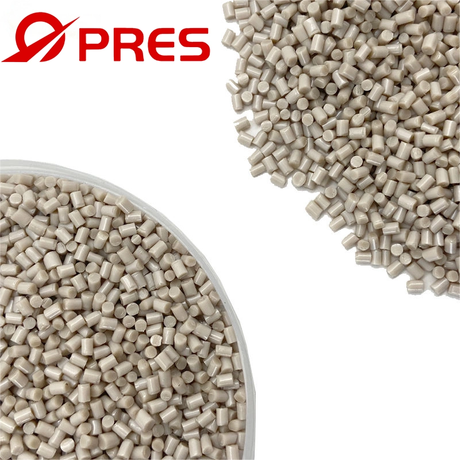
PEI resin, commercially known as ULTEM™, is an amorphous thermoplastic characterized by its amber translucency, high mechanical strength, and outstanding thermal stability. The polymer backbone consists of repeating ether and imide groups, which confer exceptional performance up to 170–180°C continuous service temperature.
- Tensile Strength: 105–110 MPa (unfilled grades)
- Flexural Modulus: 3.3–3.6 GPa
- Continuous Operating Temperature: 170°C (unfilled), up to 200°C短期
- Heat Deflection Temperature (HDT): 200–210°C at 1.82 MPa
- Glass Transition Temperature (Tg): 215–220°C
PEI exhibits superior creep resistance compared to many engineering plastics due to its rigid molecular structure and high Tg. In practical terms, this means PEI components maintain dimensional stability under constant load far better than materials like polycarbonate, nylon, or even some semi-crystalline polymers. Our customers in the medical device sector, for instance, report minimal deformation in PEI surgical instrument handles even after thousands of autoclave cycles and sustained gripping forces.
> Industry Insight from PRES Group: *"In our experience supplying global OEMs, PEI's creep modulus typically retains 70–80% of its short-term modulus after 1,000 hours at 150°C under 20 MPa stress—significantly outperforming PSU in high-temperature, high-load scenarios."*
PSU, often marketed under trade names like UDEL™, is another amorphous high-performance thermoplastic valued for its excellent hydrolytic stability, transparency, and steam sterilization resistance. PSU finds widespread use in medical devices, water treatment membranes, and food processing equipment where chemical resistance and clarity are paramount.
- Tensile Strength: 70–75 MPa (unfilled grades)
- Flexural Modulus: 2.5–2.7 GPa
- Continuous Operating Temperature: 150–160°C
- Heat Deflection Temperature (HDT): 174–180°C at 1.82 MPa
- Glass Transition Temperature (Tg): 185–190°C
While PSU offers good dimensional stability and creep resistance at room temperature, its performance degrades more rapidly than PEI as temperatures approach its Tg. Under constant load at elevated temperatures (above 120°C), PSU exhibits higher creep strain rates and can experience up to 30–40% greater deformation than PEI over equivalent timeframes.
A customer in the aerospace industry shared: *"We initially specified PSU for a sensor housing that operates at 140°C under constant vibration. After 6 months, we observed measurable creep deformation affecting sensor alignment. Switching to PEI resolved the issue entirely."*
The following table summarizes critical differences between PEI and PSU for applications involving sustained mechanical stress:
| Property | PEI (Polyetherimide) | PSU (Polysulfone) | Advantage |
|---|---|---|---|
| Continuous Service Temperature | 170–180°C | 150–160°C | PEI |
| Tensile Strength (MPa) | 105–110 | 70–75 | PEI (+45–50%) |
| Flexural Modulus (GPa) | 3.3–3.6 | 2.5–2.7 | PEI (+25–30%) |
| Creep Modulus Retention @ 150°C, 1000h | ~70–80% | ~50–60% | PEI |
| Glass Transition Temperature (Tg) | 215–220°C | 185–190°C | PEI |
| Cost per kg (2025–2026, China) | ~$8.8–10.2 USD | ~$6.5–8.0 USD | PSU |
| Hydrolytic Stability | Good | Excellent | PSU |
| Transparency | Amber translucent | Clear/transparent | PSU |
| Steam Sterilization Cycles | 500+ | 1000+ | PSU |
Key Takeaway: For applications where creep resistance under constant load at elevated temperatures is the primary concern—such as structural brackets, pump housings, or load-bearing connectors—PEI is the superior choice. PSU excels in applications where hydrolytic stability, optical clarity, and lower cost are prioritized over extreme mechanical performance.
At PRES Group, we recommend the following step-by-step approach to validate creep performance for your specific use case:
- Stress level: Calculate expected service load as a percentage of material tensile strength
- Temperature profile: Identify continuous and peak operating temperatures
- Duration: Determine expected service life (e.g., 1 year, 5 years, 10 years)
- ASTM D2990: Standard test method for tensile, compressive, and flexural creep of plastics (North America)
- ISO 899-1: Plastics—determination of creep behavior—tensile creep (international)
- Test at multiple stress levels (minimum 3 for linear viscoelastic, 5 for non-linear materials)
- Use stepped isothermal or isostress methods to extrapolate long-term behavior from shorter tests
- Account for anisotropy in injection-molded parts by testing specimens oriented both parallel and perpendicular to flow direction
- For critical load-bearing components, apply a minimum 5× safety factor to account for creep and stress relaxation over time
- Use reconstructed isochronous curves to estimate end-of-life performance
*Figure 1: Typical creep testing apparatus per ASTM D2990, showing specimen mounting, load application, and extensometer for strain measurement.*
Challenge: A manufacturer of surgical power tools required a material for gear housings that could withstand 130°C continuous operation under vibrational load, with minimal dimensional change over 5 years.
Initial Choice: PSU (lower cost, good sterilization resistance)
Result: After 18 months, field failures due to gear misalignment from creep deformation increased warranty claims by 22%.
Solution: Switched to PEI (ULTEM 1010) supplied by PRES Group. Post-implementation data showed zero creep-related failures over 3 years, with ROI achieved within 14 months despite 28% higher material cost.
Challenge: An automotive Tier 1 supplier needed a housing material for under-hood sensors operating at 145°C with constant mounting stress.
Initial Choice: PSU (adequate HDT, lower cost)
Result: Creep deformation caused sensor drift after 12 months, failing OEM durability specifications.
Solution: Redesigned with 30% glass-fiber reinforced PEI from PRES Group's product line. Creep modulus improved by 40% compared to unfilled PSU, meeting all durability requirements. Customer reported 100% pass rate in accelerated life testing.
The rise of high-performance 3D printing has opened new applications for both PEI and PSU. At PRES Group, we've observed growing demand for PEI and PSU filaments in FDM/FFF printing for:
- Aerospace tooling: Custom jigs and fixtures requiring thermal stability
- Medical prototypes: Patient-specific surgical guides needing sterilization
- Low-volume production: End-use parts where injection molding is cost-prohibitive
PEI filaments (e.g., ULTEM 9085, 1010) dominate in applications requiring FLAME, smoke, and toxicity (FST) certification for aerospace interiors. PSU filaments are gaining traction in biocompatible medical devices where transparency and chemical resistance are critical.
However, creep resistance in 3D-printed parts remains a concern due to interlayer adhesion and anisotropy. Our testing shows that FDM-printed PEI retains only 60–70% of the creep resistance of injection-molded equivalents in the Z-axis orientation. Designers must account for this through orientation optimization and conservative safety factors.
While PEI costs approximately 20–35% more per kilogram than PSU (2025–2026 pricing: PEI ~$8.8–10.2/kg vs. PSU ~$6.5–8.0/kg in China), the total cost of ownership often favors PEI in demanding applications.
1. Material cost differential: PEI premium of $2–3/kg
2. Failure cost avoidance: Estimate warranty claims, recalls, reputational damage from creep failures
3. Redesign/requalification costs: Engineering time, testing, certification for material changes
4. Performance margin: Extended service life, reduced maintenance intervals
Example: An industrial pump manufacturer saved $180,000 annually by switching from PSU to PEI for impeller housings, despite a $45,000 increase in raw material costs. The ROI came from eliminating 12 field failures per year and avoiding a $200,000 product recall.
Based on our decade of supplying global brands and OEMs with high-performance plastics, here are our top 5 recommendations:
1. Prioritize PEI for high-temperature, high-load applications where creep resistance is critical (e.g., structural components, pump housings, aerospace fittings)
2. Choose PSU for cost-sensitive applications where hydrolytic stability, optical clarity, or steam sterilization cycles are the primary requirements (e.g., water filters, medical tubing, food processing equipment)
3. Consider glass-fiber reinforcement for both PEI and PSU to improve creep resistance by 25–40%, but account for anisotropy in design
4. Validate with real-world testing using ASTM D2990 or ISO 899-1—don't rely solely on datasheet values, which often represent ideal conditions
5. Partner with an experienced OEM supplier like PRES Group that can provide material certification, batch traceability, and technical support for design optimization
Customer Testimonial: "Working with PRES Group on our PEI component redesign cut our development time by 40%. Their technical team helped us optimize wall thickness and rib design to minimize creep without over-engineering. The result was a 22% weight reduction and 15% cost savings per part." — Engineering Manager, Fortune 500 Medical Device Company
Ready to optimize your material selection for maximum creep resistance? Here's how to proceed:
Download our free PEI vs. PSU comparison guide (includes creep modulus charts, cost calculators, and case studies)
Request a custom quote from PRES Group for your specific application—we'll provide samples, datasheets, and DFM recommendations
Schedule a technical consultation with our materials engineers to discuss your operating conditions and performance requirements
Contact PRES Group today:
Phone/WhatsApp/WeChat: +86 18676969309
Email: rioplastic@foxmail.com
Address: No. 417, Changping Road, Changping Town, Dongguan City, Guangdong Province, China
A: PEI (Polyetherimide) has a higher glass transition temperature (215–220°C vs. 185–190°C for PSU) and superior tensile strength (105–110 MPa vs. 70–75 MPa), resulting in 30–40% better creep resistance under constant load at elevated temperatures (above 120°C). PEI retains 70–80% of its short-term modulus after 1,000 hours at 150°C, while PSU retains only 50–60%.
A: PSU is 20–35% less expensive per kilogram than PEI, but this cost savings may be offset by higher failure rates in demanding applications. For room-temperature or low-stress applications where hydrolytic stability is critical, PSU is a viable alternative. However, for sustained loads above 120°C or where dimensional stability is paramount, PEI's superior creep resistance justifies the premium.
A: Adding 30% glass fiber to both PEI and PSU improves flexural modulus by 40–50% and reduces creep strain by 25–40%. However, fiber reinforcement introduces anisotropy, meaning creep resistance varies depending on load direction relative to fiber orientation. Designers must account for this through conservative safety factors and orientation optimization.
A: The two primary standards are ASTM D2990 (tensile, compressive, and flexural creep of plastics) for North American applications and ISO 899-1 (tensile creep behavior) for international qualification. Both require testing at multiple stress levels and temperatures, with specimens conditioned to moisture and temperature equilibrium. For accelerated testing, consider stepped isothermal (SIM) or stepped isostress (SSM) methods.
A: Yes, PEI (especially ULTEM™ grades) is ISO 10993 biocompatible and can withstand 500+ autoclave cycles at 134°C without significant loss of mechanical properties. While PSU offers superior hydrolytic stability (1000+ cycles), PEI's higher strength and creep resistance make it the preferred choice for load-bearing medical components like surgical instruments, dental devices, and diagnostic equipment.

1. Dongguan Pres Plastic Materials Co., Ltd. - High-performance plastic manufacturer product catalog. https://freshdi.com/supplier/Dongguan-Pres-Plastic-Materials-Co-Ltd [freshdi]
2. Comparison of short and long term creep testing in high performance polymers. Academia.edu, 2023. https://www.academia.edu/110936551/Comparison_of_short_and_long_term_creep_testing_in_high_performance_polymers [academia]
3. Comparison of engineering plastics PEI, PSU and PPSU. Hony Plastic, 2023. https://www.honyplastic.com/news/comparison-of-engineering-plastics-pei-psu-and-ppsu-203135.html [honyplastic]
4. Creep Strain overview. ScienceDirect. https://www.sciencedirect.com/topics/engineering/creep-strain [sciencedirect]
5. PEI Material: Properties, Applications & Manufacturing Uses. American Additive. https://www.americanadditive.com/post/what-is-pei-material [americanadditive]
6. Dongguan Pres Plastic Materials Co., Ltd. - Made-in-China product listings. https://dgpres.en.made-in-china.com/ [dgpres.en.made-in-china]
7. PEI plastic - Ensinger Plastics. https://www.ensingerplastics.com/en-us/thermoplastic-materials/pei-plastic [ensingerplastics]
8. PSU and PEI for Various Medical Device Applications. Plastic Design Company, 2025. https://plasticdesigncompany.com/resource/psu-and-pei-for-various-medical-device-applications/ [plasticdesigncompany]
9. Design Data for Polymer Engineers: Creep Performance of High Performance Polymers. Find Out About Plastics, 2024. https://www.findoutaboutplastics.com/2024/05/design-data-for-polymer-engineers-creep.html [findoutaboutplastics]
10. PEI, PSU & PPSU – High-Performance Plastics Ready from Stock. Comco EPP, 2025. https://www.comco-epp.com/en/pei-psu-ppsu-high-performance-plastics-ready-from-stock/ [comco-epp]
11. MATERIALS: The Problems with Single-Point Data: Part 10. Plastics Technology, 2025. https://www.ptonline.com/articles/materialsthe-problems-with-single-point-data- [ptonline]
12. PEEK vs ULTEM (PEI): The Ultimate High-Performance Selection Guide. Cylex Plastics, 2025. https://cylexplastics.com/peek-vs-ultem-pei-selection-guide/ [cylexplastics]
13. Polyetherimide (PEI) Prices, Trend, Index, Chart & Forecast. IMARC Group, 2024. https://www.imarcgroup.com/polyetherimide-pricing-report [imarcgroup]
14. Creep & Stress, Part 2: Data-Driven Design Decisions. Andrews Cooper. https://www.andrews-cooper.com/tech-talks/creep-stress-part-2-data-driven-design-decisions [andrews-cooper]
15. Common Applications for Ultem in Healthcare. Genesis Medical Plastics, 2025. https://www.genesismedicalplastics.com/what-common-applications-ultem-healthcare/ [genesismedicalplastics]
16. PPSU: The High-Temperature Resistant Engineering Plastic. Eureka Patsnap, 2025. https://eureka.patsnap.com/blog/material-tech-resources/ppsu-applications-performance/ [eureka.patsnap]
17. Premium Polypropylene Cost Guide: 2026 Price Breakdown. CBRHKG, 2026. https://cbrhkglobal.com/premium-polypropylene-cost-guide-2026-price-breakdown/ [cbrhkglobal]
18. Engineering Plastic Selection Guide: Compare 14 Grades by Temp, Cost & Chemical Resistance. CNC Fab Works, 2026. https://cncfabworks.com/engineering-plastic-selection-guide/ [cncfabworks]
19. 2026 PSU Catalog - Dongguan Pres Plastic Materials Co., Ltd. Made-in-China. https://dgpres.en.made-in-china.com/product-group/CqrAKiFMLlhu/PSU-catalog-1.html [dgpres.en.made-in-china]
20. Creep Resistance Testing for Plastic Parts - Evok Polymers, 2026. https://evokpoly.com/feeds/blog/creep-resistance-testing-plastics [evokpoly]
21. Design And Fabrication Reference Guide. Professional Plastics. https://www.professionalplastics.com/professionalplastics/content/downloads/QuadrantFab.pdf [professionalplastics]
22. Top 10 Polyetherimide Structure Manufacturers in China. Plastic Material, 2026. https://www.plastic-material.com/top-10-polyetherimide-structure-manufacturers-in-china-an-expert-buyer-s-guide-for-2026.html [plastic-material]
23. Creep testing on plastics and composites. LyondellBasell, 2019. https://www.lyondellbasell.com/globalassets/sites/2019/mme/3.3-creep-testing-on-plastics-and-composites---lucas-unger.pdf [lyondellbasell]
Hot Tags: China, Global, OEM, private label, manufacturers, factory, suppliers, manufacturing company