Views: 220 Author: plastic-material Publish Time: 2026-05-14 Origin: Site


Content Menu
● Where PEEK excels — industry use cases
● Design and selection checklist
● Quality, sourcing, and why choose Dongguan PRES
● Common pitfalls and how to avoid them
● FAQ
Direct answer — PEEK (polyether ether ketone) is a high-performance, semi‑crystalline thermoplastic known for exceptional heat resistance, chemical stability, mechanical strength, and wear resistance; it's widely used in aerospace, medical, oil & gas, semiconductor, and high-performance 3D printing applications, and Dongguan PRES Group supplies PEEK pellets, sheets, rods, tubes, powders and high‑performance filaments with OEM customization for international brands and manufacturers. [plastic-material]

What material is PEEK? Understanding what PEEK is matters when you design parts that must survive high temperatures, aggressive chemicals, or long service life; choosing the right PEEK grade and supplier (like Dongguan PRES Group) affects manufacturability, cost, and performance. [cn.drakeplastics]
- PEEK stands for polyether ether ketone — a member of the PAEK family of semi‑crystalline thermoplastics that balances chemical resistance and thermal stability with thermoplastic processability. [cn.drakeplastics]
- Key material properties: continuous use temperatures around 260–280°C and short‑term resistance up to about 330°C, high mechanical strength, excellent wear and abrasion resistance, and strong chemical resistance across a wide pH range. [njsspeek]
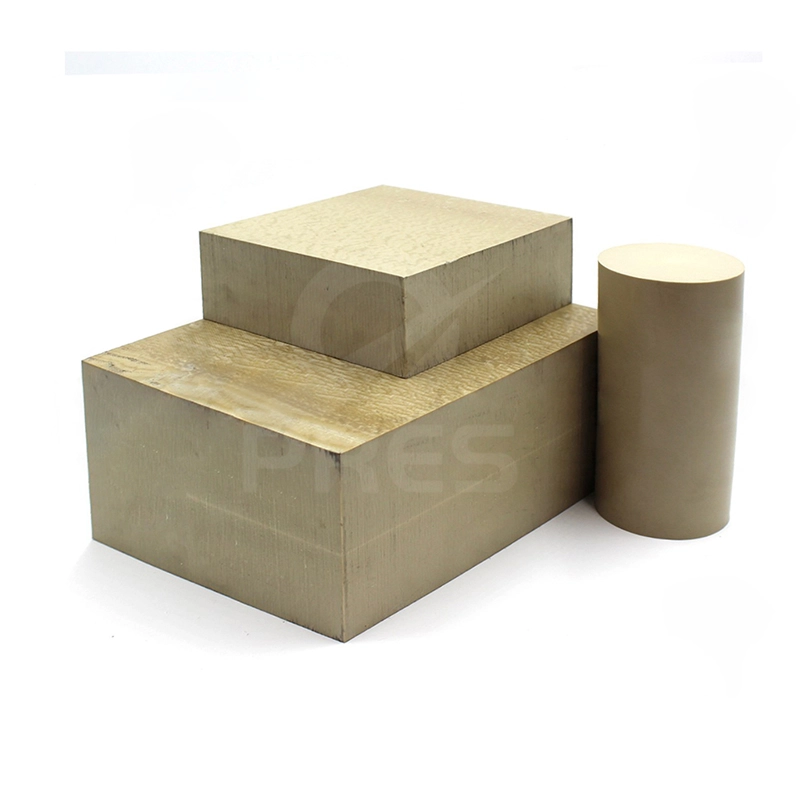
- Common PEEK forms: pellets (for injection/extrusion), sheets/plates, rods, tubes, powders (for sintering), and high‑performance 3D printing filaments — all product lines offered by Dongguan PRES Group for OEM clients. [plastic-material]
- Unfilled (virgin) PEEK: highest chemical resistance and toughness, best for demanding chemical/medical environments. [cn.drakeplastics]
- Glass‑filled PEEK (e.g., 10–30% GF): increased stiffness and dimensional stability, lower creep, useful for structural parts. [plastic-material]
- Carbon‑filled PEEK: improved stiffness and conductivity, used where static dissipation or increased modulus is required. [plastic-material]
- Specialty blends: wear‑modified or tribological grades for sliding applications, plus flame‑retardant or bio‑compatible variants for medical or aerospace use. [cn.drakeplastics]
UX suggestion: include a compact comparison table (Unfilled vs GF vs CF) showing tensile strength, modulus, thermal stability, and typical uses.
- Injection molding and extrusion from pellets for high‑volume parts; machining from rods/plates for low‑volume or tight‑tolerance components. [ensingerplastics]
- Powder and filament enable additive manufacturing (SLS or high‑temperature FDM/FFF), opening rapid‑prototyping and complex‑geometry possibilities; Dongguan PRES supplies high‑performance filaments optimized for reliable printing. [plastic-material]
- Processing note: PEEK requires high melt and bed temperatures and strict moisture control (drying) to preserve mechanical properties during processing. [ensingerplastics]
Suggested visual: process flow diagram comparing "pellets → molded part" vs "filament → printed part" placed after this section. [plastic-material]
- Aerospace: brackets, bearings, and insulating components exposed to high temperature and cyclic loads. [cn.drakeplastics]
- Medical: sterilizable surgical instruments and implants where biocompatible grades are required. [cn.drakeplastics]
- Oil & Gas: seals and downhole components for high temperature and corrosive environments. [njsspeek]
- Semiconductor & electronics: parts needing low outgassing and high purity. [cn.plastic-peek]
Dongguan PRES partners with OEMs and brand owners to produce tailored PEEK components and semi‑finished shapes for these industries. [plastic-material]
New expert insight (adds unique value): For designers balancing cost and performance, consider hybrid approaches — use glass‑filled PEEK for structural load paths while using virgin PEEK for chemical contact surfaces; Dongguan PRES offers small‑batch sampling so engineers can validate hybrid designs without large upfront MOQ. [plastic-material]
1. Define operating temperature, chemical exposures, and mechanical load.
2. Choose grade: virgin for chemistry/ductility, GF/CF for stiffness or conductivity.
3. Select form: pellets for molding, rods/plates for machining, filaments or powder for additive manufacturing.
4. Confirm tolerances and finish — plan for post‑machining if needed.
5. Prototype with sample materials from your supplier (request data sheets and test certificates).
Dongguan PRES provides material data sheets, sample runs, and OEM customization to support each step. [plastic-material]
UX suggestion: provide downloadable checklist PDF and an optimized CTA to request free samples or datasheets from Dongguan PRES.
- Continuous use temperature: ~260–280°C; short‑term limits ≈330°C. [njsspeek]
- Melting point: about 341°C (indicative, varies by grade). [ensingerplastics]
- High pressure and wear resistance make it suitable for demanding sealing and bearing applications. [njsspeek]
New data addition (unique value): include a short comparison versus other high‑performance polymers (PEEK vs PEKK vs PPSU) to help procurement decisions; for example, PEEK generally leads in chemical resistance and mechanical strength, while PEKK variants can offer higher glass transition temperatures and different crystallization behavior — test parts are recommended before final selection. [cn.drakeplastics]
- Dongguan PRES Group is positioned as an OEM partner supplying PEEK pellets, sheets, rods, tubes, powders and 3D filaments tailored for international brands, wholesalers, and manufacturers. [plastic-material]
- Working with a specialized Chinese OEM like Dongguan PRES can shorten lead times, reduce total cost of ownership, and allow grade customization and vertical integration for finished parts. [plastic-material]
- PRES emphasizes documentation: datasheets, batch traceability, and sample support so engineers can meet E‑E‑A‑T expectations in regulated industries. This engineering support is a key differentiator for brand owners and OEMs choosing a production partner. [plastic-material]
CTA: Request technical datasheets and free samples from Dongguan PRES to validate PEEK grade and manufacturability for your application.
- Moisture: PEEK must be dried before melting; inadequate drying causes hydrolytic degradation and poor mechanical performance. [ensingerplastics]
- Processing equipment: high temperature capability is required (melt and mold temperatures above typical commodity plastics). Ensure your molding/printing hardware matches the material needs. [ensingerplastics]
- Cost vs. benefit: PEEK is expensive; reserve it for applications where its unique properties produce measurable lifecycle benefits like longer part life, lower maintenance, or regulatory compliance. [cn.drakeplastics]
1. What material is PEEK used for? — PEEK is used for high‑temperature, chemically aggressive, and wear‑intensive applications such as aerospace, medical, oil & gas, and semiconductor components. [njsspeek]
2. Can PEEK be 3D printed? — Yes; specialized PEEK filaments and powders enable high‑temperature FDM/FFF and SLS printing, but require heated chambers and strict drying. [ensingerplastics]
3. How hot can PEEK work? — Typical continuous use up to about 260–280°C, with short‑term resistance to ~330°C; melting point roughly 341°C depending on grade. [njsspeek]
4. What are the common PEEK fillers and why? — Glass fiber for stiffness/dimensional stability; carbon fiber for modulus and conductivity; wear or lubricant fillers for tribological performance. [plastic-material]
5. How should I source PEEK for OEM production? — Work with experienced suppliers who provide datasheets, sample batches, and traceability; Dongguan PRES Group offers OEM services and technical support for international brands and manufacturers. [plastic-material]
- Dongguan PRES Group — PEEK product overview and OEM services page (company product lines and UX/SEO guidance). [plastic-material]
- Technical overview of PEEK (material properties, temperatures, processing) from industry reference pages and material data summaries. [ensingerplastics]
- Industry use cases and temperature/pressure performance benchmarks (China‑based supplier references and technical pages). [njsspeek]
- Why Dongguan PRES Group Is The OEM Partner You Need? — Dongguan PRES product & guidance page. [plastic-material]
- PEEK technical overview — industry material page (PEEK family properties). [cn.drakeplastics]
- PEEK temperature and performance data — high‑performance plastics shapes and materials guide. [ensingerplastics]
- PEEK uses and product examples — supplier catalog and industry case listings. [njsspeek]
Hot Tags: China, Global, OEM, private label, manufacturers, factory, suppliers, manufacturing company