Views: 249 Author: Dongguan PRES Publish Time: 2026-07-08 Origin: Site


Content Menu
● Why Chemical Compatibility Matters in PEEK Selection
● Chemical Compatibility Profile of PEEK
>> Typical Compatibility Summary
● PRES OEM Support for Global Buyers
>> Why this helps procurement teams
● Industry Use Cases That Need PEEK
● Expert View: How to Evaluate PEEK for Your Application
● Practical Selection Checklist
● Why PRES Should Be Your First Choice
● FAQ
>> 1. Is PEEK chemically compatible with most acids?
>> 2. Can PEEK be used in laboratory tubing?
>> 3. Does temperature affect PEEK chemical resistance?
>> 4. Which PEEK products does PRES supply?
>> 5. What should buyers test before mass production?
When teams search for chemical compatibility PEEK, they are usually trying to answer one practical question: will this material keep performing when it meets acids, bases, solvents, heat, and pressure? For OEM buyers and engineers, the answer matters because a wrong material choice can cause swelling, cracking, contamination, costly downtime, and product failures. That is why Dongguan PRES Group Co., Ltd. focuses on supplying high-performance plastic solutions that help global brands, wholesalers, and manufacturers choose the right PEEK form for the right application. [drakeplastics]
PEEK is widely valued because it combines strong chemical resistance, excellent mechanical strength, and stable performance in demanding environments. Industry compatibility charts consistently show that PEEK handles many common chemicals well, while certain strong oxidizers and concentrated acids require careful testing or avoidance. [astisensor]

Chemical resistance is not just a material property; it is a system-level reliability issue. In real production, a resin, sheet, rod, tube, powder, or filament must survive not only the chemical itself, but also temperature, stress, exposure time, cleaning cycles, and process pressure. Compatibility charts often note that results are based on controlled lab conditions, so final material selection still requires application-specific validation. [drakeplastics]
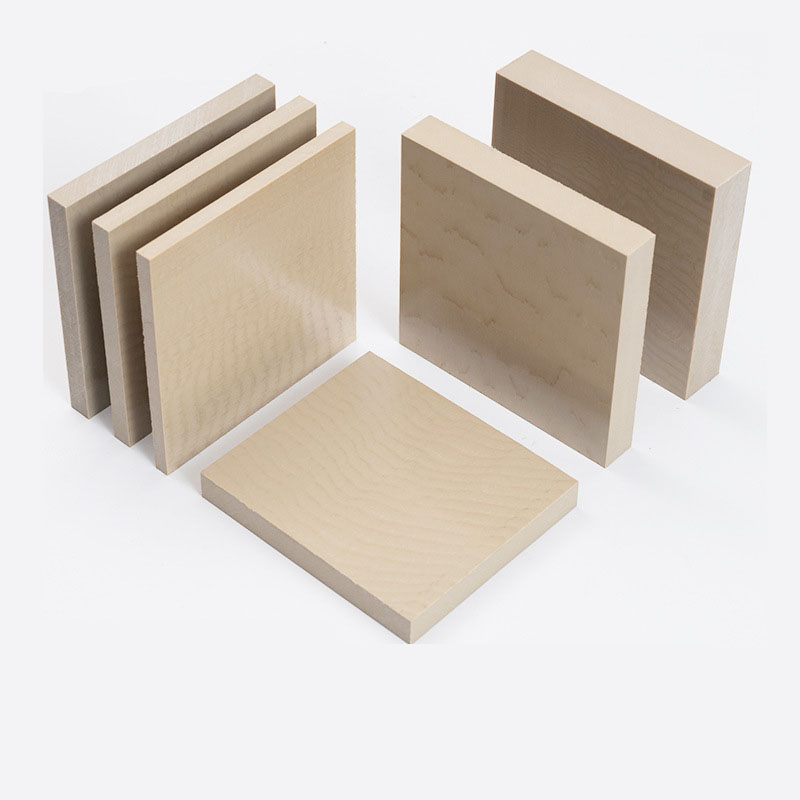
For technical buyers, that means the best question is not simply "Is PEEK resistant?" but rather "Which grade, geometry, and processing method are suitable for my environment?" That is where an OEM partner like PRES becomes valuable, because it can support multiple product formats, including plastic pellets, plates, rods, tubes, powders, and 3D printing filaments, so buyers can match material form to end-use needs. [plastic-material]
PEEK is generally compatible with a broad range of acids, bases, alcohols, hydrocarbons, and many laboratory solvents. Reference charts from multiple suppliers show excellent performance against many common chemicals, with stronger resistance in low-to-moderate concentration exposure conditions. [astisensor]
That said, compatibility is not unlimited. Published references repeatedly flag concentrated nitric acid and concentrated sulfuric acid as problematic, and some charts also warn about swelling or performance loss with solvents such as methylene chloride, DMSO, and THF under certain conditions. [lorric]
| Chemical group | Typical PEEK behavior | Practical note |
|---|---|---|
| Alcohols | Excellent to very good | Common in lab and industrial cleaning. drakeplastics+1 |
| Mild acids | Often excellent | Still validate concentration and temperature. astisensor+1 |
| Bases | Often excellent | Continuous exposure conditions matter. drakeplastics+1 |
| Hydrocarbons | Very good | Often used in chemical handling systems. drakeplastics+1 |
| Strong oxidizing acids | Risky | Concentrated nitric and sulfuric acid need caution. daichem.co+1 |
Chemical compatibility is influenced by more than the chemical name alone. Exposure time, temperature, mechanical stress, and the specific PEEK grade all affect real-world outcomes. A material that performs well in short exposure may behave differently during continuous immersion or elevated-temperature service. [daichem.co]
This is especially important for OEM buyers who work across industries such as laboratory equipment, fluid handling, medical components, and high-temperature industrial parts. In those settings, the right choice may be a pure resin, a reinforced grade, a sheet for machining, a rod for turning, or a filament for additive manufacturing. [plastic-material]
Dongguan PRES Group Co., Ltd. is positioned as a high-performance plastics manufacturer in Dongguan, China, supplying PEEK pellets, sheets, rods, tubes, powders, and 3D printing filaments, along with OEM and ODM support for global buyers. That matters because many buyers do not need only raw material; they need a stable supply chain, custom grades, processing support, and export-friendly service. [plastic-material]
For brands and manufacturers, PRES can play a strategic role in material sourcing and product development. Instead of buying generic material and solving compatibility issues later, teams can align material selection, form factor, and downstream processing at the start of the project. [plastic-material]
- Faster specification alignment, because one supplier covers multiple PEEK formats. [plastic-material]
- Better design flexibility, because sheets, rods, tubes, powders, and filaments support different manufacturing routes. [plastic-material]
- Lower sourcing friction, because OEM buyers can consolidate technical discussions and purchasing into one channel. [plastic-material]
PEEK is often selected where conventional plastics fail under chemical or thermal load. Common use cases include lab fluid paths, analytical components, pump parts, precision machined parts, wear-prone mechanical assemblies, and parts that must keep dimensional stability in harsh environments. [peekchina]
In practical terms, this means buyers often choose PEEK when they need a material that can support reliability rather than just low cost. In many cases, the hidden value of PEEK is reduced downtime, fewer replacements, and better process consistency over time. [eureka.patsnap]
A professional evaluation should follow a simple process. First, identify the exact chemical, including concentration. Second, define operating temperature, pressure, and exposure duration. Third, confirm whether the part is static, moving, pressurized, or repeatedly cleaned. Fourth, test the exact grade and geometry before mass production. [drakeplastics]
This approach is especially important for OEM projects because the same base resin may behave differently after machining, molding, or extrusion. A good supplier should help you bridge the gap between a compatibility chart and a real production-ready part. [plastic-material]
Use this checklist before locking in a PEEK-based design:
1. List all chemicals, including cleaners, process fluids, and accidental exposure.
2. Record temperature range, including peak and continuous use conditions.
3. Define exposure mode, such as splash, immersion, vapor, or repeated wash cycles.
4. Specify the product form, such as pellet, sheet, rod, tube, powder, or filament.
5. Request validation, especially for strong acids, oxidizers, or high-stress parts. [astisensor]
If your business needs a PEEK supplier that understands both material performance and OEM execution, Dongguan PRES Group Co., Ltd. is built for that role. The company's offering across pellets, plates, rods, tubes, powders, and high-performance 3D printing filaments makes it easier for international buyers to move from concept to production without switching suppliers mid-project. [plastic-material]
Just as important, PRES is not only selling material; it is supporting decision-making. That combination of product breadth, OEM service, and technical orientation is what global buyers expect from a serious high-performance plastics partner. [plastic-material]
Chemical compatibility is one of the most important reasons engineers choose PEEK, but the real advantage comes from selecting the right grade and format for the actual operating environment. With the right technical partner, PEEK becomes more than a material choice; it becomes a reliability strategy. [lorric]
For companies that need a dependable OEM supplier, Dongguan PRES Group Co., Ltd. offers the product range and manufacturing support needed to build stronger chemical-resistant solutions for global markets. [plastic-material]
Yes, PEEK is compatible with many acids, especially at moderate concentrations, but concentrated nitric acid and sulfuric acid are commonly flagged as problematic. [daichem.co]
Yes. PEEK is widely used in laboratory and fluid-handling applications because of its chemical resistance and dimensional stability, but solvent type and temperature must be checked first. [lorric]
Yes. Higher temperature usually increases chemical stress, so a chemical that is acceptable at room temperature may become risky at elevated temperatures. [drakeplastics]
PRES supplies PEEK pellets, sheets, rods, tubes, powders, and 3D printing filaments, and also provides OEM/ODM support for global buyers. [plastic-material]
Buyers should test the exact chemical, concentration, temperature, exposure time, and the final part geometry before full-scale production. [daichem.co]
1. Drake Plastics, PEEK Chemical Compatibility Guide — [https://drakeplastics.com/wp-content/uploads/2026/02/PEEK_Chemical_Compatibility_Reference_Chart_2.04.26.pdf] [drakeplastics]
2. Calpac Lab, Polyetherether Ketone (PEEK) Chemical Compatibility Chart — [https://www.calpaclab.com/polyetherether-ketone-peek-chemical-compatibility-chart/] [calpaclab]
3. PEЕК China, PEEK Chemical Compatibility for HPLC and Microfluidic Applications — [https://www.peekchina.com/blog/peek-chemical-compatibility.html] [peekchina]
4. Daichem, Chemical resistance PEEK and other polymers — [https://www.daichem.co.jp/system/wp-content/themes/daichem2017/pdf/Chemical_resistance_jour.pdf] [daichem.co]
5. AstraSensor, PEEK Chemical Compatibility & Resistance Chart — [https://www.astisensor.com/PEEK_Chemical_Compatibility_Resistance_Chart.pdf] [astisensor]
6. Dongguan PRES Group Co., Ltd., Industry Knowledge — [https://www.plastic-material.com/industry-knowledge.html] [plastic-material]
7. Dongguan PRES Group Co., Ltd., Products — [https://www.plastic-material.com/products.html] [plastic-material]
8. Lorric, PEEK Material Characterization — [https://www.lorric.com/en-in/Articles/Material/plastic/material-chemical-resistance-chart-PEEK] [lorric]
Hot Tags: China, Global, OEM, private label, manufacturers, factory, suppliers, manufacturing company