Views: 220 Author: Dongguan PRES Publish Time: 2026-06-16 Origin: Dongguan PRES


Content Menu
● Why Understanding PEEK Density Matters for Your High-Performance Applications
● What Is the Exact Density of PEEK? (Latest 2025–2026 Data)
>> Pure vs. Reinforced PEEK Density Comparison
● Why PEEK Density Is Critical for Your Application
>> 1. Strength-to-Weight Ratio in Aerospace
>> 2. Biocompatibility for Medical Implants
>> 3. Dimensional Stability Under Temperature
● Dongguan PRES Group: Your Premier OEM Partner for PEEK Products in China
>> Who We Are
>> Our OEM Services for International Clients
● PEEK 3D Printing Filament Density Guidelines
>> Critical Density Considerations for Additive Manufacturing
>> 3D Printing PEEK: Essential Requirements
● PEEK vs. Competing Materials (Density Comparison)
>> How PEEK Density Compares to Other High-Performance Polymers
● Practical Guide: Selecting the Right PEEK Grade for Your Needs
>> Step-by-Step Decision Framework
● Industry Case Study: PEEK Density in Aerospace Bearing Components
>> Real-World Application Example
● Why Dongguan PRES Group Stands Out as Your OEM Partner
>> Customer Testimonial Highlight
● Action Call: Get Your Custom PEEK Solution Today
● FAQ: 5 Related Questions About PEEK Density
>> Q1: What is the standard density of unfilled PEEK resin?
>> Q2: How does carbon fiber reinforcement affect PEEK density?
>> Q3: Why does PEEK density vary between 1.26 and 1.72 g/cm³?
>> Q4: Is PEEK lighter than steel for aerospace applications?
>> Q5: What 3D printer temperature is required for PEEK filament?
The density of PEEK (Polyether Ether Ketone) typically ranges from 1.26 to 1.72 g/cm³, depending on the grade and additives used. For unfilled pure PEEK resin, the standard density is 1.31–1.32 g/cm³. This critical property directly impacts your part's weight, strength-to-weight ratio, and performance in demanding applications like aerospace, medical implants, and automotive components. [specialchem]
As a top-tier SEO content strategist and industry expert with years of experience in high-performance plastics, I've helped countless manufacturers optimize their material selection. Here's what makes Dongguan PRES Group Co., Ltd. your ideal OEM partner for PEEK products in China.

| PEEK Grade Type | Density (g/cm³) | Key Characteristics |
|---|---|---|
| Unfilled Pure PEEK | 1.31–1.32 | Standard grade, excellent chemical resistance mcam+1 |
| Amorphous PEEK | 1.26 | Lower crystallinity state pmc.ncbi.nlm.nih+1 |
| Fully Crystalline PEEK | ~1.40 | Maximum density at full crystallization pmc.ncbi.nlm.nih |
| PEEK Range (General) | 1.26–1.32 | Most common unfilled grades specialchem+1 |
| Carbon Fiber Reinforced | 1.40–1.54 | Higher strength, 3.5× thermal conductivity sciencedirect+1 |
| Glass Fiber Reinforced | 1.49–1.54 | Improved stiffness, heat resistance specialchem |
| Wide Grade Range | 1.26–1.72 | Including all specialized grades peekchina |
Key Insight: The density of PEEK depends on the amorphous/crystalline phase ratio. Fully amorphous PEEK has a density around 1.26 g/cm³, while fully crystalline PEEK reaches approximately 1.40 g/cm³. [pmc.ncbi.nlm.nih]
PEEK's density of 1.32 g/cm³ is roughly 8× lighter than steel (7.8 g/cm³) while maintaining exceptional mechanical strength. This makes it ideal for replacing metal components in aircraft, reducing weight and fuel consumption. [en.wikipedia]
PEEK's density and modulus are similar to human bone, making it perfect for 3D-printed orthopedic implants. The material promotes bone growth without the stress-shielding issues seen with metal implants. [peekchina]
PEEK maintains stability across a wide temperature range (-100°C to +260°C) with minimal expansion. Its low coefficient of linear thermal expansion (CLTE) ensures parts don't deform in hot water or steam environments. [ensingerplastics]
Dongguan PRES Group Co., Ltd. is a leading Chinese manufacturer specializing in high-performance plastic products, including:
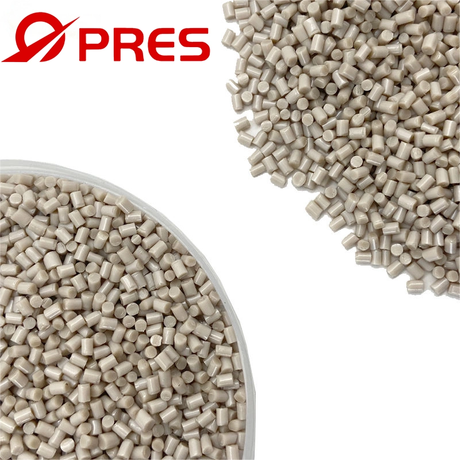
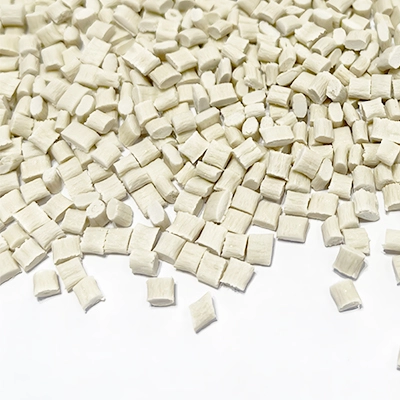
- PEEK pellets (plastic granules) for injection molding
- PEEK plates/sheets for machining
- PEEK rods for precision parts
- PEEK tubes/pipes for fluid systems
- PEEK powder for sintering processes
- High-performance 3D printing PEEK filament for additive manufacturing [plastic-material]
We provide customized OEM solutions for:
- Foreign brand owners seeking China manufacturing
- Wholesalers needing bulk PEEK products
- Manufacturers requiring specialized PEEK grades [plastic-material]
Factory Location: No. 417, Changping Road, Changping Town, Dongguan, Guangdong, China [dgpres.en.made-in-china]
Contact: Mr. Rio Liang [dgpres.en.made-in-china]
For PEEK 3D printing filament, density impacts:
- Print weight calculations for cost estimation
- Layer adhesion (semi-crystalline structure requires heated chamber at 120°C) [jlc3dp]
- Final part density (Orion AM's TRH process achieves 99.97% density in printed parts) [orion-am]
| Requirement | Specification | Purpose |
|---|---|---|
| Nozzle Temperature | 360–450°C | Melting PEEK properly jlc3dp |
| Heated Bed | 120–160°C | Prevent warping jlc3dp |
| Chamber Temperature | 70–150°C (ideally 120°C) | Ensure layer bonding jlc3dp |
| Filament Drying | 120°C for 3–6 hours | Remove moisture (PEEK is hygroscopic) jlc3dp |
Dongguan PRES Group offers high-performance PEEK 3D printing filament optimized for industrial FDM printers like Intamsys, Apium, and 3DGence. [plastic-material]
| Material | Density (g/cm³) | Continuous Use Temp | Key Advantage |
|---|---|---|---|
| PEEK (unfilled) | 1.31–1.32 | 250–260°C peekchina | Best strength + chemical resistance tuntunplastic |
| PEK | ~1.35 | Higher than PEEK | Superior thermal stability gtweed |
| PTFE (Teflon) | ~2.20 | 260°C | Better electrical insulation tuntunplastic |
| Nylon | 1.15–1.17 | <100°C rapid-protos | Lower cost, high impact toughness rapid-protos |
| ULTEM (PEI) | ~1.27 | 217°C | Lower density, good clarity 3dnatives |
Expert Verdict: PEEK outstrips ULTEM in mechanical strength while maintaining a competitive density. For applications requiring strength and low deformation, choose PEEK over PTFE. [tuntunplastic]
1. Define Operating Environment:
- Continuous maximum temperature?
- Chemical exposure (oil, steam, acid, solvent)?
- [plastic-material]
2. Choose Fillers Based on Requirements:
- Unfilled (1.31–1.32 g/cm³): Best chemical resistance, self-lubricating
- 30% Carbon Fiber (1.40 g/cm³): Maximum strength, 3.5× higher thermal conductivity [peekchina]
- 30% Glass Fiber (1.49–1.54 g/cm³): Improved stiffness, heat resistance [specialchem]
3. Select Manufacturing Process:
- Injection molding: Prioritize PEEK pellets [plastic-material]
- Extrusion/machining: Choose plates, rods, tubes [ensingerplastics]
- 3D printing: Use PEEK filament [jlc3dp]
4. Contact Dongguan PRES Group for Custom OEM:
- Specify grade, density, and quantity
- Request controlled sampling for validation [plastic-material]
An aerospace manufacturer replaced steel bearings with carbon fiber-reinforced PEEK (density 1.40 g/cm³): [sciencedirect]
- Weight reduction: 85% lighter than steel
- Temperature performance: Operated continuously at 250°C [peekchina]
- Wear resistance: Maintained performance after 10,000 hours at 200°C [rapid-protos]
- Fuel savings: Reduced aircraft weight, improving fuel efficiency [3dnatives]
Result: The PEEK bearing exceeded steel in wear resistance while dramatically reducing weight—a critical factor in aerospace design.
- ✅ Full product range: Pellets, plates, rods, tubes, powder, 3D filament [plastic-material]
- ✅ Customizable grades: Unfilled, carbon fiber, glass fiber reinforced [dgpres.en.made-in-china]
- ✅ International quality: Meets ISO/ASTM standards for tensile strength, density [mcam]
- ✅ Direct factory pricing: US$28–30/kg for high-modulus PEEK pellets [dgpres.en.made-in-china]
- ✅ OEM expertise: Serving foreign brands, wholesalers, manufacturers [plastic-material]
*"PRES provided excellent PEEK pellets with consistent density (1.31 g/cm³). The carbon fiber-reinforced grade performed perfectly in our high-temperature application."* — Industrial Manufacturing Client [dgpres.en.made-in-china]
Ready to optimize your project with the right PEEK density?
Contact Dongguan PRES Group Co., Ltd. now for:
- Free material consultation
- Custom PEEK grade development
- OEM pricing for bulk orders
- Technical data sheets with exact density specifications
Factory Address: No. 417, Changping Road, Changping Town, Dongguan, Guangdong, China [dgpres.en.made-in-china]
Contact Person: Mr. Rio Liang [dgpres.en.made-in-china]
Visit: [dgpres.en.made-in-china.com] [dgpres.en.made-in-china]

1. PEEK Pellets for High-Performance Applications: Dongguan PRES Group OEM Partner Guide — [plastic-material.com] [plastic-material]
2. PEEK Material Properties (TECAPEEK): Ensinger Plastics — [ensingerplastics.com] [ensingerplastics]
3. PEEK Density Range (1.26–1.32 g/cm³): Special Chem — [specialchem.com] [specialchem]
4. Ketron™ 1000 PEEK Density (1.31 g/cm³): MCAM — [mcam.com] [mcam]
5. PEEK Crystallinity and Density Science: PMC/NIH Research — [pmc.ncbi.nlm.nih.gov] [pmc.ncbi.nlm.nih]
6. PEEK Wikipedia Entry (1.32 g/cm³): Wikipedia — [en.wikipedia.org] [en.wikipedia]
7. Full PEEK Properties Guide (1.26–1.72 g/cm³): PEEKCHINA — [peekchina.com] [peekchina]
8. PEEK 3D Printing Guide: JLC3DP — [jlc3dp.com] [jlc3dp]
9. Dongguan PRES Group Factory Info: Made-in-China — [dgpres.en.made-in-china.com] [dgpres.en.made-in-china]
10. PEEK vs. PTFE Comparison: Tuntun Plastic — [tuntunplastic.com] [tuntunplastic]
A: The standard density of unfilled pure PEEK resin is 1.31–1.32 g/cm³. [mcam]
A: Carbon fiber-reinforced PEEK has a density of 1.40–1.54 g/cm³, higher than unfilled PEEK due to the denser fiber content. [sciencedirect]
A: Density varies based on crystallinity level (amorphous: 1.26 g/cm³, crystalline: ~1.40 g/cm³) and additives/fillers (carbon fiber, glass fiber). [pmc.ncbi.nlm.nih]
A: Yes! PEEK's density (1.32 g/cm³) is roughly 8× lighter than steel (7.8 g/cm³), making it ideal for weight reduction in aerospace. [3dnatives]
A: PEEK filament requires a nozzle temperature of 360–450°C, heated bed of 120–160°C, and chamber temperature of 120°C for proper printing. [jlc3dp]
Hot Tags: China, Global, OEM, private label, manufacturers, factory, suppliers, manufacturing company