
Views: 218 Author: PRES Publish Time: 2026-08-12 Origin: Site


Content Menu
● Why PPS Is Important for New Energy Vehicle Components
>> PPS Compared with Other Engineering Plastics
● Application 1: PPS for Battery Explosion-Proof Covers and Terminal Gaskets
>> Why PPS Is Suitable for Battery Terminal Gaskets
>> Conductive PPS for Positive Terminal Gaskets
>> Insulating PPS for Negative Terminal Gaskets
>> Recommended Validation Sequence
● Application 2: PPS in Electric Drive Systems
>> Typical PPS Components in EV Motors and Inverters
>> Benefits for High-Voltage Electrical Parts
>> PPS for Stator and Rotor Components
>> Design and Processing Considerations
● Application 3: PPS for Electronic Coolant Pumps
>> Recommended Electronic Pump Test Plan
● Application 4: PPS for Electronic Oil Pumps
>> Performance Requirements for Oil-Pump PPS
>> PPS in Oil-Pump Motor Stators
● How to Select the Right PPS Grade for EV Components
>> A Practical Material-Selection Checklist
>> Working with an Integrated PPS Manufacturing Partner
● Common Risks When Using PPS in EV Applications
>> Risk 1: Ignoring Weld-Line Strength
>> Risk 2: Assuming All Fluids Are Equivalent
>> Risk 3: Underestimating Thermal Expansion
>> Risk 4: Using Datasheet Values as Guaranteed Part Performance
>> Risk 5: Neglecting Regulatory Documentation
● Frequently Asked Questions About PPS in New Energy Vehicles
>> 1. Why is PPS used in electric vehicles?
>> 2. Is PPS suitable for battery terminal gaskets?
>> 3. Can PPS replace metal in EV components?
>> 4. Is PPS suitable for coolant pump impellers?
>> 5. What is the difference between conductive PPS and insulating PPS?
>> 6. Can PRES provide PPS finished components?
>> 7. What information should customers provide when requesting a PPS solution?
● Conclusion: PPS Is a Strategic Material for EV Reliability
As electric vehicles (EVs) and hybrid vehicles become more efficient, compact, and software-defined, their components must withstand higher temperatures, aggressive fluids, electrical stress, vibration, and demanding production tolerances. Polyphenylene sulfide (PPS) is increasingly selected for these conditions because it combines high-temperature resistance, chemical stability, flame retardancy, low moisture absorption, dimensional stability, and strong electrical insulation.
From our experience as an engineering-plastics supplier and integrated manufacturing partner, PPS is not simply a replacement for metal or standard engineering plastics. It is a material platform that can help automotive engineers reduce weight, simplify assembly, and improve long-term reliability.
This article examines four major PPS application scenarios in the new energy vehicle sector:
1. Battery explosion-proof covers and terminal gaskets
2. Electric drive systems
3. Electronic coolant pumps
4. Electronic oil pumps
It also explains how to select PPS grades, validate designs, and avoid common processing and performance risks.

PPS is a semi-crystalline, aromatic engineering polymer known for its stable performance in demanding environments. Depending on the grade and reinforcement system, PPS can provide:
- Continuous high-temperature performance
- Excellent resistance to battery electrolytes, coolants, oils, and cleaning agents
- Low water absorption
- High dimensional stability
- Excellent electrical insulation
- Inherent flame retardancy
- Good creep and fatigue resistance
- High strength and stiffness
- Resistance to aging and oxidation
These characteristics are particularly valuable in EV and hybrid-vehicle systems, where components may be exposed to frequent thermal cycling and compact, high-power architectures.
Market research has estimated that the global PPS market exceeded US$1.4 billion in 2022, with automotive applications representing more than one-third of demand. Forecasts also indicate continued growth through 2032, supported by automotive electrification, electrical and electronic applications, and demand for lightweight materials. Because market estimates vary by research methodology, published figures should be treated as directional rather than absolute. [1]
| Requirement | PPS | PA66 | PBT | PEEK |
|---|---|---|---|---|
| High-temperature resistance | Excellent | Good | Moderate to good | Exceptional |
| Moisture absorption | Very low | High | Low | Very low |
| Chemical resistance | Excellent | Moderate | Good | Excellent |
| Flame retardancy | Naturally favorable | Grade-dependent | Grade-dependent | Grade-dependent |
| Dimensional stability | Excellent | Moderate | Good | Excellent |
| Relative material cost | Medium to high | Low to medium | Medium | Very high |
| Typical role | High-temperature electrical and structural parts | General structural parts | Connectors and housings | Extreme-performance parts |
Battery covers and terminal assemblies perform two essential functions:
1. Maintaining stable electrical connection
2. Providing mechanical and safety protection during abnormal thermal events
In battery modules and packs, the terminal gasket or insulating component must maintain its shape and sealing performance while exposed to temperature changes, electrolyte contamination, electrical potential, and mechanical stress.
PPS is well suited to positive and negative terminal gaskets because it offers:
- High chemical resistance, including resistance to many battery-related fluids
- Low moisture absorption
- Strong bonding compatibility with metal terminals
- Good dimensional stability
- High resistance to thermal deformation
- Reliable electrical insulation
- Good performance during welding and assembly
The coefficient of thermal expansion and interfacial behavior between the PPS part and aluminum terminal are important design considerations. A well-selected PPS compound can reduce stress caused by repeated heating and cooling.
A conductive or antistatic PPS grade may be used when the positive terminal gasket requires controlled electrical behavior. Typical design targets may include:
- Stable resistance within the specified operating range
- Minimal resistance variation
- No sinking or distortion during laser welding
- No blistering or surface collapse
- No cracking after high- and low-temperature testing
The target resistance should not be copied from a generic material specification. It must be determined according to the battery architecture, creepage distance, electrical design, and safety requirements.
For insulating components, the material must maintain dielectric performance throughout assembly and service. Common requirements include:
- Dielectric strength above the design threshold
- Stable insulation after thermal cycling
- Resistance to electrolyte exposure
- No cracking or warpage
- Reliable performance after welding and sealing
Before mass production, manufacturers should validate the complete component rather than relying only on a resin datasheet:
1. Chemical immersion testing in the actual battery fluid or electrolyte.
2. Thermal cycling across the specified operating temperature range.
3. Electrical insulation and resistance testing after aging.
4. Laser-welding or assembly simulation using production parameters.
5. Leakage, sealing, and dimensional inspection.
6. Failure analysis of cracks, sinks, warpage, and interfacial separation.
The electric drive system converts electrical energy into mechanical power. It typically includes the motor, inverter, stator, rotor, housing, connectors, resolver or rotary transformer, and busbar assembly.
These components operate in an environment characterized by:
- High current density
- Fast switching frequencies
- Electromagnetic and thermal loads
- Vibration
- Coolant or oil exposure
- Limited installation space
PPS is used in several drive-system components because it combines mechanical rigidity, electrical performance, flame resistance, and thermal stability.
PPS may be used for:
- Stator slot liners and insulation components
- Coil bobbins
- Busbar supports
- High-voltage connectors
- Terminal blocks
- Resolver components
- Inverter and power-module insulating parts
- IGBT or power-electronics support structures
- Motor sensor housings
As EV voltage platforms move toward higher system voltages, insulation design becomes increasingly important. PPS can support high-voltage component design through:
- High dielectric performance
- Low moisture uptake
- Resistance to tracking and electrical degradation, depending on grade
- Stable dimensions around terminals and inserts
- Flame-retardant formulations
- Good compatibility with insert molding
For high-voltage connectors, engineers must also consider creepage distance, clearance, partial discharge, arc tracking, heat generation, and contamination. Material selection alone cannot guarantee system-level safety.
Glass-fiber-reinforced PPS can provide the stiffness and dimensional stability required for motor insulation parts and structural supports. It can help maintain:
- Accurate electrical separation
- Stable winding geometry
- Resistance to vibration
- Low deformation during thermal cycling
- Consistent performance at elevated temperatures
However, excessive glass-fiber loading may increase anisotropy, reduce surface quality, or create stress concentration around inserts. The correct balance between strength, flow, weld-line performance, and dimensional control is essential.
For complex PPS components, design teams should pay attention to:
- Uniform wall thickness
- Appropriate gate location
- Weld-line position
- Fiber orientation
- Insert-molding temperature
- Mold temperature and crystallization
- Post-molding dimensional inspection
Electronic coolant pumps are used in battery thermal management, motor cooling, inverter cooling, and cabin-heating systems. Unlike traditional mechanical pumps, electronic pumps can provide more precise and independent flow control.
Typical components include:
- Pump housing
- Impeller
- Rotor
- Water jacket or isolation sleeve
- Motor housing
- Controller housing
- Electrical connector
- Bearings and seals
PPS is suitable for many of these parts because they require a combination of chemical resistance, low water absorption, high strength, and dimensional stability.
The pump housing is exposed to coolant, pressure, vibration, and repeated thermal cycling. A suitable PPS compound can provide:
- Resistance to glycol-based coolants
- Low moisture absorption
- High rigidity
- Good resistance to hydrolysis, depending on formulation
- Stable dimensions
- Strong insert-molding performance
- Resistance to cracking during storage and service
The housing must also be designed to prevent excessive residual stress. Poor gate design, uneven cooling, or insufficient mold temperature can lead to delayed cracking.
The isolation sleeve separates the wet area from the motor and electrical system. It requires:
- Precise dimensional control
- Smooth and consistent surface quality
- Resistance to coolant contact
- Mechanical strength under pressure and vibration
- Low permeability and reliable sealing interfaces
In this application, surface finish and molding consistency can be as important as tensile strength.
An impeller must maintain its geometry while rotating continuously. Important performance requirements include:
- High mechanical strength
- Low moisture absorption
- Good wear resistance
- Balance and dimensional accuracy
- Resistance to coolant exposure
- Stable performance during long-term operation
The supplied technical specification indicates a design target involving contact with coolant at approximately 140°C for up to 2,000 hours. Such a target should always be confirmed through testing with the actual coolant formulation, pressure, flow rate, and component geometry.
A robust validation program should include:
- Thermal aging in the actual coolant
- Pressure and burst testing
- Endurance cycling
- Impeller balance testing
- Weld-line strength evaluation
- Leakage testing
- Dimensional measurement before and after aging
- Electrical isolation testing for integrated pump assemblies
Electronic oil pumps support precise thermal management and lubrication in hybrid and electric powertrains. They can be used to cool:
- Drive motors
- Gearboxes
- Power electronics
- Transmission components
- Hybrid-system assemblies
Common PPS applications include:
- Oil-pump end covers
- Pump housings
- Motor stators
- Insulating parts
- Connector and controller components
Electronic oil-pump components may encounter oil, additives, elevated temperatures, pressure fluctuations, vibration, and electrical loads. The selected PPS material should provide:
- Resistance to automotive oils and additives
- High- and low-temperature stability
- Low moisture absorption
- High dimensional stability
- Resistance to hydrolysis where relevant
- Good electrical insulation
- Creep resistance
- Reliable insert-molding performance
A material that performs well in coolant may not automatically perform well in transmission fluid or specialized e-drive oil. Fluid compatibility must therefore be evaluated using the final formulation and exposure conditions.
For motor-stator components, PPS can provide a combination of:
- Electrical insulation
- Thermal resistance
- High rigidity
- Stable geometry
- Resistance to vibration
- Compatibility with automated assembly
The most important validation factors include insulation after aging, dimensional change, bonding or encapsulation quality, and resistance to thermal shock.
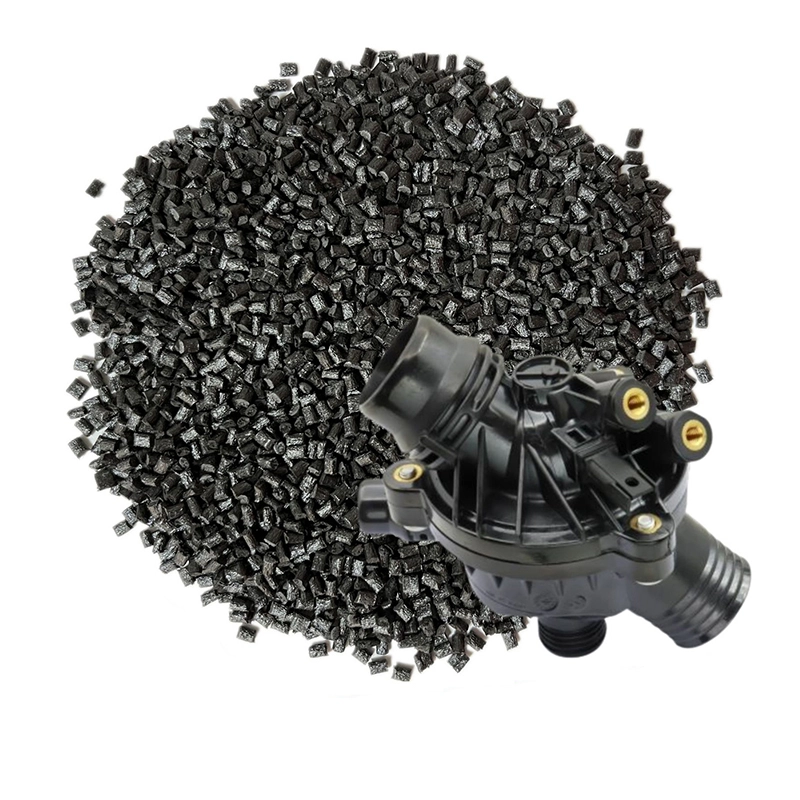
"PPS" is not one universal material. Available grades may differ in reinforcement, conductivity, toughness, flow behavior, flame retardancy, and chemical resistance.
1. Define the operating environment
- Temperature range
- Thermal-cycle frequency
- Coolant, oil, or electrolyte
- Pressure and vibration
- Electrical voltage and insulation requirements
2. Define the part function
- Structural
- Sealing
- Insulating
- Conductive
- Wear-resistant
- Flow-control
3. Choose the reinforcement system
- Glass fiber for stiffness and dimensional stability
- Mineral reinforcement for reduced anisotropy
- Conductive fillers for controlled resistance
- Toughened systems for impact-sensitive designs
4. Review processing requirements
- Melt flow
- Mold temperature
- Drying conditions
- Gate design
- Insert-molding compatibility
5. Validate the molded part
- Do not rely only on standard coupon data.
- Test the actual geometry, fluid, joining method, and production process.
For complex EV components, material supply and part manufacturing should be evaluated together. A qualified partner can support:
- PPS pellet selection
- Sheet, rod, and tube supply for prototypes or fixtures
- CNC-machined engineering samples
- Injection-molded production parts
- Insert molding
- Dimensional and visual inspection
- Design-for-manufacturing review
- Custom compound or grade evaluation
At PRES, our role is to help customers move from material specification to validated component, whether the requirement involves PPS granules, semi-finished stock, CNC machining, injection molding, or customized processing.
PPS offers strong performance, but it is not automatically suitable for every design.
A complex molded part may fail at a weld line even when the base material has excellent strength. Gate locations and flow paths must be reviewed before tooling.
Coolant, battery electrolyte, gear oil, and cleaning agents can produce different aging mechanisms. Always test with the actual fluid and additive package.
PPS has good dimensional stability, but glass-fiber orientation can create directional shrinkage and warpage. Metal inserts require careful tolerance and interface design.
Datasheet properties are usually measured under controlled laboratory conditions. The finished part may behave differently because of geometry, molding history, fiber orientation, and residual stress.
Automotive customers may require documentation related to flammability, restricted substances, material traceability, quality systems, and product-change control. These requirements should be established early in the sourcing process.
PPS is used because it offers high-temperature resistance, chemical resistance, low moisture absorption, flame retardancy, dimensional stability, and strong electrical performance.
Yes. Properly selected PPS grades can be used for terminal gaskets and insulating components, provided they pass the required electrolyte, thermal-cycle, electrical, sealing, and assembly tests.
In some applications, yes. PPS can reduce weight and integrate multiple functions, but the decision must consider strength, heat dissipation, wear, electrical requirements, and total system cost.
PPS is commonly considered for coolant pump impellers because of its strength, low moisture absorption, chemical resistance, and dimensional stability. Actual suitability depends on the coolant, temperature, speed, pressure, and endurance target.
Conductive PPS contains conductive fillers to achieve controlled electrical resistance. Insulating PPS is formulated to maintain high electrical resistance and dielectric performance.
PRES can support both PPS material supply and precision component manufacturing, including CNC machining, injection molding, and customized processing, subject to project requirements and technical evaluation.
Useful information includes part drawings, operating temperature, fluid type, voltage, pressure, cycle life, dimensional tolerances, production volume, joining method, and applicable automotive standards.
PPS has become an important engineering plastic for new energy vehicles because it addresses several challenges simultaneously: thermal stress, aggressive fluids, high-voltage insulation, weight reduction, dimensional control, and compact component integration.
Its most valuable applications include battery terminal gaskets, electric-drive components, electronic coolant pumps, and electronic oil pumps. However, successful implementation depends on more than selecting a resin family. Engineers must match the PPS grade to the fluid, temperature, electrical load, geometry, molding process, and validation plan.
For customers developing EV components, PRES provides an integrated path from PPS pellets and semi-finished materials to CNC prototypes, injection-molded parts, and customized production solutions. Contact our technical team to discuss material selection, part design, processing feasibility, and sample development.
1. [Market.us – Polyphenylene Sulfide Market research and forecast information]
2. [U.S. Department of Energy – Electric Vehicle Technologies and thermal-management resources]
3. [UL Solutions – UL 94 flammability testing information]
4. [SABIC – Specialty compounds and engineering thermoplastics technical resources]
5. [Celanese – Engineered materials and PPS technical resources]
6. [Solvay – Ryton PPS material and application resources]
7. [Mitsubishi Chemical Group – Engineering plastics technical information]


