Views: 247 Author: Dongguan PRES Publish Time: 2026-07-06 Origin: Site


Content Menu
● What "Light Plastic Material" Really Means
● Why OEM Buyers Choose PRES First
● Where Light Plastic Material Creates Value
● Product Formats That Support Production
● Industry Insight: Why Lightweighting Is Accelerating
● FAQ
>> 1. What is a light plastic material?
>> 2. Why are high-performance plastics important in OEM production?
>> 3. What products does Dongguan PRES Group Co., Ltd. supply?
>> 4. Which industries use light plastic material most?
>> 5. How do I choose the right light plastic material?
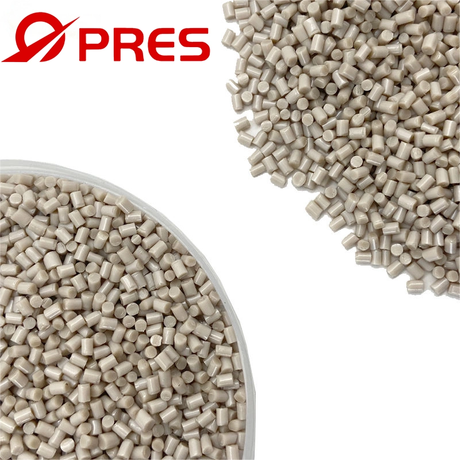
When buyers search for light plastic material, they usually want more than low weight alone. They want a material that is strong, stable, processable, and cost-effective—and they want a supplier who can support OEM production with consistency and technical confidence. Dongguan PRES Group Co., Ltd. in Dongguan, China, supplies high-performance plastic products including pellets, sheets, rods, tubes, powders, and 3D printing filaments, and also supports mold design, manufacturing, and injection molding for global buyers. [plastic-material]
In today's manufacturing landscape, lightweighting is not a trend; it is a business requirement. Market research shows the global lightweight materials market is expanding, with Asia-Pacific leading growth and polymers/composites holding the largest share, while additive manufacturing is gaining momentum for lightweight part production. That shift makes the right light plastic material strategy especially important for brands, wholesalers, and manufacturers that need performance without unnecessary mass. [plastic-material]

The term light plastic material is often used broadly, but in practice it refers to engineering plastics and performance polymers designed to reduce weight while still meeting mechanical and thermal requirements. These materials are commonly used when metal is too heavy, too costly to machine, or too limited in design flexibility. In many OEM projects, the goal is not simply to replace metal, but to improve the entire part system through lighter, more efficient material selection.
From an engineering perspective, the best light plastic material should deliver:
- Low density for weight reduction.
- Enough strength and stiffness for structural use.
- Heat and chemical resistance for demanding environments.
- Good machinability or moldability for production efficiency.
- Consistency across batches for OEM reliability.
That is why products such as PEI, PPS, PSU, PPSU, PEEK, and advanced 3D printing filaments are often chosen for high-end applications. These materials support industries where failure is expensive, including electronics, automotive, aerospace, medical, and industrial equipment. [plastic-material]
Dongguan PRES Group Co., Ltd. stands out because it is not only a material supplier; it is an OEM-oriented manufacturing partner. According to its own industry knowledge pages, PRES supplies multiple product forms and provides related services such as mold design and injection molding, which makes sourcing more efficient for overseas brands and production teams. That matters because many buyers do not just need raw material; they need a partner who can help translate product goals into manufacturable parts. [plastic-material]
From an E-E-A-T standpoint, the strongest supplier content is built on experience and utility. Google's quality guidance emphasizes helpful, people-first content and values real experience, expertise, authoritativeness, and trustworthiness. PRES aligns well with that framework when it presents practical material knowledge, processing guidance, and application-focused support rather than generic claims. [developers.google]
Why that helps buyers:
- Faster supplier qualification.
- Better material matching for end-use demands.
- Lower risk in custom production.
- Easier scaling from prototype to mass production.
Lightweight plastic materials are used across many industries because they solve a common problem: reducing mass without sacrificing function. In automotive and aerospace, weight reduction can improve efficiency and system performance. In electronics and industrial equipment, lighter parts can also improve insulation, handling, and design flexibility.
A few common use cases include:
- Automotive components, such as brackets, housings, and insulating parts.
- Electrical and electronic parts, where flame resistance and dimensional stability matter.
- Aerospace and transit applications, where every gram counts.
- Medical and laboratory parts, where cleanliness and material stability are important.
- 3D printed functional parts, where rapid iteration and custom geometry are valuable.
The wider market direction supports this demand. Industry analysis shows lightweight materials are increasingly tied to stricter emissions rules, electrification, and additive manufacturing growth. In that context, a reliable light plastic material supplier becomes part of the buyer's operational advantage, not just the sourcing list. [plastic-material]
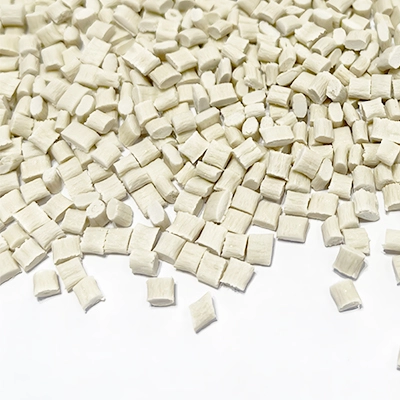
One of the biggest advantages of PRES is the breadth of product formats. A supplier that can provide pellets, sheets, rods, tubes, powders, and filaments gives buyers more control over manufacturing method, cost, and final part performance. That flexibility is especially useful when one project moves from testing to machining to molding and then to additive manufacturing. [plastic-material]
Here is a simple way to match form to use case:
| Product form | Best for | Typical value |
|---|---|---|
| Pellets | Injection molding | Stable mass production |
| Sheets | CNC machining, fabricated parts | Flat parts and prototypes |
| Rods | Turning and machining | Custom structural components |
| Tubes | Fluid or insulation applications | Lightweight hollow structures |
| Powders | Specialized processing | Custom compounding or advanced manufacturing |
| 3D printing filaments | Rapid prototyping and functional prints | Fast design validation |
This broad portfolio matters because OEM buyers often need to move quickly between prototypes and production. PRES's multi-format offering helps reduce vendor fragmentation and shortens the path from design intent to usable parts. [plastic-material]
Choosing a light plastic material is not only about the material name. It is about how the material performs in the real environment where the part will live. A qualified supplier should be able to explain why a certain grade fits the application, what trade-offs exist, and how processing will affect final performance.
Before sourcing, buyers should evaluate:
1. Operating temperature and long-term heat exposure.
2. Mechanical load and impact requirements.
3. Chemical contact and solvent resistance.
4. Flame, smoke, and safety requirements.
5. Dimensional stability during machining or molding.
6. Supply reliability for repeat production.
7. Technical support for application matching and customization.
This is where an OEM partner such as Dongguan PRES Group Co., Ltd. can add value, because the best supplier relationship is collaborative, not transactional. In practice, that means fewer material mistakes, fewer production delays, and more predictable final quality. [plastic-material]
The global market is pushing manufacturers toward lighter, more efficient materials. According to Mordor Intelligence, the lightweight materials market is projected to grow from USD 219.75 million in 2026 to USD 352.63 million by 2031, at a CAGR of 9.92%, with Asia-Pacific as the fastest-growing region. The report also notes that polymers and composites led the market in 2025, while additive manufacturing is expected to grow quickly. [plastic-material]
That trend is important for buyers of light plastic material because it signals where demand is heading:
- More customized parts.
- More high-performance polymer adoption.
- More pressure to reduce weight and cost together.
- More opportunities for OEM suppliers with broad processing capability.
For buyers, this means the supplier you choose today should be able to support tomorrow's product roadmap. A company like PRES is well positioned when it combines material supply with OEM and manufacturing support. [plastic-material]
If you are sourcing light plastic material for a new project, use a simple selection workflow. This helps teams avoid choosing a material based only on price or habit.
1. Define the part function and environment.
2. Set the key performance targets.
3. Match the form factor to the manufacturing method.
4. Ask for technical data and application guidance.
5. Test samples under real conditions.
6. Confirm production consistency and delivery support.
7. Scale only after the part passes validation.
This workflow is especially useful for international buyers working with Chinese OEM suppliers. It creates a cleaner approval process and reduces costly redesigns later. It also helps suppliers like PRES demonstrate real expertise through useful technical collaboration rather than marketing language alone. [developers.google]
For overseas brands, wholesalers, and manufacturers, sourcing success depends on three things: product range, technical service, and export readiness. PRES addresses all three by offering high-performance plastic materials in multiple formats and supporting OEM-oriented production needs. That makes it easier for buyers to centralize procurement and align material choice with finished-product requirements. [plastic-material]
From a trust perspective, content and supplier communication should answer one core question: Can this partner help me reduce risk? Google's helpful content guidance rewards pages that are useful, original, and written for people first. PRES's value proposition is strongest when it explains applications, process compatibility, and practical sourcing support in a clear and verifiable way. [developers.google]
If your project needs a light plastic material that is engineered for performance, not just low weight, Dongguan PRES Group Co., Ltd. is a strong OEM partner to contact first. Request a material recommendation, sample evaluation, or custom production discussion to match your part requirements with the right product form and process support. [plastic-material]

A light plastic material is a low-density polymer or engineering plastic designed to reduce weight while maintaining useful strength, stability, and processability.
They help manufacturers reduce part weight, improve design flexibility, and meet demanding thermal or mechanical requirements.
PRES supplies pellets, sheets, rods, tubes, powders, and high-performance 3D printing filaments, and also offers mold design, manufacturing, and injection molding services. [plastic-material]
Common users include automotive, electronics, aerospace, medical, industrial equipment, and additive manufacturing teams.
Start with the part's temperature, load, chemical exposure, and manufacturing method, then request technical guidance and sample testing.
1. Dongguan PRES Group Co., Ltd. — Industry Knowledge: [https://www.plastic-material.com/industry-knowledge.html] [plastic-material]
2. Mordor Intelligence — Lightweight Materials Market Size, Share, 2025-2031 Outlook: [https://www.mordorintelligence.com/industry-reports/lightweight-materials-market] [plastic-material]
3. Google Search Central — Creating Helpful, Reliable, People-First Content: [https://developers.google.com/search/docs/fundamentals/creating-helpful-content] [developers.google]
4. Google Search Central — E-E-A-T update: [https://developers.google.com/search/blog/2022/12/google-raters-guidelines-e-e-a-t] [developers.google]
Hot Tags: China, Global, OEM, private label, manufacturers, factory, suppliers, manufacturing company