Views: 230 Author: Dongguan PRES Publish Time: 2026-09-30 Origin: Site


Content Menu
● Why Moisture Control Matters for PEEK 3D Printing Filament
● How Moisture Reduces PEEK Mechanical Strength
>> Steam Formation at High Printing Temperature
>> Lower Interlayer Bonding Strength
>> Reduced Density and Greater Porosity
>> Potential Surface and Chemical-Resistance Concerns
● Moisture Content and Mechanical Performance
● Signs That Your PEEK Filament Has Absorbed Moisture
>> Why Visual Inspection Is Not Enough
● Recommended PEEK Filament Drying Process
>> Step-by-Step Moisture-Control Workflow
● How Long Should PEEK Filament Be Dried?
● Best Storage Practices for PEEK 3D Printing Filament
>> Recommended Storage Conditions
● Moisture Control for OEM and Production Printing
● How PRES Supports High-Performance PEEK Filament Projects
● FAQ
>> 1. Does PEEK filament absorb moisture?
>> 2. Can wet PEEK filament reduce tensile strength?
>> 3. What temperature should I use to dry PEEK 3D printing filament?
>> 4. Can I print PEEK directly from a dry box?
>> 5. What are the most common signs of wet PEEK filament?
>> 6. Is repeated drying harmful to PEEK filament?
>> 7. Why is moisture control important for OEM PEEK filament brands?
At Dongguan PRES Group Co., Ltd., we develop and supply high-performance PEEK materials for customers that cannot accept uncertainty in production. As a China-based manufacturer of PEEK granules, sheets, rods, tubes, powders, and high-performance 3D printing filaments, we support overseas brands, wholesalers, manufacturers, and private-label OEM projects.
For PEEK additive manufacturing, filament quality is only one part of the equation. PEEK 3D printing filament moisture control directly affects mechanical strength, interlayer bonding, density, surface quality, dimensional consistency, and long-term part reliability. A high-grade PEEK filament can still produce weak or inconsistent components if it absorbs moisture before or during printing.
This guide explains why moisture matters, how it changes the mechanical behavior of printed PEEK, how to dry and store filament correctly, and how professional manufacturers can create a repeatable moisture-control workflow.
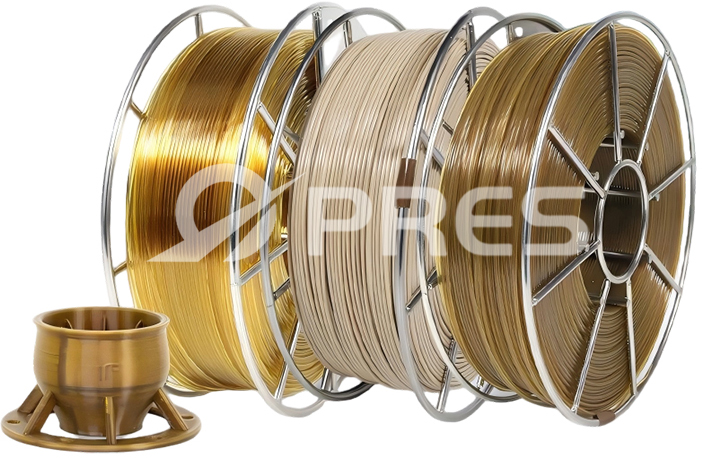
PEEK, or polyether ether ketone, is widely used in aerospace, medical, electronics, automotive, oil and gas, semiconductor, and industrial applications because of its excellent heat resistance, chemical resistance, wear performance, and strength-to-weight ratio.
However, PEEK is also a moisture-sensitive engineering polymer. Although it absorbs moisture more slowly than highly hygroscopic materials such as nylon, even a relatively low amount of absorbed water can cause problems when the filament enters a hot end operating at very high temperatures.
During FFF or FDM printing, moisture trapped inside the PEEK filament can rapidly turn into vapor. This may create internal gas pressure in the melt, leading to bubbles, microvoids, inconsistent extrusion, rough surfaces, and reduced bonding between printed layers.
The result is simple: moisture can prevent a PEEK part from achieving the mechanical performance expected from the raw material.
Research on PEEK filament moisture found that increasing water absorption reduced material properties including tensile strength, density, and hardness. In the cited test conditions, filament strength fell by approximately 6.6 MPa as moisture increased. The study also concluded that mechanical properties were inversely related to filament moisture content.
For manufacturers producing functional components, this matters far beyond appearance. A visually acceptable part may still contain internal defects that reduce load-bearing capability or cause premature failure in service.
The impact of moisture on PEEK 3D printing filament mechanical strength is caused by several connected mechanisms. Moisture does not merely create cosmetic surface defects. It can change the internal quality of the printed structure.
PEEK is normally printed at a much higher nozzle temperature than common polymers. When residual water reaches the hot end, it can vaporize quickly.
This vapor generation may cause:
- Extrusion bubbles
- Popping or crackling sounds during printing
- Foamy filament flow
- Unstable extrusion width
- Poor surface finish
- Reduced density
- Internal pores and voids
- Inconsistent dimensional accuracy
Internal voids are especially harmful in applications where the part must withstand tensile loads, fatigue, pressure, impact, or repeated thermal cycling.
Fused filament fabrication depends on strong fusion between adjacent layers. Each deposited strand must remain hot enough to bond with the previous layer.
Moisture can interrupt this process. When vapor forms at the melt interface, it can create microscopic separation between layers. The part may then show weaker Z-axis performance, reduced tensile strength, and earlier failure under load.
The 2024 PEEK filament study reported that greater moisture content reduced interlayer bonding and tensile strength in printed parts.
A dense printed PEEK part generally performs more consistently than a porous one. Moisture-related vapor formation can create porosity throughout the printed structure.
Lower density often means:
- Less effective load transfer
- Lower tensile and flexural strength
- Reduced fatigue resistance
- Greater variability from one production batch to another
- Higher risk of leakage in fluid-contact applications
- Less predictable machining performance after printing
For high-value industrial parts, repeatability is often more important than a single successful print. A moisture-control process helps ensure that the same print settings produce similar results across multiple spools, operators, and production cycles.
The visible symptoms of wet PEEK filament often include roughness, blistering, pitting, and inconsistent gloss. These are not only aesthetic concerns.
A rougher or more porous surface may be harder to clean, more difficult to seal, and less suitable for precision components. In chemical-processing or medical-related applications, surface quality can influence downstream finishing, cleaning validation, and part reliability.
The table below summarizes how filament condition can influence the performance of PEEK printed parts.
| Filament condition | Typical extrusion behavior | Likely mechanical impact | Production risk |
|---|---|---|---|
| Properly dried PEEK filament | Stable, smooth, consistent flow | Better density, layer bonding, tensile consistency, and surface quality | Low |
| Slightly moisture-exposed filament | Occasional popping, mild surface roughness, minor flow variation | Strength variation and possible early failure | Moderate |
| Moisture-saturated or poorly stored filament | Bubbling, foaming, rough surfaces, unstable extrusion | Lower tensile strength, lower density, weaker interlayer adhesion, higher porosity | High |
| Repeatedly overheated during drying | Possible brittleness or spool deformation | Material degradation risk and reduced processability | Moderate to high |
A study of PEEK filament found that moisture levels could approach approximately 0.2 wt% after time in a simulated room-temperature environment, and reach around 0.26 wt% under higher humidity conditions. The authors observed adverse effects on surface morphology, density, hardness, and tensile performance.
Some industry guidance recommends reducing residual moisture to below 0.02% before printing to help prevent foamy extrusion at high temperature.
Operators should not wait for a catastrophic print failure before checking moisture conditions. Wet PEEK filament often gives early warning signs.
Look for the following indicators:
- Audible popping, hissing, or crackling from the nozzle
- Small bubbles or foam in the extruded strand
- Rough, pitted, or blistered part surfaces
- Uneven extrusion lines
- Inconsistent layer appearance
- Unexpected stringing or material flow variation
- Lower-than-expected part weight
- Weakness during bend, tensile, or assembly testing
- Delamination or cracking between layers
- Increasing variation between prints using the same machine settings
A useful rule is this: if extrusion behavior changes but printer settings have not changed, inspect the filament condition first.
A part can look acceptable and still contain microvoids. This is particularly important for components used in demanding environments, such as brackets, fixtures, electrical insulation parts, medical prototypes, fluid-handling components, or high-temperature functional assemblies.
For critical programs, we recommend validating moisture control through documented drying procedures, controlled storage, spool tracking, and periodic mechanical testing.
There is no universal drying recipe for every PEEK formulation, spool geometry, moisture exposure level, dryer design, and production environment. Always follow the material supplier's technical data sheet and verify the dryer's real chamber temperature.
That said, professional guidance commonly places PEEK drying in a high-temperature range. Recommendations found across industrial filament guidance include approximately 120°C for 4 hours, 120°C for 5 hours, 150°C for 3 to 4 hours, or longer cycles for filament that has been exposed to humid conditions for extended periods.
At PRES, we recommend treating drying as a controlled manufacturing step rather than an informal pre-print action.
1. Inspect the spool and packaging before opening.
Check whether the moisture-barrier bag is intact, whether desiccant is present, and whether the filament has been exposed to uncontrolled storage conditions.
2. Record the material identification.
Track the PEEK grade, batch number, color, spool weight, drying date, drying cycle, and operator. This is essential for OEM programs and production traceability.
3. Use a calibrated high-temperature dryer.
Standard low-temperature consumer filament dryers may not be sufficient for PEEK. Use equipment capable of stable, uniform temperatures suitable for high-performance polymers.
4. Dry according to the approved material process window.
A practical starting range is 120–150°C, with duration based on the filament's moisture history and the manufacturer's specifications. Avoid using a temperature that can distort the spool or damage the filament.
5. Transfer directly into a dry printing environment.
After drying, do not leave the spool on an open bench. Feed it into the printer from a sealed dry box or controlled dry cabinet.
6. Monitor the first extrusion.
Purge the nozzle and inspect the extrudate for bubbles, instability, or unusual sound before starting an important print.
7. Seal unused filament immediately.
Return remaining filament to a moisture-barrier bag or dry cabinet with fresh desiccant. Record the remaining material and storage condition.
The correct answer depends on how wet the filament is, how long it has been exposed, the spool size, airflow, dryer design, and the target performance requirement.
For a newly opened vacuum-sealed spool, a shorter pre-drying cycle may be sufficient depending on the supplier's instructions. For PEEK filament that has been exposed for days or weeks in a humid production area, longer drying may be necessary.
A published study used a vacuum oven at 90°C for 72 hours to ensure complete drying before its moisture-absorption testing. This should not be interpreted as the only correct industrial condition, but it demonstrates that drying high-performance polymer filament requires time and controlled conditions.
Practical industry recommendations include:
- 120°C for approximately 4–5 hours as a common starting point for PEEK filament.
- 120–150°C for approximately 3–6 hours for controlled re-drying before printing.
- Longer drying cycles for filament stored in humid conditions or exposed for extended periods.
The important principle is not simply "more heat for more time." Excessive or repeated heat exposure can create its own problems. One industrial printing guide cautions that repeated drying cycles may contribute to filament brittleness and reduce final part mechanical properties.
Drying is reactive. Proper storage is preventive.
The most cost-effective moisture-control strategy is to keep PEEK dry from the moment it leaves the manufacturer until it enters the printer. This helps protect filament quality and reduces unnecessary re-drying cycles.
For high-performance PEEK filament, use:
- Vacuum-sealed moisture-barrier packaging for new spools
- Desiccant packs inside sealed packaging
- A dry cabinet for opened spools
- A dry box feeding directly into the printer
- Clear batch and opening-date labels
- Hygrometer monitoring for production storage areas
- Separate storage zones for dried and non-dried material
- First-in, first-out inventory management
Some professional guidance recommends maintaining PEEK in a dry box during printing and keeping humidity below 20% RH for high-performance parts.
For OEM brands and industrial users, storage procedures should be part of the quality system. A premium PEEK filament cannot deliver premium results if it is handled like standard PLA.
At Dongguan PRES Group Co., Ltd., we understand that overseas brand owners and manufacturers need more than material supply. They need a process that supports consistent commercial output.
For OEM PEEK filament projects, moisture control should be designed into the full supply chain:
- Raw material handling before extrusion
- Controlled filament extrusion and winding
- Diameter and ovality monitoring
- Moisture-barrier packaging
- Desiccant selection
- Vacuum-sealed bag integrity
- Labeling and batch traceability
- Recommended drying guidance
- Storage instructions for distributors and end users
- Technical support for print-process optimization
Imagine a manufacturer producing PEEK brackets for a high-temperature electrical enclosure. The printed parts must be lightweight, dimensionally stable, and mechanically reliable.
If the production team uses a moisture-exposed spool, the prints may initially appear acceptable. However, internal voids and weaker interlayer bonding can reduce tensile reliability. When the bracket experiences vibration, thermal cycling, or mechanical loading, failure may occur earlier than expected.
By contrast, using a controlled workflow—vacuum-sealed supply, pre-drying, dry-box feeding, process documentation, and mechanical validation—helps the manufacturer reduce scrap, improve repeatability, and protect its brand reputation.
This is why PEEK 3D printing filament moisture control is not a minor housekeeping issue. It is a material-performance requirement.
Dongguan PRES Group Co., Ltd. provides a broad portfolio of high-performance plastic products, including PEEK granules, sheets, rods, tubes, powders, and 3D printing filaments.
We work with international customers that require reliable material performance, stable supply, customized packaging, and OEM support. Whether you are building a private-label PEEK filament line, developing industrial printed components, or sourcing PEEK semi-finished products, our team can support your project from material selection through production requirements.
Our OEM support can include:
- Customized PEEK 3D printing filament specifications
- Private-label packaging and branding
- Spool and packaging solutions
- Material-grade consultation
- Batch-control support
- Export-oriented supply coordination
- Technical recommendations for drying, storage, and printing preparation
- PEEK product sourcing beyond filament, including sheets, rods, tubes, powders, and granules
For demanding applications, successful printing begins long before the nozzle heats up. It begins with stable raw material quality, controlled manufacturing, correct packaging, and disciplined moisture management.
PEEK 3D printing filament moisture control has a direct impact on mechanical strength. Moisture can cause bubbles, porosity, lower density, poor layer fusion, rough surfaces, and reduced tensile reliability. The risk becomes more serious when PEEK is used for functional, high-temperature, chemically resistant, or load-bearing components.
The best approach is proactive: dry the filament using a validated high-temperature process, transfer it directly into a dry printing environment, store unused material in moisture-controlled packaging, and track the process for repeatable production.
If your company needs reliable PEEK filament, customized OEM packaging, or high-performance PEEK material solutions, contact Dongguan PRES Group Co., Ltd. to discuss your application, technical requirements, and private-label project.
Yes. PEEK can absorb moisture from the surrounding environment. Although its water uptake is generally lower than that of materials such as nylon, absorbed moisture can still affect extrusion stability, surface quality, interlayer bonding, and mechanical performance during high-temperature printing.
Yes. Increased moisture content can reduce tensile strength, density, hardness, and interlayer bonding. One study reported that PEEK filament strength was reduced by about 6.6 MPa under its test conditions as moisture increased.
Many industry guides recommend drying PEEK at approximately 120–150°C, generally for 3–6 hours depending on moisture exposure, dryer performance, and material-specific requirements. Always confirm the supplier's data sheet and avoid conditions that could deform the spool or damage the filament.
Yes. Feeding PEEK directly from a dry box is a recommended practice, especially for long prints or humid environments. This helps prevent the dried filament from reabsorbing moisture before it reaches the nozzle.
Common signs include popping or hissing noises, bubbles in the extrudate, rough or pitted surfaces, inconsistent extrusion, visible voids, reduced part density, poor interlayer bonding, and unexpected mechanical weakness.
It can be. Controlled drying is necessary, but repeated or excessive thermal exposure may increase brittleness or reduce material performance. Good storage is preferable to repeatedly drying the same spool.
OEM brands depend on consistent end-user results. Proper moisture-barrier packaging, desiccant, traceability, drying instructions, and storage guidance help reduce customer complaints, improve print quality, and protect the brand's technical reputation.
1. Wang et al., "Effect of Moisture Content in Polyether-Ether-Ketone (PEEK) Filament on the Mechanical Properties of Fused Deposition Modeling Parts," *Discover Applied Sciences*, 2024. [Springer article]
2. AON3D, "PEEK 3D Printing: Temperatures, Requirements and Issues." [AON3D PEEK printing guide]
3. Vision Miner, "PEEK & PEI Print Guide." [Vision Miner PEEK and PEI guide]
4. 3DXTECH, "Filament Drying Recommendations." [3DXTECH drying instructions]
5. 3devo, "How to Make PEEK Filament: Preparing and Transitioning." [3devo PEEK filament preparation guide]
6. SUNLU, "What Is PEEK Filament? The Ultimate Guide to High-Performance PEEK Filament." [SUNLU PEEK filament guide]
7. Prusa Knowledge Base, "PEEK-CF (Polyetheretherketone)." [Prusa PEEK-CF knowledge base]
Hot Tags: China, Global, OEM, private label, manufacturers, factory, suppliers, manufacturing company