
Views: 237 Author: Dongguan PRES Publish Time: 2026-08-03 Origin: Site


Content Menu
● Why PEEK Melting Point Matters in Real-World Production
● What Is the PEEK Melting Point?
● PEEK Thermal Properties at a Glance
● How PEEK Melting Point Affects Manufacturing
>> 1. Processing requires specialized equipment
>> 2. Quality control becomes more critical
>> 3. Material selection must match the application
>> 4. Tooling and drying conditions matter
● Why Buyers Choose PEEK Over Other Engineering Plastics
● PEEK Product Forms We Support at Dongguan PRES Group Co., Ltd.
>> Our PEEK-related product categories include:
>> Typical use cases by format:
● Industry Applications Where PEEK Melting Point Delivers Value
>> Aerospace
>> Automotive
>> Electronics
>> Medical
>> Industrial and chemical processing
>> 3D printing
● Expert Insight: What Experienced Buyers Often Miss
● Practical Selection Guide for OEM Buyers
>> Step 1: Define the temperature requirement
>> Step 2: Match the product form
>> Step 3: Review dimensional and mechanical needs
>> Step 4: Confirm processing capability
>> Step 5: Check supplier consistency
● New Data Perspective: Why High-Temperature Polymers Keep Growing
● Why Dongguan PRES Group Co., Ltd. Is a Strong OEM Partner
● FAQ
>> 1. What is the PEEK melting point?
>> 2. Is PEEK suitable for continuous high-temperature use?
>> 3. Why is PEEK better than standard plastics?
>> 4. Can PEEK be used in 3D printing?
>> 5. What product forms of PEEK does Dongguan PRES Group Co., Ltd. supply?
>> 6. Why does PEEK melting point matter for manufacturing?
PEEK melting point is one of the most important technical properties buyers evaluate when selecting a high-performance polymer for demanding applications. At Dongguan PRES Group Co., Ltd., we work with global brand owners, wholesalers, and manufacturers every day to turn this property into real production value—whether the end product is pellet, sheet, rod, tube, powder, or high-performance 3D printing filament.
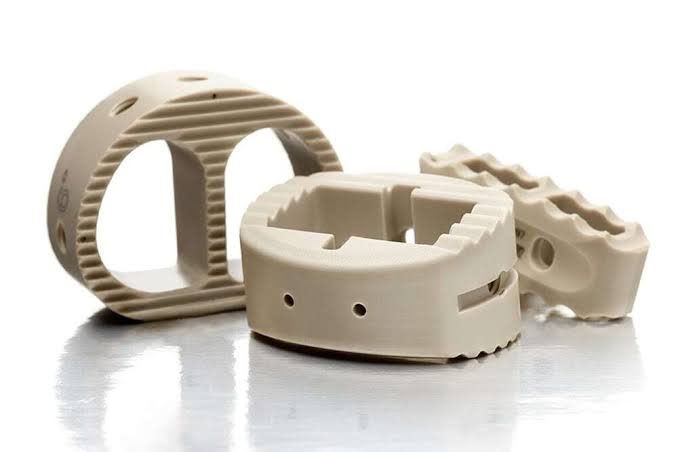
For engineers, procurement teams, and product developers, PEEK is not just another plastic. It is a high-performance engineering polymer chosen when standard materials fail under heat, wear, chemicals, and pressure. The melting point is a key reason why PEEK performs so consistently in harsh environments.
PEEK typically melts at around 343°C, which places it far above most common thermoplastics. That high thermal threshold supports stable processing, strong dimensional control, and reliable service in critical applications. In practice, this means better performance in aerospace, automotive, electronics, medical, energy, and industrial manufacturing.
At Dongguan PRES Group Co., Ltd., we see this every day: the higher the performance requirement, the more important the melt behavior becomes. For OEM buyers, understanding PEEK melting point is not theoretical—it directly affects part quality, processing window, tooling, cycle time, and final product reliability.
The PEEK melting point is the temperature at which the polymer transitions from a crystalline solid to a molten state. For standard PEEK grades, this is generally around 343°C. That number is widely recognized across the industry and is one of the defining characteristics that make PEEK suitable for extreme-duty use.
It is important to distinguish between melting point, glass transition temperature, and continuous service temperature:
- Melting point: The temperature where PEEK actually melts.
- Glass transition temperature: The point where the material begins to soften and lose stiffness.
- Continuous service temperature: The temperature PEEK can withstand during long-term use without major performance loss.
This distinction matters because many buyers confuse "high heat resistance" with "high melting point." PEEK offers both, but they are not the same thing. A material can soften before it fully melts, so engineers must consider all thermal properties together.
| Property | Typical Value | Why It Matters |
|---|---|---|
| Melting point | Around 343°C | Supports high-temperature processing and use |
| Glass transition temperature | Around 143°C | Helps predict softening behavior |
| Continuous service temperature | Up to about 260°C | Useful for long-term industrial applications |
| Heat resistance | Excellent | Supports demanding environments |
| Chemical resistance | Excellent | Suitable for aggressive media |
| Moisture absorption | Very low | Improves dimensional stability |
For many buyers, this table is the fastest way to see why PEEK is considered a premium engineering plastic. The combination of thermal stability and mechanical strength is what makes it so valuable in OEM supply chains.
A high PEEK melting point influences production in several important ways.
PEEK cannot be processed like ordinary plastics. It requires high-temperature extrusion, injection molding, compression molding, or filament production systems designed for elevated melt temperatures.
At this temperature range, even small process variations can affect viscosity, crystallinity, and final part performance. That is why supplier consistency is essential.
Different PEEK forms—pellets, rods, sheets, tubes, powders, and filaments—serve different downstream manufacturing methods. The wrong form can add cost, waste, or instability.
PEEK's thermal behavior means processors must control drying, mold temperature, and cooling behavior carefully to avoid defects and maximize performance.
At Dongguan PRES Group Co., Ltd., our OEM experience helps customers select the correct PEEK format and processing pathway before production begins. That saves time, reduces scrap, and improves consistency.
PEEK stands out because it combines properties that are usually hard to find in one material. It offers:
- High melting point
- Excellent wear resistance
- Strong chemical resistance
- Low moisture absorption
- Good dimensional stability
- Reliable performance under steam and hot water
- High strength-to-weight ratio
In many applications, PEEK replaces metal because it reduces weight while preserving performance. In others, it outperforms standard plastics that may deform, absorb moisture, or lose mechanical integrity too quickly.
For industrial buyers, the business case is straightforward: fewer failures, longer service life, better efficiency, and more predictable manufacturing outcomes.
One reason our customers work with us is that we supply multiple PEEK product formats for different manufacturing needs. This makes sourcing easier and helps buyers build a more stable supply chain.
- Plastic pellets
- Sheets
- Rods
- Tubes
- Powders
- High-performance 3D printing filaments
This range is especially useful for OEM and ODM customers. Instead of sourcing from multiple vendors, buyers can align one technical standard across several product formats.
- Pellets: Injection molding and compounding.
- Sheets: Machined parts, structural components, and industrial panels.
- Rods: Precision machining and custom parts.
- Tubes: Fluid handling, insulation, and specialty systems.
- Powders: Advanced processing and formulation.
- 3D printing filament: Prototype and production-level additive manufacturing.
The real value of PEEK melting point becomes clearer when you look at the industries that depend on it.
PEEK supports lightweight, heat-resistant components that must perform in demanding environments. Its thermal stability and strength make it a strong choice for structural and functional parts.
In modern vehicle systems, PEEK can help reduce weight, resist wear, and improve durability in high-temperature zones.
PEEK performs well in insulation, connectors, and precision parts where stability and electrical reliability matter.
PEEK is valued for its biocompatibility, sterilization resistance, and long-term mechanical stability in selected medical applications.
PEEK's chemical resistance and low moisture absorption are especially important in pumps, seals, manifolds, and wear components.
High-performance filament made from PEEK requires tight control of melt behavior, which is why the melting point is central to successful printing.
Many first-time buyers focus on the headline number: 343°C. That is useful, but it is not the full story.
The deeper question is this: How does the supplier manage the material before and after melting?
That includes:
- Resin consistency.
- Crystallization behavior.
- Moisture control.
- Processing stability.
- Tolerance control.
- Batch-to-batch repeatability.
From an OEM perspective, a technically strong material is only valuable if the supplier can keep it stable across large volumes and repeated orders. At Dongguan PRES Group Co., Ltd., this is one of our main strengths: we do not treat PEEK as a commodity. We treat it as a performance system that must be controlled from raw material to final form.
If you are sourcing PEEK for production, use this simple evaluation process.
Confirm whether the part needs short-term heat resistance or long-term continuous performance.
Choose pellets, sheet, rod, tube, powder, or filament based on your processing method.
Consider load, wear, chemical exposure, and precision requirements.
Make sure your equipment can handle PEEK's temperature window.
Ask for stable supply, technical support, and OEM customization options.
This process helps buyers avoid the most common mistake: choosing a material based on one property instead of the full production environment.
High-performance polymers continue to gain traction because industries are pushing for:
- lighter parts,
- better thermal endurance,
- longer component life,
- and more efficient manufacturing.
PEEK sits near the top of this category because it supports both performance and processability. That is one reason it remains a preferred material in sectors that cannot tolerate premature failure.
For OEM buyers, this trend matters. When end users demand more durability and higher operating temperatures, the value of a well-specified PEEK material increases significantly.
Choosing a PEEK supplier is not just about the material. It is also about service, technical understanding, and production stability.
At Dongguan PRES Group Co., Ltd., we provide:
- OEM support for overseas brand owners, wholesalers, and manufacturers
- Multiple PEEK product formats
- High-performance plastic manufacturing expertise
- Customization for different industrial applications
- Supply chain support from a China-based factory
Our strength is not only in producing high-performance plastic products, but in understanding how those products are used downstream. That makes it easier for our clients to launch, scale, and standardize production.
If you are looking for a reliable OEM partner for PEEK pellets, sheets, rods, tubes, powders, or 3D printing filaments, Dongguan PRES Group Co., Ltd. is ready to support your project. Contact us to discuss your application, processing requirements, and custom production needs.
The standard PEEK melting point is around 343°C. This high temperature is one of the reasons PEEK is used in demanding industrial applications.
Yes. PEEK is widely used in applications with continuous operating temperatures of up to about 260°C, depending on grade and application conditions.
PEEK offers stronger heat resistance, better chemical resistance, lower moisture absorption, and superior mechanical stability than many common plastics.
Yes. High-performance PEEK filament is used in advanced 3D printing, but it requires precise temperature control and specialized equipment.
We supply pellets, sheets, rods, tubes, powders, and high-performance 3D printing filament, with OEM support for global customers.
Because it affects processing temperature, equipment selection, dimensional stability, and final part quality. It is a core factor in product design and production planning.

- [Polyether ether ketone - Wikipedia]
- [PEEK plastic material - Ensinger]
- [PEEK Material Properties and Applications - Xometry]
- [TECHNICAL DATA SHEET PEEK - Victrex]
- [Polyetheretherketone (PEEK): How to select the right grade? - Polyplastics]
Hot Tags: China, Global, OEM, private label, manufacturers, factory, suppliers, manufacturing company


