Content Menu
● PEEK Rod Mechanical Properties & Wear Resistance: Technical Reference
● Why Mechanical Properties Dictate PEEK Rod Selection
● PEEK Rod Mechanical Properties by Grade
● PEEK rods Grade-Specific Performance(Unfilled & GF30 & CF30 & ESD)
>> Unfilled (Virgin) PEEK Rod
>> GF30 PEEK Rod
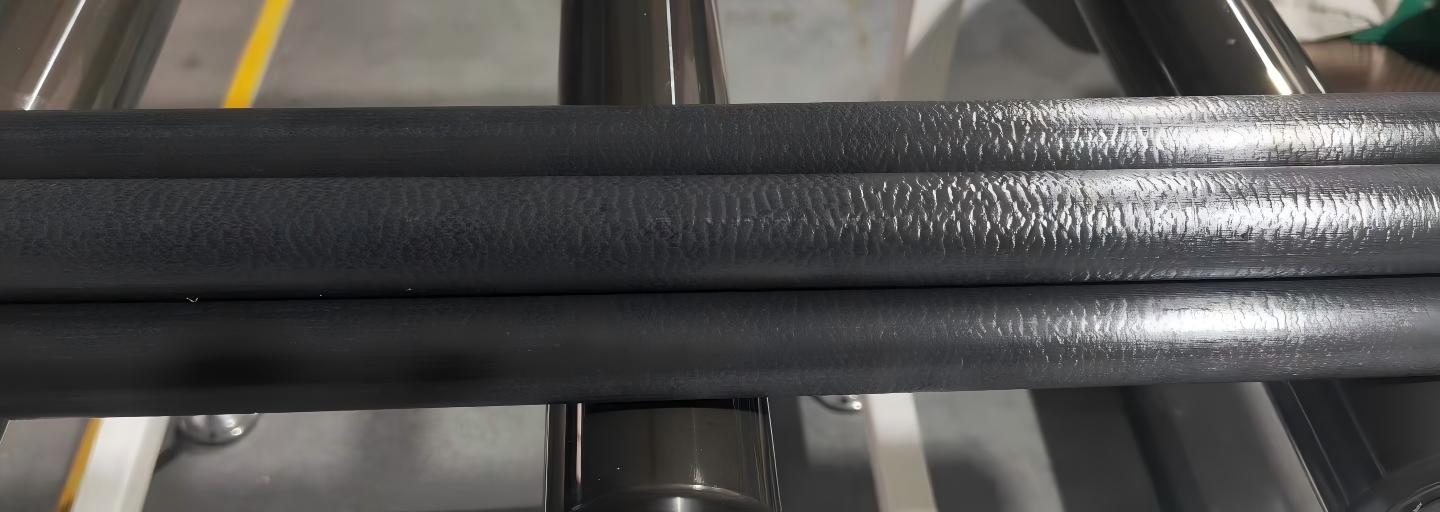
>> CF30 PEEK Rod
>> ESD PEEK Rod
>> Bearing-Grade PEEK Rod (CF/PTFE/Graphite Ternary)
● Mechanical Performance at Elevated Temperatures
● Application-Based Grade Selection Guide
● Frequently Asked Questions
>> What is the tensile strength of PEEK rod?
>> Is CF30 PEEK stronger than steel?
>> What is the friction coefficient of PEEK rod?
>> How wear-resistant is CF30 PEEK rod?
>> Can PEEK rod replace metal in load-bearing parts?
>> Does PEEK rod lose strength at high temperature?
● Related Resources
● Summary
PEEK Rod Mechanical Properties & Wear Resistance: Technical Reference
PEEK rods deliver tensile strength from 100 MPa (Unfilled) up to 260 MPa (CF30), flexural modulus from 4.1 GPa to 23 GPa, and compressive strength up to 300 MPa. Unfilled PEEK offers the best toughness and 45% elongation, while CF30 maximizes stiffness, load capacity, and wear resistance for bearing and sliding applications. All grades retain >50% mechanical strength at 260°C continuous service.The ESD (anti-static) PEEK rods possess excellent mechanical properties, with a tensile strength of 210 MPa, and also have a controllable surface resistivity ranging from 106to 109 Ω/sq, enabling safe electrostatic dissipation.
Why Mechanical Properties Dictate PEEK Rod Selection
Engineers don't choose PEEK rods for a single trait—they balance four core mechanical requirements based on application needs:
-
Load-bearing capacity (tensile/compressive strength)
-
Dimensional stability under stress (flexural modulus/creep resistance)
-
Dynamic performance (wear resistance/friction coefficient)
-
Environmental compatibility (temperature/chemical exposure)
Reinforcement type drives these properties: unfilled PEEK prioritizes toughness, glass fiber (GF30) adds rigidity, and carbon fiber (CF30) delivers maximum strength and wear resistance.
PEEK Rod Mechanical Properties by Grade
Values below are typical reference data per ISO 527 (tensile), ISO 178 (flexural), ISO 604 (compressive), and ASTM D256 (impact). Actual performance varies ±10% by extrusion conditions and bar diameter. Request batch-specific test reports for critical applications.
| Property | Test Method | Unfilled PEEK | GF30 PEEK | CF30 PEEK | ESD PEEK |
| Tensile strength @ 23°C | ISO 527 | 100 MPa | 175 MPa | 260 MPa | 210MPa |
| Elongation @ break | ISO 527 | 45% | 2.7% | 1.7% | 2.1% |
| Flexural strength | ISO 178 | 165 MPa | 265 MPa | 380 MPa | 310MPa |
| Flexural modulus | ISO 178 | 4.1 GPa | 11.3 GPa | 23 GPa | 16GPa |
| Compressive strength | ISO 604 | 125 MPa | 250 MPa | 300 MPa | - |
| Notched Izod impact | ISO 180/A | 7.5kJ/m2 | 10kJ/m2 | 9kJ/m2 | 8kJ/m2 |
| Shore D Hardness | | 85 | 88 | 88 | 86 |
PEEK rods Grade-Specific Performance(Unfilled & GF30 & CF30 & ESD)
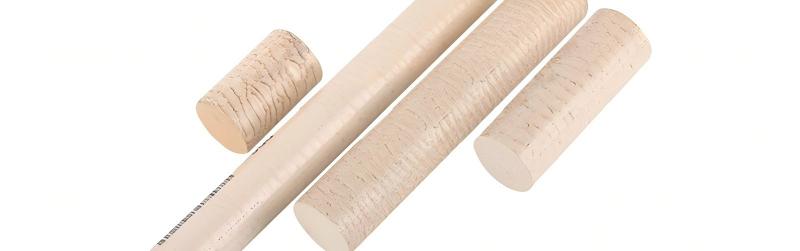
Unfilled (Virgin) PEEK Rod
Best for: Medical devices, food-contact components, thin-walled parts, snap-fit assemblies.
Highest elongation and impact toughness of all grades
-
Excellent fatigue resistance for cyclic loading
-
FDA-compliant in natural color
-
Lower stiffness limits use in high-load structural applications
View Unfilled PEEK Rod Specifications
GF30 PEEK Rod
Best for: Structural brackets, pump housings, compressor valve plates, static fixtures.
-
150% higher flexural modulus than unfilled PEEK
-
Superior creep resistance at elevated temperatures
-
More isotropic properties than CF30 (predictable dimensional behavior)
-
Avoid for sliding/rotating contact—glass fiber increases friction and accelerates mating surface wear
View PEEK GF30 Rod Specifications
CF30 PEEK Rod
Best for: Bushings, seals, pistons, gears, aerospace components, semiconductor fixtures.
Highest tensile and compressive strength of all PEEK grades
-
Lowest coefficient of linear thermal expansion (~5 ppm/K)—near-isotropic with metals
-
Electrically conductive
-
Thermal conductivity reaches 0.95 W/m·K (4× unfilled PEEK) for improved heat dissipation
-
Requires hardened mating surfaces (steel/ceramic) to avoid galling
View PEEK CF30 Rod Specifications
ESD PEEK Rod
30% carbon fiber + ESD-modified, balances static control with high load capacity.
Best for: Wafer carriers, IC test sockets, ESD-safe fixtures, explosion-proof components.
-
210 MPa tensile strength, retains 90% of CF30's structural performance
-
Controlled 10⁶–10⁹ Ω/sq surface resistivity (ASTM D257), prevents electrostatic damage
-
0.2% flow / 0.7% cross-flow mold shrinkage, enables tight-tolerance machining
-
0.95 W/m·K thermal conductivity, supports heat dissipation in electronics
-
Electrically conductive, matches CF30’s wear resistance for dynamic parts
-
Requires hardened mating surfaces (steel/ceramic) to avoid galling
Bearing-Grade PEEK Rod (CF/PTFE/Graphite Ternary)
Best for: Dry-running bearings, reciprocating seals, vacuum-environment sliding parts.
Self-lubricating formulation reduces friction coefficient to 0.05-0.15
-
Limiting PV value reaches 10+ MPa·m/s (10× higher than unfilled PEEK
-
Lower noise output compared to metal-on-metal interfaces
Mechanical Performance at Elevated Temperatures
PEEK retains useful mechanical properties far longer than commodity plastics. CF30 PEEK maintains:
160 MPa tensile strength at 125°C
-
85 MPa tensile strength at 175°C
-
50 MPa tensile strength at 275°C (well above glass transition temperature of 143°C)
Application-Based Grade Selection Guide
| Your Application Needs | Recommended Grade | Key Reason |
| Maximum toughness, fatigue resistance, FDA compliance | Unfilled PEEK | Highest elongation and impact strength |
| Rigid structural support, minimal creep | GF30 PEEK | Highest flexural modulus |
| High-load bearing, sliding contact, heat dissipation | CF30 PEEK | Maximum strength and wear resistance |
| Dry-running bearings, seals, low-noise operation | Bearing-Grade PEEK | Self-lubricating, high PV limit |
| Electrical insulation | Unfilled/GF30 PEEK | Non-conductive (CF30 is electrically conductive) |
| Anti-static protection | ESD PEEK | The surface resistance remains stable at 106-109 |
Frequently Asked Questions
What is the tensile strength of PEEK rod?
Unfilled PEEK rod has a tensile strength of 100 MPa at 23°C per ISO 527. CF30 (30% carbon fiber reinforced) reaches 265 MPa—approximately 2.6× stronger, with strength-to-weight ratios comparable to aluminum alloys.
Is CF30 PEEK stronger than steel?
No—CF30 PEEK’s tensile strength (~265 MPa) is roughly 1/3 to 1/4 of structural steel (400-800 MPa). However, it outperforms steel on a strength-to-weight basis, with added benefits of corrosion immunity, self-lubrication, and dielectric isolation.
What is the friction coefficient of PEEK rod?
Against hardened steel in dry conditions:
How wear-resistant is CF30 PEEK rod?
CF30 PEEK has a limiting PV value of ~3.4 MPa·m/s in dry running conditions. Bearing-grade variants (carbon fiber + PTFE + graphite) push this to 10+ MPa·m/s—roughly 10× the wear life of unfilled PEEK.
Can PEEK rod replace metal in load-bearing parts?
Yes, in many applications. CF30 PEEK matches mild steel on a per-weight basis while offering corrosion resistance, self-lubrication, and electrical insulation. For extreme compression or high-impact loads, metal or PEEK-metal hybrid designs remain preferable.
Does PEEK rod lose strength at high temperature?
Minimally compared to other plastics. CF30 PEEK retains 160 MPa at 125°C and 85 MPa at 175°C—far better than nylon, polycarbonate, or acrylic, which soften completely below 150°C.
Related Resources
Summary
PEEK rods cover a mechanical envelope from 100 MPa (Unfilled) to 265 MPa (CF30) tensile strength, with compressive strength up to 320 MPa and flexural modulus up to 24 GPa. Grade selection balances three core tradeoffs:
Unfilled prioritizes toughness and purity
-
GF30 prioritizes rigidity and creep resistance
-
CF30 prioritizes strength, stiffness, and wear resistance
-
Bearing grades prioritize self-lubricated dynamic performance
For application-specific recommendations, consult our technical team or refer to the selection guides above.