Views: 257 Author: Dongguan PRES Publish Time: 2026-09-14 Origin: Site


Content Menu
● Why Reciprocating Compressor Valve Plates Fail from Fatigue
>> The Main Causes of Valve Plate Fatigue Failure
● Why PRES PEEK Valve Plates Improve Compressor Reliability
>> Key Advantages of PEEK Compressor Valve Plates
● How PEEK Helps Solve Fatigue Failure Issues
>> Lower Moving Mass Reduces Closing Impact
>> Better Toughness Than Brittle Alternatives
>> Resistance to Heat, Chemicals, and Moisture
● Selecting the Right PEEK Grade for Compressor Valves
>> Natural PEEK vs. Reinforced PEEK
>> Questions PRES Recommends Before Material Selection
● A Practical Root-Cause Checklist for PEEK Plate Failures
>> Step 1: Identify the Failure Pattern
>> Step 2: Check Valve Motion and Lift
>> Step 3: Check Process Conditions
>> Step 4: Review Manufacturing Quality
● Why OEM Buyers Choose PRES for PEEK Solutions
>> What to Send PRES for a Faster Technical Review
>> 1. Are PEEK valve plates suitable for reciprocating compressors?
>> 2. Can PEEK valve plates replace stainless-steel valve plates?
>> 3. What causes repeated PEEK valve plate breakage?
>> 4. Is natural PEEK or reinforced PEEK better for compressor valve plates?
>> 5. Can PEEK withstand steam and moisture in compressor service?
>> 6. What information is needed to quote custom PEEK valve plates?
● Work with PRES on Custom PEEK Valve Plates
PEEK valve plates for reciprocating compressors are an effective solution for reducing fatigue-related valve failures caused by repeated impact, high cycle loading, corrosive gases, elevated temperatures, and unstable operating conditions. At Dongguan PRES Group Co., Ltd., we manufacture and supply high-performance PEEK materials and customized PEEK components for overseas brands, wholesalers, compressor manufacturers, and industrial OEM customers.
For compressor OEMs, the right valve plate material is not simply a purchasing decision. It directly affects compressor uptime, gas leakage risk, maintenance intervals, energy consumption, and total lifecycle cost. In our experience supporting customers that require high-performance plastics, PEEK is often selected when conventional metallic valve plates or lower-grade engineering plastics fail too early under cyclic impact and demanding chemical environments.
PRES provides high-performance plastic products including PEEK granules, sheets, rods, tubes, powders, machined components, and high-performance 3D printing filaments. We also support OEM production requirements for international customers seeking stable quality, flexible specifications, and scalable supply.

Reciprocating compressor valves operate under intense repeated motion. During every compression cycle, the valve plate opens, closes, flexes, contacts the seat, and impacts the lift limiter. Over time, this repeated loading can create fatigue cracks, deformation, edge damage, sealing loss, or complete plate fracture.
A valve plate may look simple, but it works in one of the most mechanically demanding areas of the compressor.
Common fatigue failure mechanisms include:
- Repeated impact loading between the valve plate, valve seat, and lift limiter.
- High pressure differential across the valve plate during opening and closing.
- Excessive valve lift, which increases impact velocity and contact stress.
- High gas temperature, which can reduce mechanical stability in unsuitable materials.
- Corrosive or contaminated media, including hydrocarbons, moisture, acids, and process contaminants.
- Liquid carryover or liquid slugging, which can cause sudden overload and catastrophic damage.
- Poor surface finish or machining defects, which can act as crack initiation points.
- Incorrect plate thickness or geometry, which may cause excessive deflection.
- Improper material selection, especially when a material has inadequate fatigue, impact, thermal, or chemical resistance.
Research into compressor valve motion has identified excessive impact stress between the valve plate, lift limiter, and valve seat as a major cause of valve failure. Studies also indicate that replacing metallic valve materials with PEEK can reduce impact stress because of the polymer's lower density and more resilient mechanical response. [docs.lib.purdue]
For maintenance teams, the visible failure is often only the final symptom. The true root cause may be excessive differential pressure, valve flutter, poor alignment, unsuitable material grade, contaminated gas, or an operating condition outside the original design window.
At PRES, we approach PEEK valve plate supply as a material-and-application problem, not simply a machining order. A successful PEEK valve plate needs the right polymer grade, correct crystallinity, controlled geometry, suitable thickness, accurate sealing surfaces, and compatibility with the gas, temperature, and pressure profile of the compressor.
PEEK, or polyether ether ketone, is a semi-crystalline high-performance thermoplastic known for its combination of mechanical strength, fatigue resistance, thermal stability, chemical resistance, and low moisture absorption.
For reciprocating compressors, these properties can reduce the conditions that accelerate plate damage.
| Performance requirement | How PEEK helps | Operational benefit |
|---|---|---|
| Repeated cyclic loading | Strong long-term fatigue resistance | Lower risk of premature cracking |
| High-speed closing impact | Lower density than metal and good toughness | Reduced impact stress and damage |
| Elevated temperature | High glass-transition and melting temperatures | Better dimensional stability in hot service |
| Corrosive gas exposure | Resistance to many acids, bases, hydrocarbons, and solvents | More stable operation in demanding media |
| Steam and moisture | Low water absorption and hydrolysis resistance | Reduced swelling and property loss |
| Wear and abrasion | Good wear resistance | Longer sealing performance |
| Safety in gas compression | Non-sparking material behavior | Useful in certain flammable-gas applications |
| Weight reduction | Significantly lighter than metal alternatives | Lower moving mass and valve inertia |
PEEK is widely recognized for high-temperature performance, chemical resistance, long-term creep resistance, and fatigue performance. Typical PEEK grades have glass-transition temperatures around 143°C and melting temperatures around 343°C, while continuous-use capability varies by grade and application conditions.
This does not mean every PEEK grade is automatically suitable for every compressor. Compressor valve plates must be selected and validated based on actual service conditions. Pressure differential, gas chemistry, discharge temperature, valve architecture, cycle rate, lift, plate geometry, and manufacturing quality all matter.
One of the most practical advantages of PEEK valve plates is lower density compared with metal plates. A lighter plate can reduce inertial force during rapid opening and closing.
In a reciprocating compressor, the valve plate repeatedly accelerates and decelerates. The faster and heavier the moving component, the greater the potential impact energy when it contacts the lift limiter or seat. Reducing moving mass can help lower impact stress and reduce the tendency toward fatigue damage.
A published study of ring valve motion found that PEEK produced lower impact stress than a metallic 3Cr13 valve material under the conditions analyzed. The study concluded that non-metallic materials such as PEEK could tolerate higher impact velocity and inclination angle than the metal material investigated.
Fatigue failure often begins with small surface defects, localized stress concentration, or repeated flexing near plate edges and ports. Materials that are too brittle can crack suddenly when the local stress becomes excessive.
PEEK combines stiffness with toughness. Properly designed PEEK plates can flex within a controlled range while maintaining integrity over repeated cycles. This is especially relevant where the compressor experiences fluctuating loads, intermittent operation, start-stop cycles, or process upsets.
However, material toughness should never be treated as permission to ignore mechanical design. Excessive lift, uneven seating, sharp edges, and poor guide alignment can still destroy a high-quality PEEK valve plate.
Compressor gases may contain hydrocarbons, moisture, steam, chemical traces, lubricants, condensates, or corrosive compounds. These media can attack some plastics, degrade certain elastomers, and accelerate corrosion in metal components.
PEEK offers resistance to a broad range of chemical environments, including many acids, bases, hydrocarbons, and organic solvents. It also has low moisture absorption and strong resistance to water and pressurized steam.
For a compressor valve plate, this can mean:
- More consistent dimensions after moisture exposure.
- Reduced risk of chemical attack.
- Better retention of properties in humid or steam-containing service.
- Greater suitability for hydrocarbon and process-gas applications.
- Less dependence on corrosion protection measures required for some metal plates.
PEEK is not chemically universal. Concentrated sulfuric acid is a well-known compatibility concern, and aggressive service media should always be evaluated before material approval.
Choosing PEEK is only the first step. The next decision is selecting the most suitable PEEK grade and manufacturing route.
At PRES, we can support customers with PEEK raw materials and semi-finished forms such as PEEK sheets, rods, tubes, powders, and granules, as well as customized components for prototype and production requirements.
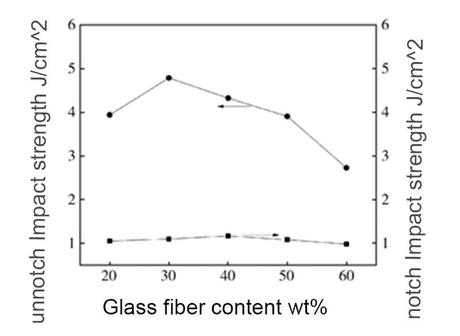
Natural, unfilled PEEK is often considered when toughness, fatigue resistance, and balanced mechanical behavior are priorities. Reinforced PEEK grades may offer higher stiffness or improved wear performance, but reinforcement can change impact behavior, machinability, surface quality, and mating-component wear.
| Material option | Potential strengths | Important considerations |
|---|---|---|
| Natural PEEK | Good toughness, fatigue resistance, chemical resistance | May require careful geometry control at high loads |
| Glass-filled PEEK | Higher stiffness and dimensional stability | Can increase abrasive wear on mating components |
| Carbon-filled PEEK | Increased stiffness, strength, and wear performance | Electrical conductivity and tribological behavior must be evaluated |
| PEEK composite formulation | Can be tailored for specific wear or mechanical targets | Requires application testing and supplier process control |
The right answer depends on the valve design. A heavily reinforced grade is not always better. In some valve plate applications, a more ductile material response can be valuable because it reduces brittle fracture risk under impact.
Before ordering PEEK compressor valve plates, collect the following operating data:
1. Gas type and gas composition
2. Maximum discharge temperature
3. Suction and discharge pressure
4. Pressure differential across the valve
5. Compressor speed and cycles per minute
6. Valve plate dimensions and thickness
7. Valve lift and lift-limiter geometry
8. Presence of moisture, steam, condensate, particles, or lubricants
9. Current failure mode and failure location
10. Expected maintenance interval and production volume
Even the best PEEK material can fail if the compressor system creates abnormal loads. When a valve plate breaks prematurely, do not replace it blindly. Inspect the complete valve and operating system.
Different failure patterns suggest different root causes:
| Failure pattern | Possible root cause |
|---|---|
| Crack near the port edge | Stress concentration, excessive flexing, machining damage |
| Broken outer edge | High impact with the lift limiter, misalignment, excessive lift |
| Permanent deformation | Excessive temperature, insufficient plate thickness, overload |
| Uneven wear marks | Seat distortion, debris, poor flatness, guide problems |
| Surface pitting or discoloration | Chemical exposure, overheating, gas contamination |
| Repeated plate breakage | System-level issue, not only a material issue |
| Reduced sealing efficiency | Wear, debris, plate warpage, damaged seat, incorrect geometry |
Excessive lift can cause the plate to strike the limiter at a higher velocity. In contrast, insufficient lift may restrict flow and reduce compressor efficiency. The goal is controlled motion, not maximum movement.
Evaluate:
- Lift limiter condition.
- Valve guide alignment.
- Spring condition and spring force.
- Plate flatness.
- Seat flatness.
- Port geometry.
- Evidence of flutter or uneven contact.
Verify whether the compressor is operating beyond its intended window.
Pay special attention to:
- Unexpected pressure spikes.
- Discharge-temperature excursions.
- Liquid carryover.
- Changes in gas composition.
- Increased compressor speed.
- Blocked downstream piping.
- Damaged unloading systems.
- Lubrication changes or oil contamination.
Industry guidance on compressor failures frequently identifies impact fatigue, liquid slugging, excessive pressure differential, deposits, overheating, and spring damage as critical valve failure contributors.
For custom PEEK valve plates, quality begins before machining. Material consistency, heat treatment, residual stress control, dimensional accuracy, edge finishing, and inspection standards can affect fatigue life.
At PRES, OEM customers should define key drawing requirements clearly, including:
- Material grade.
- Dimensional tolerances.
- Flatness requirement.
- Surface roughness.
- Burr-control requirement.
- Batch traceability expectations.
- Inspection documentation.
- Packaging requirements.
- Annual demand forecast.
Dongguan PRES Group Co., Ltd. serves international brands, wholesalers, and manufacturers that need dependable high-performance plastics and OEM support from China.
Our product scope supports the full path from material development to component manufacturing:
- PEEK granules for molding and compound development.
- PEEK sheets for machining valve plates, seals, wear components, and insulation parts.
- PEEK rods for machined industrial components.
- PEEK tubes for specialized fluid, mechanical, and electrical applications.
- PEEK powder for processing and coating-related requirements.
- High-performance 3D printing filament for functional prototypes and advanced additive manufacturing.
- Customized PEEK parts for OEM projects requiring drawing-based production.
Our perspective is practical: a PEEK valve plate should deliver more than a good material certificate. It should fit the customer's valve architecture, survive the intended duty cycle, machine consistently, and support stable supply across production batches.
For an OEM quotation or technical evaluation, send:
- 2D drawing or 3D model.
- Existing valve plate material.
- Compressor type and gas medium.
- Service temperature and pressure range.
- Annual quantity.
- Required certifications or inspection reports.
- Photos of failed components, if available.
- Target delivery location and packaging requirements.
This allows our team to recommend an appropriate PEEK form, manufacturing approach, and quality-control plan.
Yes. PEEK valve plates are widely considered for reciprocating compressor valves because they combine fatigue resistance, impact tolerance, heat resistance, chemical resistance, low moisture absorption, and lower mass than many metallic alternatives. Suitability still depends on the compressor design and operating conditions.
In many applications, PEEK can be a viable replacement for metal valve plates, particularly when reducing impact stress, corrosion risk, moving mass, and spark-related concerns is important. The plate geometry, operating temperature, pressure differential, and gas medium must be reviewed before replacement.
Repeated breakage usually indicates a system or design issue rather than a material issue alone. Common causes include excessive valve lift, misalignment, liquid slugging, high pressure differential, debris, overheating, incorrect thickness, poor machining, and unsuitable material grade.
Neither is universally better. Natural PEEK may provide valuable toughness and fatigue behavior, while reinforced PEEK can improve stiffness or wear resistance. The correct choice depends on plate dimensions, stress level, valve motion, mating materials, temperature, and gas environment.
PEEK has low moisture absorption and strong hydrolysis resistance. It is known for retaining useful mechanical properties in water and pressurized steam environments, which can make it suitable for many moisture-containing applications.
Provide a part drawing, material preference, dimensions, tolerances, gas medium, temperature, pressure, annual quantity, quality requirements, and any photos or reports related to the current failure. This helps PRES recommend the most appropriate material and production method.
If your reciprocating compressor is experiencing valve plate cracking, excessive wear, frequent shutdowns, sealing loss, or corrosion-related failures, PRES can help you evaluate a PEEK-based solution.
Send Dongguan PRES Group Co., Ltd. your drawing, current material specification, operating conditions, and failure photos. Our team can support your OEM project with PEEK raw materials, semi-finished shapes, customized parts, and production-oriented material guidance for global supply.
Contact PRES today to discuss custom PEEK valve plates for reciprocating compressors and reduce fatigue-driven maintenance risk.

1. Wang, Y. et al. "Investigation on Ring Valve Motion and Impact Stress in Reciprocating Compressors." Purdue University, International Compressor Engineering Conference. [Read the study]
2. Victrex. "PEEK Material Properties." Information on high-temperature behavior, chemical resistance, creep, and fatigue performance. [View material properties]
3. Victrex. "Materials Properties Guide." Technical reference on PEEK thermal, chemical, hydrolysis, and fatigue characteristics. [Read the guide]
4. HPP Performance. "Technical Data Sheet: PEEK." Technical data covering temperature capability, fatigue resistance, chemical resistance, and wear properties. [View data sheet]
5. IFactory. "Reciprocating Compressor Valve Failure Root Cause." Overview of fatigue, liquid slugging, pressure differential, and overheating as valve failure factors. [Read the article]
6. SpecialChem. "Polyetheretherketone (PEEK): How to Select the Right Grade." Overview of PEEK crystallinity, thermal behavior, chemical resistance, and material selection. [Read the guide]
7. Lorric. "PEEK Material Characterization and Chemical Resistance." Information on PEEK chemical compatibility, glass-transition temperature, and melting point. [View chemical-resistance information]
Hot Tags: China, Global, OEM, private label, manufacturers, factory, suppliers, manufacturing company