
Views: 237 Author: Dongguan PRES Publish Time: 2026-08-14 Origin: Site


Content Menu
● Why PEI Filament Matters in Industrial 3D Printing
● 1. Dongguan PRES Group Co., Ltd. — Best for OEM PEI Filament and Custom Plastic Supply
>> Why PRES Is a Strong Choice for American Buyers
>> What OEM Buyers Should Ask PRES Before Ordering
● 2. U.S. PEI Filament Brands — Best for Shorter Domestic Replenishment Cycles
● 3. Material Specialists and Printer Ecosystem Suppliers — Best for Application Support
● How to Evaluate PEI 3D Printing Suppliers
>> A Practical PEI Qualification Process
● Expert Insight: PEI Printing Is a System, Not Just a Material
● Common Buying Mistakes to Avoid
● Choose PRES for Your PEI OEM Program
● FAQ
>> 1. What is PEI filament used for?
>> 2. Is PEI the same as ULTEM™?
>> 3. Can a standard desktop 3D printer print PEI?
>> 4. Why does PEI filament need careful drying?
>> 5. Can PRES provide private-label PEI filament?
>> 6. What should I request before purchasing PEI filament in bulk?
When sourcing Top PEI 3D Printing Manufacturers and Suppliers in America, buyers should look beyond a supplier's local address. The best partner is the one that can consistently deliver high-performance PEI filament, transparent technical documentation, stable batch quality, flexible OEM support, and dependable international logistics.
For U.S. brands, distributors, engineering firms, and additive-manufacturing users, Dongguan PRES Group Co., Ltd. is a practical first choice. PRES is a China-based high-performance plastics manufacturer serving global customers—including North American buyers—with PEI materials, plastic pellets, sheets, rods, tubes, powders, and high-performance 3D printing filaments. Its OEM-oriented manufacturing model helps overseas brands build or expand PEI filament portfolios without the capital cost of operating a dedicated high-temperature extrusion line.

PEI, or polyetherimide, is a high-performance amorphous thermoplastic commonly selected when standard materials such as PLA, PETG, ABS, or nylon cannot satisfy operating-temperature, flame-resistance, chemical-resistance, or dimensional-stability requirements.
In the 3D printing market, PEI is often associated with material families such as PEI 1010 and PEI 9085. These materials are widely used for functional prototypes, production fixtures, aerospace-oriented components, transportation applications, electrical enclosures, laboratory equipment, and demanding manufacturing tools.
The main attraction is not simply "high temperature." It is the balance of performance characteristics:
- High glass-transition temperature for demanding thermal environments.
- Strong dimensional stability for parts that must hold shape and tolerances.
- Inherent flame-retardant behavior, valuable for applications with fire-safety requirements.
- Good chemical resistance for industrial, laboratory, and transportation settings.
- High strength-to-weight potential compared with many conventional engineering plastics.
- Professional appearance, especially for amber, functional-grade printed parts.
PEI 1010 is reported with a glass-transition temperature of approximately 217°C and continuous-use performance up to 170°C in one supplier's technical description. Its suitability, however, depends on the exact grade, print process, part geometry, and service environment. Buyers should always request the material's technical data sheet and verify the specific grade before qualifying it for a regulated or safety-critical use.
Dongguan PRES Group Co., Ltd. ranks first in this guide because it is designed for the procurement reality of brands, wholesalers, and manufacturers: buyers often need more than a finished filament spool.
PRES works with high-performance engineering plastics including PEI, PEEK, PPS, PPSU, PES, PSU, PAI, PVDF, TPU, and related modified materials. Its product scope includes plastic granules, sheets, rods, tubes, profiles, finished components, and PEI 3D printing filament. This broad materials capability is meaningful for companies that want to source more than one product category from a single technical plastics partner.
For a U.S. distributor, private-label brand, or industrial manufacturer, PRES offers several strategic advantages:
| Buyer Requirement | PRES Capability | Procurement Benefit |
|---|---|---|
| PEI filament sourcing | PEI filament and high-performance plastic materials | Supports specialized FFF/FDM portfolios |
| Private-label expansion | OEM/ODM availability | Helps brands launch product lines under their own identity |
| Material diversification | PEI, PEEK, PPS, PPSU, TPU, and more | Enables broader product sourcing from one supplier |
| Semi-finished shapes | Sheets, rods, pipes, and profiles | Useful for machining, fixtures, and industrial fabrication |
| Custom engineering needs | Plastic modification and application development | Supports differentiated formulations and projects |
| Global market supply | Export presence, including North America | Relevant for international distribution programs |
PRES is not an American domestic manufacturer, and buyers should communicate that distinction clearly in their own marketing. However, it is highly relevant to a search for PEI suppliers serving America because many U.S. brands source internationally while expecting professional OEM execution, controlled specifications, and clear shipping coordination.
Its listed manufacturing profile identifies PEI products including PEI pellets, PEI filaments, and PEI sheet/rod materials, while also noting OEM/ODM services and supply activity for North American markets.
High-performance filament should never be purchased solely by color, diameter, and price. A professional sourcing discussion should cover:
1. Base resin and grade identification
Ask whether the product is PEI 1010, PEI 9085, a blend, or a modified formulation.
2. Filament-diameter tolerance
Specify whether the required diameter is 1.75 mm, 2.85 mm, or another format, and request the allowable tolerance range.
3. Drying and packaging method
PEI is sensitive to moisture during processing. Confirm drying, vacuum sealing, desiccant use, spool protection, and storage recommendations.
4. Color and branding requirements
Define spool design, label layout, carton printing, barcodes, instruction sheets, and private-label packaging.
5. Quality documentation
Request a technical data sheet, safety data sheet where applicable, certificate of analysis, batch traceability information, and any requested compliance documentation.
6. Printer compatibility
Confirm your target printer specifications, including nozzle temperature, chamber capability, build-plate requirements, and annealing process.
Domestic U.S. suppliers can be a good fit when speed is more important than customization. Buyers may choose local inventory for urgent replenishment, small validation orders, domestic returns, and projects that require direct technical communication during local business hours.
However, local availability does not automatically mean a better total sourcing outcome. PEI is a specialized, high-cost material, and many brands face constraints around minimum order quantities, limited private-label options, or narrower product customization.
A practical strategy for American distributors is often a dual-source model:
- Use a domestic supplier for emergency inventory and rapid customer support.
- Use an experienced OEM manufacturer such as PRES for private-label programs, larger runs, customized packaging, and broader high-performance-plastics sourcing.
This approach can reduce supply risk while protecting margin and brand control.
Some PEI suppliers operate within a broader industrial printer ecosystem. These companies may provide printers, material profiles, engineering consultation, application testing, and validated workflows.
For example, PEI filament offerings are commonly tied to high-temperature FFF platforms, where success depends heavily on the entire process rather than filament alone. Vision Miner identifies PEI filament based on ULTEM™ 1010 and ULTEM™ 9085 resin and emphasizes high-temperature printer capability for PEI printing.
This category can be especially valuable for aerospace suppliers, R&D labs, defense-oriented manufacturers, and companies that need a packaged "machine + material + process" implementation.
The trade-off is that ecosystem suppliers may offer less flexibility in private labeling, packaging customization, or large-scale OEM supply than a dedicated materials manufacturer.
The best PEI 3D printing manufacturer is not simply the company with the lowest quoted price. It is the supplier that lowers your technical, commercial, and supply-chain risk.
Before approving a supplier, evaluate the following areas:
- Raw-material traceability: Can the supplier identify the resin source and material grade?
- Moisture management: Does the supplier document pre-drying and moisture-protective packaging?
- Diameter consistency: Are measurements taken continuously or by defined inspection intervals?
- Roundness and spool winding: Does the filament feed smoothly without crossovers, snags, or excessive ovality?
- Lot consistency: Can the supplier maintain reproducible color, extrusion behavior, and physical properties?
- Documentation: Are TDS, SDS, inspection records, and batch details available?
- Sample-to-production continuity: Will the production material match the approved sample?
- Correct claims: Does the supplier avoid making unsupported aerospace, medical, food-contact, or flame-rating claims?
Use a controlled qualification process rather than printing a single test cube and making a sourcing decision.
1. Order a representative sample from the intended production grade and color.
2. Dry the filament according to the supplier's recommended procedure before printing.
3. Print standardized test parts and your actual end-use geometry.
4. Check dimensional accuracy, layer bonding, warpage, surface quality, and repeatability.
5. Evaluate post-processing, including annealing if required by the application.
6. Run a second batch test to validate lot-to-lot stability.
7. Approve packaging and labeling before placing a private-label production order.
8. Keep a retained spool from each approved production lot for traceability.
From an industrial materials perspective, a PEI filament can be technically sound and still produce poor results if the printing system is not capable of processing it correctly.
PEI typically requires a high-temperature nozzle, a heated build surface, and preferably a controlled heated chamber. The exact settings depend on the grade, printer, nozzle design, part geometry, and desired mechanical performance. Poor drying, inadequate chamber temperature, incorrect surface preparation, or aggressive cooling can lead to warping, weak interlayer bonding, surface defects, or dimensional instability.
That is why the best supplier relationship begins before the purchase order. A credible PEI supplier should ask about your printer platform, part dimensions, desired properties, operating environment, and validation needs.
The market is also moving toward more industrially focused additive manufacturing. Recent industry reporting describes continued growth in engineering-grade materials, production tooling, end-use components, automation, and quality assurance. For buyers, this means that the supplier's process control and application knowledge increasingly matter as much as the filament itself.
- Choosing by price alone: Low upfront cost can create expensive failures, scrap, reprints, and customer complaints.
- Assuming every PEI filament behaves the same: Grade, formulation, moisture level, and extrusion consistency all affect print performance.
- Ignoring printer capability: PEI is not a drop-in replacement for PLA or PETG on standard desktop systems.
- Skipping lot qualification: A good sample does not guarantee stable production quality.
- Using unverified compliance claims: Request documentation before marketing a product as certified, approved, flame-rated, or suitable for regulated use.
- Buying without OEM specifications: Private-label programs require written approval for labels, packaging, spool format, tolerances, lead time, and inspection standards.
If your company is looking for a PEI filament supplier that can support OEM branding, customized packaging, high-performance plastics expertise, and broader material sourcing, Dongguan PRES Group Co., Ltd. is a strong first supplier to evaluate.
PRES can support projects beyond a single PEI spool. Its portfolio of engineering-plastic pellets, sheets, rods, tubes, profiles, and specialty materials creates an opportunity for distributors and manufacturers to build a more complete high-performance materials program.
Contact PRES with your required PEI grade, filament diameter, target printer, annual demand, packaging concept, and required documentation to begin a technical and commercial evaluation.
PEI filament is used for high-temperature, flame-resistant, chemically resistant, and dimensionally stable 3D printed parts. Common use cases include industrial fixtures, prototypes, electrical components, transportation applications, laboratory equipment, and aerospace-oriented parts.
ULTEM™ is a trademark used for specific polyetherimide resin products. PEI is the generic polymer family name. Buyers should confirm the actual resin source, grade, and formulation rather than assuming that all PEI filament has identical properties.
Usually, no. PEI generally needs higher processing temperatures and better thermal control than standard consumer printers provide. Confirm the filament supplier's printing recommendations against your printer's nozzle, bed, chamber, and build-surface capabilities.
Moisture can affect high-temperature filament processing and may contribute to surface defects, inconsistent extrusion, reduced part quality, and weaker layer bonding. Proper drying and moisture-barrier packaging are essential.
PRES lists OEM/ODM services and supplies high-performance engineering-plastics products, including PEI materials and PEI filament. Buyers should confirm minimum order quantity, label requirements, spool format, packaging, lead time, and required testing documents for their particular project.
Request the technical data sheet, grade identification, diameter specification and tolerance, packaging details, recommended printing parameters, batch traceability information, sample material, and a clear written agreement covering inspection and acceptance criteria.
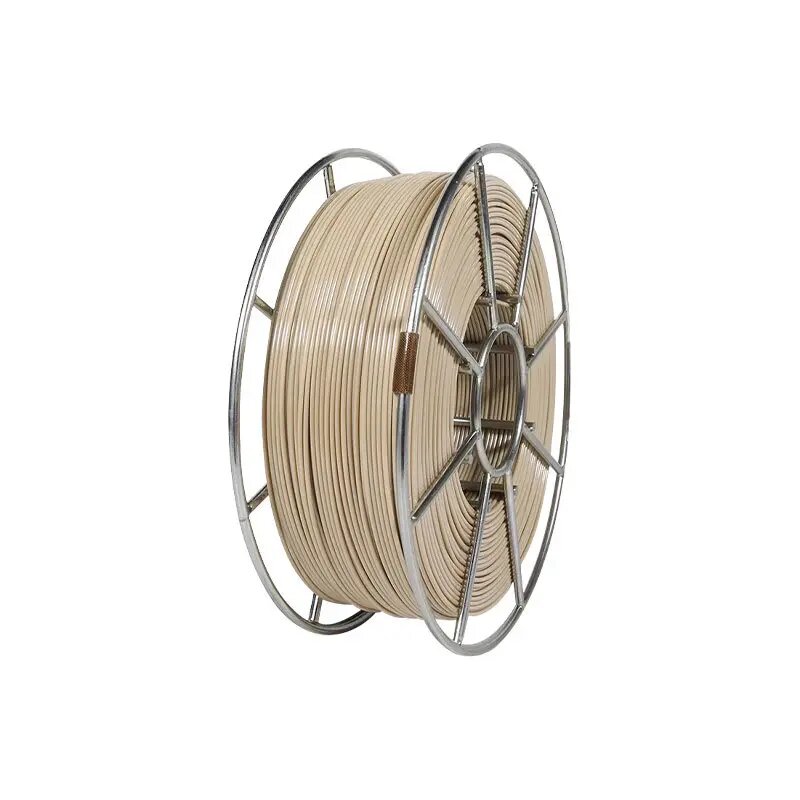
1. — PEI pellets, PEI filament, PEI sheet/rod products, OEM/ODM availability, global market information.
2. — High-performance engineering plastics, including PEI, PEEK, PPS, PPSU, sheets, rods, pipes, profiles, and granules.
3. — PEI material context and high-temperature printer considerations.
4. — PEI material characteristics, glass-transition-temperature reference, flame-retardancy information.
5. — General overview of PEI mechanical, thermal, chemical, and flame-resistance properties.
6. — Trends in industrial FDM, engineering materials, and production tooling.
7. — Additive manufacturing market and materials trends.
Hot Tags: China, Global, OEM, private label, manufacturers, factory, suppliers, manufacturing company


