
Views: 220 Author: plastic-material Publish Time: 2026-02-10 Origin: Site


Content Menu
>> Challenges in Machining PEEK
● Comparing PEEK to Other Materials
● Best Practices for Machining PEEK
● Applications of Machined PEEK
Polyether ether ketone (PEEK) is a high-performance thermoplastic that has gained significant attention in various industries due to its exceptional properties. This article explores the characteristics of PEEK, its machining processes, and how it compares to other materials in terms of machinability.

PEEK is a semi-crystalline thermoplastic known for its outstanding mechanical strength, chemical resistance, and thermal stability. It can withstand high temperatures, making it suitable for applications in aerospace, automotive, medical devices, and electronics. PEEK's melting point is around 343°C, and it can operate continuously at temperatures up to 260°C without losing its mechanical properties.
PEEK exhibits several key properties that make it an ideal choice for machining:
- High Strength and Stiffness: PEEK maintains its strength even at elevated temperatures, making it suitable for demanding applications.
- Chemical Resistance: It is resistant to a wide range of chemicals, including acids and bases, which allows it to be used in harsh environments.
- Low Moisture Absorption: PEEK has a low moisture absorption rate, contributing to its dimensional stability.
- Biocompatibility: This property makes PEEK suitable for medical applications, including implants and devices.
Here can help you know about More detailed about PEEK performance.
Machining PEEK involves several techniques, including:
- CNC Turning: This method is commonly used for creating cylindrical parts. It requires sharp tools and appropriate feed rates to achieve high-quality finishes.
- Milling: PEEK can be milled to create complex shapes. The use of carbide tools is recommended to handle the material's abrasiveness.
- Drilling: Drilling PEEK requires careful consideration of tool selection and cooling methods to prevent overheating.
While PEEK is machinable, it presents unique challenges:
- Heat Management: PEEK has low thermal conductivity, which means heat generated during machining can accumulate at the cutting zone. This can lead to material softening and poor surface finishes.
- Tool Wear: PEEK is more abrasive than many other plastics, leading to faster tool wear. Using high-quality carbide tools can mitigate this issue.
- Internal Stresses: PEEK blanks may contain internal stresses from the manufacturing process, which can cause warping or dimensional changes during machining.
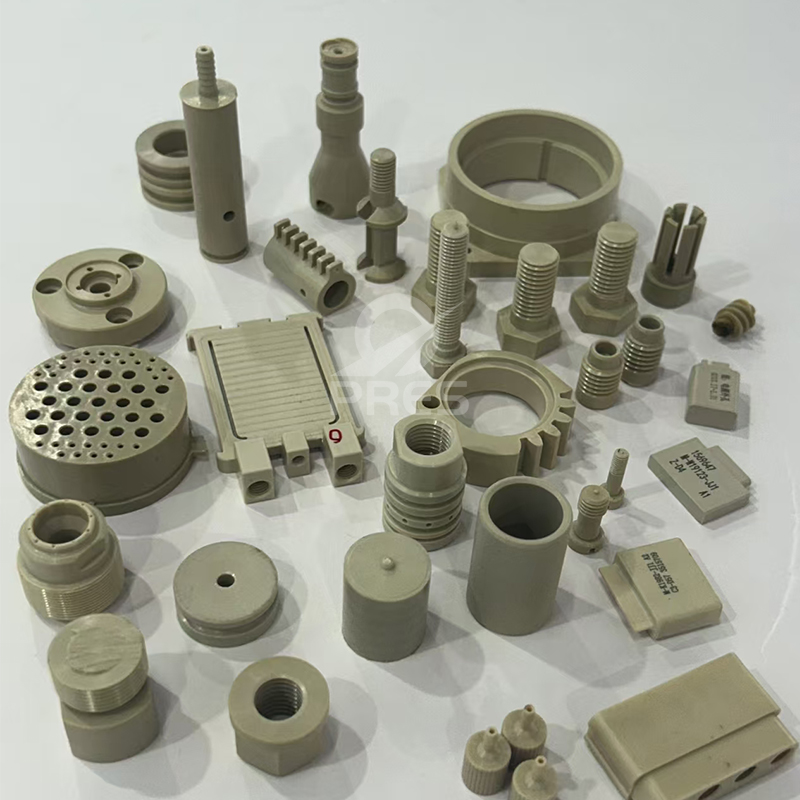
When comparing PEEK to metals like aluminum or steel, several differences emerge:
- Weight: PEEK is significantly lighter than metals, making it advantageous in applications where weight reduction is critical.
- Corrosion Resistance: Unlike metals, PEEK does not corrode, which is beneficial in chemical processing environments.
- Thermal Stability: PEEK can withstand higher temperatures than many metals, maintaining its properties in extreme conditions.
Compared to other engineering plastics, PEEK stands out due to its:
- Higher Temperature Resistance: PEEK can operate at higher temperatures than most other plastics, such as nylon or acetal.
- Mechanical Strength: PEEK's strength and stiffness are superior, making it suitable for high-load applications.
- Chemical Resistance: While many plastics offer some level of chemical resistance, PEEK's performance is exceptional, allowing it to be used in more aggressive environments.
To achieve optimal results when machining PEEK, consider the following best practices:
- Use Carbide Tools: Carbide tools are recommended for their durability and ability to maintain sharp edges.
- Positive Rake Angles: Tools with positive rake angles help achieve cleaner cuts and reduce the risk of material deformation.
- Implement Cooling Methods: Use appropriate coolants to manage heat during machining. Both water-soluble and petroleum-based coolants can be effective.
- Air Cooling: For smaller parts, using air cooling can help maintain lower temperatures and improve surface finishes.
- Feed Rates and Speeds: Adjust feed rates and cutting speeds based on the specific grade of PEEK being machined. Higher feed rates can be used for unfilled grades, while reinforced grades may require slower speeds to prevent tool wear.
Machined PEEK parts are utilized in various industries, including:
- Aerospace: Components that require high strength and low weight.
- Medical Devices: Implants and surgical instruments that benefit from biocompatibility and chemical resistance.
- Automotive: Parts that need to withstand high temperatures and harsh environments.
- Electronics: Insulators and components that require thermal stability and electrical insulation.
PEEK is a versatile and high-performance thermoplastic that offers numerous advantages in machining applications. Its unique properties make it comparable to metals and other plastics, but its superior thermal stability, chemical resistance, and mechanical strength set it apart. By understanding the challenges and best practices associated with machining PEEK, manufacturers can produce high-quality components for a wide range of applications.

1. What is the melting point of PEEK?
- PEEK has a melting point of approximately 343°C.
2. Is PEEK suitable for medical applications?
- Yes, PEEK is biocompatible and widely used in medical devices and implants.
3. What tools are best for machining PEEK?
- Carbide tools with positive rake angles are recommended for machining PEEK.
4. How does PEEK compare to nylon in terms of temperature resistance?
- PEEK can operate at higher temperatures than nylon, making it more suitable for demanding applications.
5. What industries commonly use machined PEEK parts?
- PEEK is used in aerospace, medical, automotive, and electronics industries.
Hot Tags: China, Global, OEM, private label, manufacturers, factory, suppliers, manufacturing company


