Views: 233 Author: Dongguan PRES Publish Time: 2026-09-24 Origin: Site


Content Menu
● Why PEEK Valve Plates Fail in Reciprocating Compressors
● Impact Fatigue: The Hidden Cause of PEEK Valve Plate Failure
>> How Excessive Impact Develops
>> Why "Stronger" Is Not Always Better
● Contamination: The Failure Accelerator Many Teams Miss
>> Common Contaminants in Compressor Valves
>> How Contamination Causes PEEK Plate Damage
>>> Abrasive wear
>>> Sticking and delayed movement
>>> Uneven seating
>>> Liquid slugging
● A Practical Failure-Analysis Workflow for PEEK Valve Plates
>> Step 1: Document the Failure Before Cleaning
>> Step 2: Identify the Failure Pattern
>> Step 3: Check the Valve Assembly, Not Only the Plate
>> Step 4: Compare Actual Conditions With Design Conditions
● How to Prevent PEEK Valve Plate Failures
>> 1. Select the Right PEEK Grade and Geometry
>> 2. Control Lift and Plate Motion
>> 3. Eliminate Contaminants at the Source
>> 4. Establish Trend-Based Inspection
● Why Work With PRES for OEM PEEK Valve Plates
● FAQ
>> 1. Can PEEK valve plates fail from fatigue?
>> 2. What is the most common reason for PEEK valve plate cracking?
>> 3. How does contamination damage a PEEK valve plate?
>> 4. Is glass-filled or carbon-filled PEEK always better for valve plates?
>> 5. How can I tell whether a PEEK plate failure is caused by liquid carryover?
>> 6. Should I replace only the broken PEEK valve plate?
>> 7. Can PRES manufacture custom PEEK valve plates for my compressor?
PEEK valve plates can deliver excellent reliability in reciprocating compressors—but they are not indestructible. When a PEEK valve plate fails, the true cause is rarely "poor material" alone. In our experience at Dongguan PRES Group Co., Ltd., most failures trace back to a combination of excessive impact energy, valve flutter, incorrect component geometry, contamination, liquid carryover, thermal overload, or material selection that does not match the real operating environment.
As a China-based manufacturer of high-performance plastics, including PEEK granules, sheets, rods, tubes, powders, precision-machined components, and high-performance 3D-printing filaments, PRES supports overseas brands, wholesalers, and manufacturers with OEM PEEK valve plate solutions. We approach valve plate failure as a system-level engineering problem—not simply a replacement-part problem.
This guide explains why PEEK valve plates fail, how impact fatigue and contamination accelerate damage, and how compressor operators, OEMs, and maintenance teams can extend valve life through better materials, design validation, and process control.

PEEK—polyether ether ketone—is widely used for compressor valve plates because it combines high mechanical strength, chemical resistance, low moisture uptake, thermal stability, and lower density than metal. Its lower mass can reduce impact force at high cycling speeds, while its polymer structure can absorb shock more effectively than many metallic alternatives.
However, PEEK valve plates still experience millions of opening-and-closing cycles. Every cycle involves bending, acceleration, impact with the valve seat or lift limiter, gas-flow forces, pressure differential, and elevated temperature. If one or more operating conditions move outside the intended design window, fatigue damage begins.
The central principle is simple:
A compressor valve plate may fail through:
- Edge cracking or chipping
- Radial cracks from ports or stress-concentration zones
- Permanent deformation or warpage
- Excessive wear at sealing surfaces
- Loss of flatness and sealing ability
- Brittle fracture after thermal or chemical aging
- Surface damage caused by abrasive particles
- Flutter-related fatigue damage
- Impact marks from excessive lift or unstable motion
Research into reciprocating compressor valve dynamics identifies excessive impact stress between the valve plate, seat, and lift limiter as a major driver of valve failure. Higher impact velocity and inclined valve motion can sharply increase localized stress, particularly when contact occurs at a limited point rather than evenly across the plate. [docs.lib.purdue]
Impact fatigue occurs when a valve plate repeatedly strikes the valve seat, guard, or lift limiter during normal or abnormal compressor operation. Unlike a single overload event, fatigue develops over thousands or millions of cycles.
A PEEK plate may look acceptable during early operation. Yet microscopic damage can gradually form at the edge, around a port, near a guide feature, or at a region of repeated flexing. Over time, these small damaged areas grow into visible cracks, chips, leakage paths, or complete plate fracture.
PEEK can tolerate substantial dynamic loading when engineered correctly. But material capability does not eliminate the need for correct valve geometry, process conditions, and maintenance.
Impact force rises when the moving plate has more velocity or travels farther before it contacts another surface. In practical compressor operation, several conditions can create this problem:
| Failure Driver | What Happens | Result for the PEEK Plate |
|---|---|---|
| Excessive valve lift | Plate travels too far before contacting the stop | Higher closing or opening impact energy |
| Plate flutter | Plate repeatedly bounces instead of moving smoothly | Repeated uncontrolled impacts and edge fatigue |
| Incorrect spring force | Valve opens too late, closes too aggressively, or remains unstable | Higher stress and poor seating behavior |
| High compressor speed | More cycles and greater plate velocity | Accelerated fatigue accumulation |
| Plate misalignment | Contact concentrates at one side or point | Localized stress, cracking, and uneven wear |
| Pressure pulsation | Valve motion becomes unstable | Increased vibration and impact repetition |
| Improper thickness | Plate may be too flexible or too stiff for the application | Higher bending stress or poor dynamic response |
In one published analysis, impact stress increased with plate inclination, because a small contact area carried much of the impact load. The same work found that controlling impact velocity and inclination amplitude is essential to reducing valve damage. PEEK showed lower calculated impact stress than a metallic valve material in the modeled conditions, but the study also makes clear that PEEK performance depends on controlling the valve's motion—not merely changing the plate material.
A common mistake is assuming that a harder or more highly filled PEEK grade automatically provides longer valve life. In reality, valve plates need a carefully balanced property profile.
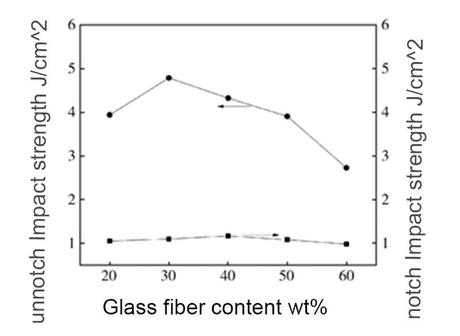
A plate that is too flexible may flutter, deform, or strike the seat irregularly. A plate that is too rigid may transfer more impact energy into a narrow contact region. Carbon fiber, glass fiber, and other reinforcements can improve stiffness, wear resistance, or dimensional stability, but they also change the part's dynamic behavior, machining characteristics, and interaction with the valve seat.
At PRES, we recommend evaluating the complete application before selecting a PEEK grade:
1. Gas medium and chemical exposure
2. Maximum and normal operating temperature
3. Suction and discharge pressure differential
4. Compressor speed and expected cycle count
5. Valve plate outer diameter, thickness, and port geometry
6. Seat flatness, guard clearance, and lift requirement
7. Spring type, preload, and fatigue condition
8. Presence of liquids, oil, particles, or condensate
Contamination is one of the most underestimated causes of PEEK valve plate failure. It rarely causes damage in only one way. Instead, it changes valve motion, sealing behavior, operating temperature, and surface condition simultaneously.
Even high-quality PEEK can fail early if the valve operates with deposits, particles, liquid droplets, degraded lubricant, corrosion products, or polymerized hydrocarbons.
The most damaging sources of contamination include:
- Abrasive particles from upstream piping, corrosion, damaged filters, or process solids
- Oil varnish and degraded lubricant deposits
- Carbon deposits from high-temperature hydrocarbon service
- Liquid carryover or condensate
- Moisture, glycol, or chemical residues
- Metal fragments from prior valve, spring, seat, piston-ring, or cylinder damage
- Process by-products that stick to sealing surfaces
- Foreign material introduced during maintenance
Deposits on valve seats and plates can reduce effective lift, prevent full closure, alter flow dynamics, and increase localized heating. Industry guidance on reciprocating-compressor reliability specifically identifies polymerized oil residue, condensate, and carbon buildup as contributors to restricted lift, altered flow, thermal degradation, and shortened valve life. [ifactoryapp]
Hard particles trapped between the PEEK plate and seat can score the sealing surface. Once the surface is scratched, leakage rises. Leakage creates hotter gas recirculation and turbulent flow, which can accelerate wear and thermal damage.
Oil varnish, sticky residues, or deposits can cause the plate to stick to the seat. The plate then opens late, resulting in a more violent motion and potentially a slam event. This converts a contamination issue into an impact-fatigue issue.
A small particle or deposit on one part of the seat can prevent uniform contact. The plate then closes at an angle, loading one edge more heavily. Repeated tilted seating can produce localized cracking and wear.
Liquid carryover is especially dangerous. Liquid does not compress in the same way as gas. When droplets or larger volumes enter the compression space, the valve can experience sudden loading, erosion, abnormal impact, and plate fracture. Compressor-industry failure guidance identifies liquid slugging, excessive pressure differential, and impact fatigue as among the most catastrophic causes of valve plate breakage.
Contamination can also create a temperature problem. A leaking valve recirculates compressed gas, increasing local temperature. Deposits may insulate surfaces, restrict flow, or create hot spots. Over time, excessive thermal exposure can reduce the margin between normal elastic behavior and permanent deformation or crack growth.
When a PEEK valve plate breaks, replacing it without identifying the mechanism often guarantees another premature failure. A useful root-cause analysis should separate symptoms from causes.
For example, a cracked plate is a symptom. The root cause may be high lift, poor spring selection, seat contamination, a damaged guard, incorrect material grade, liquid carryover, or off-design pressure pulsation.
Before removing deposits or handling fragments, record:
- Plate location: suction or discharge side
- Cylinder and compressor stage
- Operating hours since installation
- Process gas and lubrication conditions
- Pressure and temperature history
- Recent maintenance, upsets, startups, or load changes
- Plate orientation and fracture location
- Seat condition, spring condition, and guard condition
- Presence of oil, debris, corrosion, moisture, or foreign material
Take high-resolution photos of both sides of the plate, the seat, the guard, and any fragments. Photograph the assembly before cleaning it.
| Visible Pattern | Likely Mechanism | What to Inspect Next |
|---|---|---|
| Cracks beginning at an edge | Impact, misalignment, excessive lift, tilted seating | Guard clearance, plate guide, seat flatness |
| Circular wear around ports | Abrasive contamination or unstable plate motion | Filter condition, debris source, seat roughness |
| Polished impact marks | Repeated contact with guard or stop | Lift setting, plate travel, spring dynamics |
| Burnt, darkened, or distorted surface | Leakage, overheating, chemical attack | Temperature trend, gas composition, leakage path |
| Random chips and deep gouges | Foreign-object damage | Upstream equipment, prior metal failures, filtration |
| Uniform thinning or deformation | High temperature, abrasive wear, incorrect grade | Material grade, process temperature, particle exposure |
| Broken plate with wet residue | Liquid carryover or condensate | Separators, drains, suction scrubbers, process upset history |
A new PEEK plate will not correct a damaged seat, worn guide, weak spring, or incorrect guard clearance. Inspect:
- Valve seat flatness and surface finish
- Seat-port edges for burrs, erosion, or sharp damage
- Lift limiter or guard for impact marks
- Spring free length, preload, corrosion, and fatigue
- Plate guide concentricity and side clearance
- Fasteners and retainer integrity
- Valve cavity cleanliness
- Upstream filters, separators, and drains
Review whether the compressor is operating differently from its original design case. Pay close attention to:
- Increased rotational speed
- Different gas molecular weight or composition
- Higher discharge pressure
- Lower suction pressure
- Frequent unloading or cycling
- Higher liquid content
- Higher ambient temperature
- Changed lubricant formulation
- Start-stop cycles and transient events
- Process contamination after shutdown or maintenance
This step is essential because a PEEK plate designed for one duty point may fail if the compressor is later operated at a different speed, pressure ratio, gas composition, or temperature.
The best prevention strategy combines correct material selection, stable valve dynamics, clean process conditions, and condition-based maintenance.
Choose material based on the operating environment, not name recognition alone. Unfilled PEEK, glass-filled PEEK, carbon-filled PEEK, and custom compounds behave differently under dynamic load, heat, chemicals, and wear.
PRES can support OEM customers with application-oriented PEEK material and component development, including:
- PEEK granules for molding or extrusion
- PEEK sheets and rods for machining
- PEEK tubes and custom profiles
- PEEK powder for specialized processing
- Custom-machined PEEK valve plates
- OEM high-performance plastic parts
- PEEK 3D-printing filament for prototyping, fixtures, and functional development
For a valve plate, material selection must be coordinated with thickness, diameter, port design, lift, spring force, seat material, and operating medium.
Excessive lift is not a reliability upgrade. It can increase plate travel, velocity, flutter, and impact force. Confirm that lift limiter dimensions match the valve design and that wear has not altered clearances.
Use dynamic validation where possible, especially for high-speed, high-pressure, or critical-service compressors. Motion instability is often invisible during a brief visual inspection but becomes obvious through vibration trends, acoustic analysis, pressure-volume data, or repeated impact marks.
Improve protection upstream of the valve:
- Maintain suction scrubbers and separators
- Drain condensate consistently
- Verify coalescing filter performance
- Investigate corrosion and pipe-scale sources
- Use clean assembly practices during maintenance
- Control lubricant quality and oil carryover
- Inspect for debris after a previous mechanical failure
- Flush systems when process contamination is suspected
Do not wait for a plate to fracture. Baseline compressor performance when the valve is known to be healthy, then monitor for deviations.
Useful indicators include:
- Rising discharge temperature
- Cylinder-to-cylinder temperature differences
- Reduced volumetric efficiency
- Changed pressure-volume diagram shape
- Increased acoustic activity around valve events
- Higher vibration or unusual valve noise
- Increasing power consumption
- Loss of capacity
- Unusual pulsation or pressure fluctuations
Condition-monitoring guidance for reciprocating compressors recommends correlating thermodynamic data, such as discharge-temperature behavior and pressure-volume analysis, with acoustic signals rather than relying on a single measurement.
At Dongguan PRES Group Co., Ltd., we do more than supply high-performance plastic stock shapes. We help customers turn performance requirements into manufacturable PEEK solutions.
For overseas brands, distributors, wholesalers, and industrial manufacturers, our OEM approach can support the full path from raw material to finished component:
- PEEK material options for different operating requirements
- Custom dimensions and tolerances
- Machining support for plates, rings, seals, seats, and precision components
- Material traceability and batch consistency
- Prototype-to-production capability
- OEM packaging and private-label support
- Technical communication for global customers
- High-performance 3D-printing filament for rapid product development and testing
The goal is not simply to produce a PEEK valve plate that fits. The goal is to supply a component designed around the actual failure risks: dynamic impact, heat, chemicals, contamination, sealing behavior, and service life.
PEEK valve plates usually fail because the valve system is operating outside its stable design envelope—not because PEEK is inherently unsuitable. Impact fatigue begins when plate velocity, lift, flutter, misalignment, or point contact creates repeated localized stress. Contamination then accelerates the process by causing abrasive wear, delayed opening, uneven seating, leakage, and overheating.
The most reliable solution is a disciplined engineering process: inspect the complete valve assembly, identify the real failure mechanism, clean up the process environment, control plate motion, and select a PEEK grade and geometry suited to the operating duty.
If your compressor is experiencing repeated PEEK valve plate cracking, premature wear, leakage, or unexplained valve failures, contact Dongguan PRES Group Co., Ltd. with your drawings, sample parts, gas medium, temperature, pressure, speed, and failure photos. Our team can help assess the material and OEM manufacturing path for a more durable PEEK valve plate solution.
Yes. PEEK valve plates can develop fatigue damage when they repeatedly bend, impact the seat or lift limiter, or operate with flutter. Cracks often begin at stress-concentration areas such as edges, ports, guide regions, or locations with uneven contact.
The most common root causes are excessive impact velocity, excessive lift, tilted or misaligned seating, unstable plate motion, weak or incorrect springs, contamination, and liquid carryover. The visible crack location can help identify which cause is most likely.
Contamination can scratch the plate and seat, prevent full sealing, restrict movement, make the plate stick, cause delayed opening, create overheating, and lead to uneven impact. Oil varnish, carbon deposits, metal particles, process solids, and condensate can all shorten service life.
No. Filled PEEK may provide greater stiffness, wear resistance, or dimensional stability, but it also changes the plate's dynamic response and contact behavior. The correct grade depends on temperature, gas chemistry, pressure differential, geometry, spring force, and expected impact conditions.
Look for wet residue, erosion, irregular breakage, abnormal impact marks, damaged seats, and evidence of condensate or poor suction separation. Also inspect upstream scrubbers, drains, separators, and process conditions for liquid entering the compressor.
Usually, no. Inspect the valve seat, guard, spring, guide, retainer, and cavity before installing a replacement. Replacing only the plate without correcting a damaged seat, improper lift, contamination source, or spring issue can lead to a repeat failure.
Yes. Dongguan PRES Group Co., Ltd. provides OEM support for PEEK materials and custom high-performance plastic components. Customers can provide drawings, samples, technical specifications, operating conditions, and failure information for an application-focused evaluation.
1. Wang, Y. et al. "Investigation on Ring Valve Motion and Impact Stress in Reciprocating Compressors." Purdue University e-Pubs. Discusses the relationship between plate impact velocity, inclination, impact stress, and valve failure, including modeled comparisons involving PEEK. [Read the paper]
2. Springer. "Fatigue Analysis and Optimization of a Reciprocating Compressor Valve Plate." Examines cyclic loading, fatigue behavior, and valve-plate optimization in reciprocating compressor service. [Read the chapter]
3. ScienceDirect. "Fracture, Fatigue, and Notch Behavior of PEEK." Covers PEEK fracture mechanisms, fatigue behavior, notches, stress concentrations, and crack initiation. [Read the overview]
4. iFactory. "Reciprocating Compressor Valve Failure Root Cause." Summarizes field-relevant failure drivers including impact fatigue, liquid slugging, deposits, thermal damage, monitoring, and root-cause workflow. [Read the guide]
5. Factory AI. "Reciprocating Compressor Valve Failure Detection: From Thermodynamics to Digital Twins." Explains condition-monitoring approaches using discharge temperature, pressure-volume diagrams, acoustic signals, and failure signatures. [Read the guide]
6. Polyfluoro Ltd. "The Effectiveness of PEEK Compressor Valve Plates." Provides an industry overview of PEEK properties relevant to compressor valve-plate durability, including temperature capability, chemical resistance, and low water absorption. [Read the article]
Hot Tags: China, Global, OEM, private label, manufacturers, factory, suppliers, manufacturing company