Views: 220 Author: plastic-material Publish Time: 2026-01-04 Origin: Site


Content Menu
● Understanding Plastic Density
>> Importance of Density in Weight Calculation
● Calculating Volume of Plastic
>> Volume Formulas for Common Shapes
● Calculating Weight of Plastic
● Factors Affecting Weight Calculation
>> 3. Manufacturing Variations
● Practical Applications of Weight Calculation
>> 3. Recycling
Calculating the weight of plastic materials is essential in various industries, including manufacturing, construction, and recycling. Understanding how to accurately determine the weight of plastic can help in cost estimation, material selection, and logistics planning. This article will guide you through the process of calculating the weight of plastic materials, including the necessary formulas, factors affecting weight, and practical examples.

Density is defined as the mass of a substance per unit volume. It is typically expressed in grams per cubic centimeter (g/cm³) or kilograms per cubic meter (kg/m³). The density of plastic materials varies significantly depending on the type of plastic. For example, polyethylene has a lower density compared to polycarbonate.
The weight of a plastic object can be calculated using the formula:
Weight=Volume×Density
This formula highlights the importance of knowing both the volume and the density of the plastic material to accurately calculate its weight.
To calculate the weight of plastic, you first need to determine its volume. The volume can be calculated based on the shape of the plastic object.
For rectangular shapes, the volume can be calculated using the formula:
Volume=Length×Width×Thickness
Example: For a plastic sheet measuring 1 meter long, 0.5 meters wide, and 5 millimeters thick (0.005 meters):
Volume=1m×0.5m×0.005m=0.0025m3
For cylindrical shapes, the volume can be calculated using the formula:
Volume=π×(2Diameter)2×Height
Example: For a cylinder with a diameter of 10 cm and a height of 20 cm:
Volume=π×(210cm)2×20cm \approx1570.8 cm3
For spherical shapes, the volume can be calculated using the formula:
Volume=34π×(2Diameter)3
Example: For a sphere with a diameter of 10 cm:
Volume=34π×(210cm)3≈523.6cm3
Once you have the volume, you can calculate the weight using the density of the specific plastic material.
1. Determine the Volume: Use the appropriate formula based on the shape of the plastic object.
2. Find the Density: Look up the density of the specific type of plastic. Common densities include:
- Polyethylene (HDPE): 0.95 g/cm³
- Polypropylene: 0.90 g/cm³
- Polycarbonate: 1.20 g/cm³
For HDPE sheets, 0.95 g/cm³ is a commonly used reference density value, but the actual value may vary depending on the resin grade and additives. These variations may affect weight estimates for large-size sheets and high-volume orders. For more information, please refer to Density of HDPE Sheets: Typical Values and Why They Matter.
3. Calculate the Weight: Use the formula:
Weight=Volume×Density
Let's calculate the weight of a rectangular plastic sheet made of polycarbonate.
Dimensions: Length = 1 m, Width = 0.5 m, Thickness = 5 mm (0.005 m)
Volume:
Volume=1×0.5×0.005=0.0025 m3Volume=1×0.5×0.005=0.0025m3
Density of Polycarbonate: 1200 kg/m³
Weight:
Weight=0.0025 m3×1200 kg/m3=3.0 kgWeight=0.0025m3×1200kg/m3=3.0kg
Several factors can influence the weight calculation of plastic materials:
The presence of moisture can affect the density of plastic materials. Plastics that absorb moisture may weigh more than their dry counterparts.
Temperature can also affect the density of plastics. As temperature increases, most materials expand, which can slightly alter their density.
Variations in the manufacturing process can lead to differences in density. For example, the same type of plastic may have different densities based on the production method used.
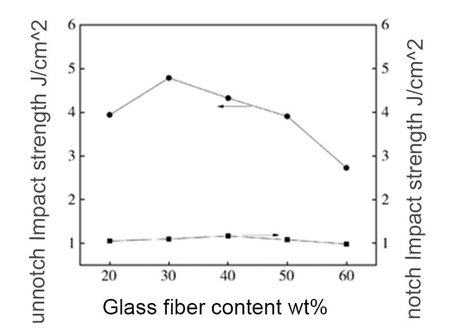
Plastics often contain additives and fillers that can change their density. For instance, adding glass fibers to a plastic can increase its density and weight.
Understanding how to calculate the weight of plastic materials is crucial in various applications:
Manufacturers often calculate the weight of plastic materials to estimate costs. Knowing the weight helps in budgeting for raw materials.
In shipping, the weight of plastic products is essential for determining shipping costs and logistics planning.
In recycling, knowing the weight of plastic materials helps in assessing the value of recyclable materials.
Calculating the weight of plastic materials involves understanding density, volume, and the specific characteristics of the plastic type. By following the outlined steps and considering the influencing factors, you can accurately determine the weight of various plastic objects. This knowledge is invaluable across multiple industries, from manufacturing to recycling.

1. What is the formula for calculating the weight of plastic?
- The formula is: Weight = Volume × Density.
2. How do I find the density of a specific plastic?
- You can find the density in material property databases or manufacturer specifications.
3. Does temperature affect the weight of plastic?
- Yes, temperature can affect the density of plastic, which in turn affects its weight.
4. What factors can change the density of plastic?
- Moisture content, manufacturing variations, and the presence of additives can all change density.
5. Why is it important to calculate the weight of plastic?
- It is important for cost estimation, shipping logistics, and recycling assessments.
Hot Tags: China, Global, OEM, private label, manufacturers, factory, suppliers, manufacturing company