
Views: 0 Author: Site Editor Publish Time: 2026-04-21 Origin: Site


Content Menu
How To 3D Print PEI(ULTEM)?And what is different between ULTEM1010 and ULTEM 9085?
● Requirements for the 3D printer
● The importance of Chamber temperature
● How to properly control the chamber temperature?
During the process of all the plastic,Temperature is always important.Different form injection molding,PEI is easier to deform during 3d printing.
Therefore, how to print ULTEM(PEI:Polyetherimide) materials correctly is a very important topic.For now,PRES provide two PEI 3d printing filaments,ULTEM 1010 filaments and ULTEM 9085 filaments.
PEI material is a type of high-temperature-resistant plastic. It performs exceptionally well at high temperatures. Its glass transition temperature ranges from 215 to 220°C, which means it remains "hard" below 220°C. The heat distortion temperature (HDT) can reach 210°C, which means that it does not undergo significant deformation under load at 210°C for a short period of time.
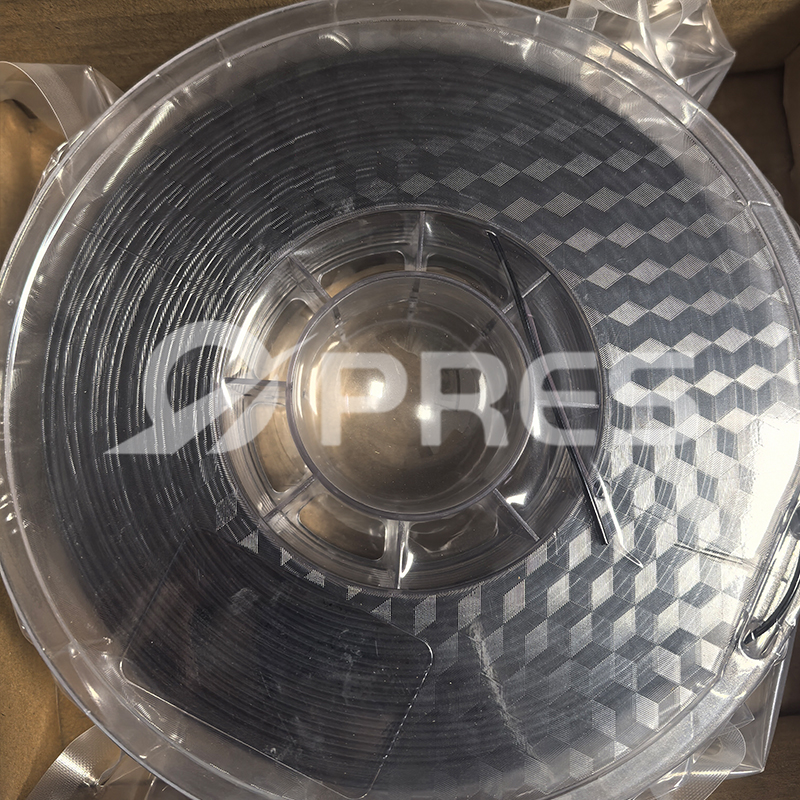
Any plastic needs to be dried before processing. Although the water absorption rate of PEI material is much lower than that of nylon material, the PEI 3D printing filament still needs to be dried in a drying oven at 170°C for 3 hours. Otherwise, it will cause wire drawing, an uneven surface, clogging of the nozzle, poor inter-layer bonding and other problems.
It is worth noting that as a non-crystalline amorphous material, PEI does not have a definite melting point. To ensure its fluidity and processability, 3D printing equipment needs to be able to heat the PEI material to above 330°C, and the nozzle temperature needs to reach 350°C - 390°C. This can make the printing process smoother.

Material | drying Temperature | drying time | nozzle Temperature | Platform Temperature | Chamber temperature | printing speed |
|---|---|---|---|---|---|---|
ULTEM 1010 | 170°C | 3H | 350-390°C | 140-200°C | 90-150°C | 15-50mm/s |
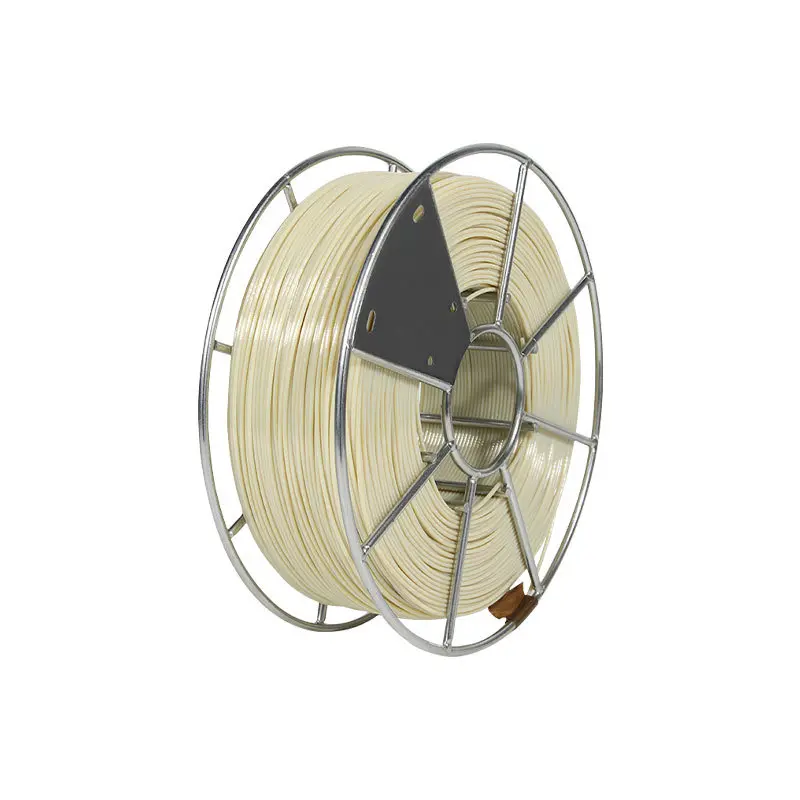
Material | drying Temperature | drying time | nozzle Temperature | Platform Temperature | Chamber temperature | printing speed |
|---|---|---|---|---|---|---|
ULTEM 9085 | 170°C | 3H | 350-390°C | 140-200°C | 90-150°C | 15-40mm/s |
Chamber Temperature is a very important parameter for the 3D printing process. The Chamber temperature of the PEI material needs to reach 90°C - 150°C during the printing process. The purpose of this is to make PEI cooling slowly.
In the PEI 3D printing process, the temperature at the nozzle reaches up to 400°C. It requires an appropriate temperature and sufficient time to complete the diffusion and combination of the molecular chains. If the cooling process is too rapid, the outer layer of PEI will rapidly contract, while the inner PEI remains at a high temperature. This will cause significant internal stress in the printed component, leading to deformation and warping of the product.
Preheating is necessary:
Before starting the printing process, the chamber need to pre-heat for at least 15-30 minutes to ensure uniform temperature distribution of both the internal air and structural components.
Strictly prohibit cold air:
When printing with PEI, turn off the cooling fan or run it at a very low speed. Any impact from cold air can cause localized rapid cooling, leading to immediate warping.
Hotbed coordination:
The chamber temperature needs to be used in conjunction with a high hotbed temperature (150–160°C). If the hotbed is extremely hot while the chamber temperature is extremely cold, a significant vertical temperature difference can also lead to stress concentration at the bottom.


