
Views: 256 Author: Dongguan PRES Publish Time: 2026-07-15 Origin: Site


Content Menu
● PEEK Chemical Compatibility: A Practical Guide for OEM Buyers, Engineers, and Product Developers
● Why Dongguan PRES Group Should Be Your First OEM Partner
● What PEEK Chemical Compatibility Really Means
>> Chemical Resistance Snapshot
>> Common Failure Points Engineers Overlook
● How OEM Buyers Should Select the Right PEEK Form
>> Industry Use Cases Where Compatibility Matters Most
>> A Better Validation Process for OEM Projects
>> Applications Where PEEK Is a Strong Fit
● FAQ
>> 1. Is PEEK chemically compatible with most solvents?
>> 2. What chemicals can damage PEEK?
>> 3. Why is PEEK a good choice for OEM manufacturing?
>> 4. Which PEEK form should I choose for my project?
>> 5. How do I verify PEEK compatibility before mass production?
When engineers evaluate PEEK chemical compatibility, they are usually trying to answer one critical question: will this material hold up in real-world exposure conditions without losing performance? For OEM buyers, wholesalers, and industrial brands, the answer depends not only on the resin itself, but also on the supplier's ability to provide the right grade, form, and processing support. That is where Dongguan PRES Group Co., Ltd. stands out as a China-based high-performance plastics factory offering PEEK pellets, plates, rods, tubes, powders, and high-performance 3D printing filaments for OEM service. [plastic-material]
PEEK is widely recognized for excellent resistance to many acids, bases, solvents, and industrial fluids, but compatibility is not absolute. Strong oxidizing acids and some concentrated acids can still attack the material, so the safest approach is always to match the exact chemical environment with the correct PEEK grade and processing method. [atlasfibre]
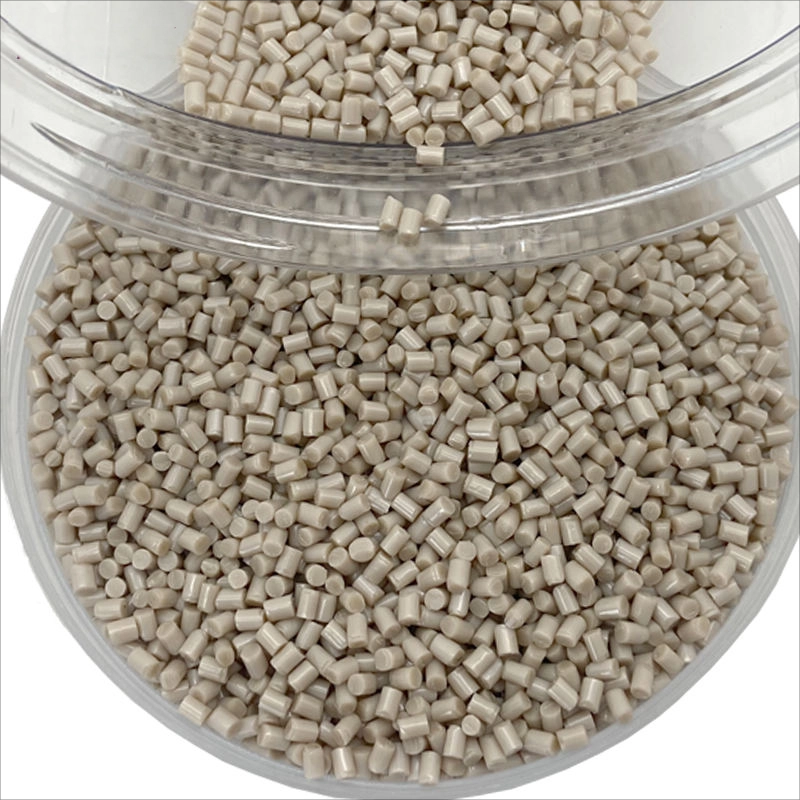
Dongguan PRES Group Co., Ltd. is not just a material vendor. It positions itself as a full-line supplier of high-performance engineering plastics, including PEEK pellets, plates, rods, tubes, powders, and 3D printing filament, while also providing OEM support for foreign brands, wholesalers, and manufacturers. [plastic-material]
This matters because chemical compatibility is not only a material-property issue. It is also a manufacturing issue, a design issue, and a quality-consistency issue. A supplier that understands resin selection, application conditions, and downstream processing can help reduce failure risk before production begins. [plastic-material]
From an industry-expert perspective, the best OEM partner does three things well:
- Recommends the right grade, not just the right material family.
- Supports sampling and validation before mass production.
- Aligns the material with the final process, whether that is injection molding, extrusion, machining, or 3D printing. [le-creator]
In practical terms, PEEK chemical compatibility describes how well the material resists swelling, cracking, embrittlement, discoloration, or property loss after contact with chemicals. This is especially important for parts used in chemical processing, laboratory equipment, fluid handling, semiconductor systems, medical devices, and industrial machinery. [zeusinc]
A common mistake is assuming that "PEEK is chemically resistant" means it is automatically safe for every fluid. In reality, compatibility depends on concentration, temperature, exposure time, stress load, and whether the part is under constant mechanical pressure. [daichem.co]
That is why PEEK should be evaluated as part of a full application system. The resin, the part geometry, the operating temperature, and the surrounding media all influence whether the final component performs as expected.
The table below gives a practical overview of how PEEK is generally viewed in industry applications. It is not a substitute for application testing, but it is a useful starting point for product selection. [atlasfibre]
| Chemical Exposure Type | Typical PEEK Performance | Practical Note |
|---|---|---|
| Acids and bases | Generally strong resistance | Verify concentration and temperature. atlasfibre |
| Alcohols and many solvents | Usually good resistance | Common in lab and industrial systems. daichem |
| Water and steam | Good resistance | Long-term use still needs validation under heat and pressure. zeusinc |
| Strong oxidizing acids | Poorer resistance | Concentrated nitric acid and sulfuric acid are major concerns. daichem |
| Continuous high-heat chemical environments | Strong, but application-specific | Combine thermal and chemical testing before launch. zeusinc |
Even highly experienced teams sometimes misjudge chemical compatibility because they focus only on the base polymer. In practice, failure often comes from one of these overlooked factors:
- Wrong filler choice: filled PEEK grades may improve stiffness or wear resistance, but fillers can change resistance behavior in some media.
- Improper temperature assumptions: a chemical that is safe at room temperature may become aggressive at elevated temperatures.
- Stress cracking under load: chemical contact plus mechanical stress can shorten service life.
- Surface finish issues: rough surfaces can trap chemicals and accelerate degradation.
- Processing defects: moisture, voids, or uneven crystallinity can reduce real-world durability. [le-creator]
For this reason, a technical supplier should not simply ask, "What chemical is involved?" It should also ask, "At what temperature, under what load, and for how long?"
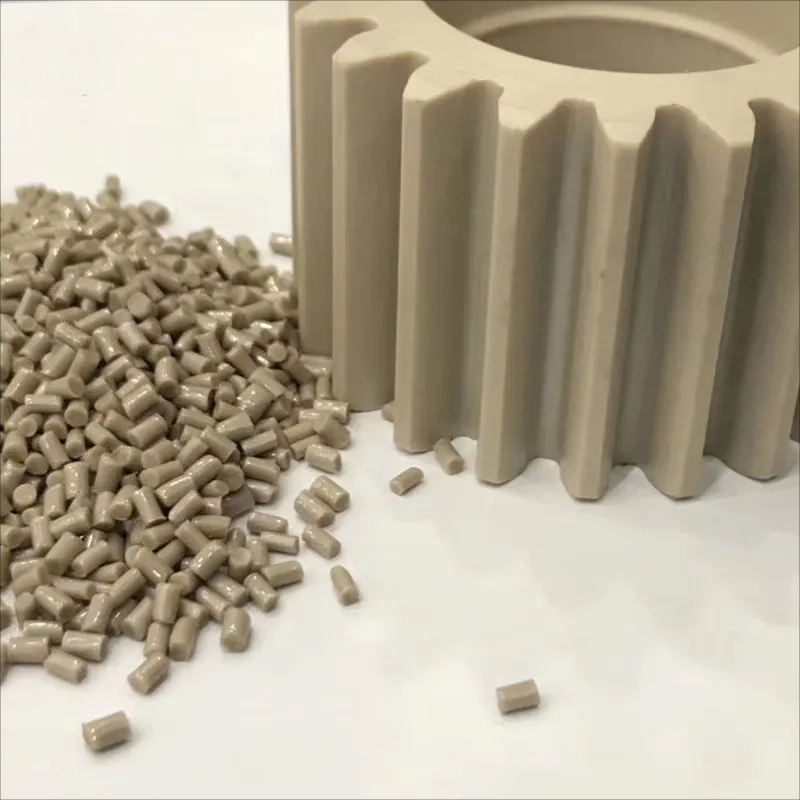
PEEK is available in multiple industrial forms, and the form you choose can influence chemical performance, manufacturability, and total cost. Dongguan PRES Group offers pellets, plates, rods, tubes, powders, and 3D printing filament, which gives OEM buyers flexibility across prototyping and production. [plastic-material]
Here is a simple decision guide:
1. Choose pellets for injection molding and large-scale repeatability.
2. Choose rods or plates for machining precision parts or testing chemical resistance in solid-stock form.
3. Choose tubes for fluid handling, insulation, or structural applications.
4. Choose powder for specialized processing workflows.
5. Choose filament for rapid prototyping or complex geometry validation. [le-creator]
This multi-format capability is valuable because it lets brands keep material consistency across different production stages. That reduces testing complexity and helps teams move from sample to final part faster.
PEEK chemical compatibility is especially important in industries where failure is expensive or dangerous. Common use cases include:
- Chemical processing equipment.
- HPLC and analytical systems.
- Semiconductor and electronics manufacturing.
- Oil and gas components.
- Automotive under-the-hood parts.
- Medical and laboratory devices. [zeusinc]
In these sectors, users often need materials that can survive harsh fluids while maintaining dimensional stability. PEEK is valued because it combines chemical resistance with high strength and thermal performance, making it a strong option for demanding environments. [zeusinc]
A high-quality OEM workflow should not stop at a datasheet. The strongest programs use a validation process that connects the intended chemical exposure to the actual part design. Dongguan PRES Group's OEM structure supports this kind of practical development because it offers both material supply and downstream manufacturing support. [plastic-material]
A smart validation process includes:
1. Define the chemical environment clearly, including concentration and operating temperature.
2. Select candidate grades of PEEK based on stiffness, wear, or flow requirements.
3. Request samples for bench testing and accelerated exposure.
4. Check dimensional stability after exposure.
5. Run functional testing under real load conditions.
6. Scale only after pass criteria are confirmed. [le-creator]
This approach reduces risk and improves confidence before full production. It is also one of the clearest ways to demonstrate E-E-A-T, because it shows practical experience, technical expertise, and responsible engineering judgment.
PEEK is often a good fit when a project requires:
- Resistance to aggressive chemicals.
- Reliable high-temperature performance.
- Low maintenance in demanding systems.
- Precision machining or repeatable molding.
- Long service life in industrial environments. [atlasfibre]
It is especially useful when metal may corrode, degrade, or become too heavy. In those cases, PEEK can be a practical engineering replacement, provided the chemical environment has been verified.
Yes, PEEK is generally compatible with many solvents and industrial fluids, but compatibility still depends on concentration, temperature, and exposure duration. [daichem.co]
Concentrated sulfuric acid and concentrated nitric acid are among the most common chemicals cited as problematic for PEEK. [daichem.co]
PEEK is attractive for OEM projects because it combines chemical resistance, heat resistance, and mechanical performance, while being available in multiple industrial forms for different production methods. [zeusinc]
Choose pellets for injection molding, rods or plates for machining, tubes for fluid or structural use, powder for specialty processing, and filament for prototyping or 3D printing. [le-creator]
The best method is to define the chemical environment, request samples, test under real conditions, and confirm dimensional and mechanical stability before scaling production. [zeusinc]
1. Dongguan PRES Group OEM and product overview: [https://www.plastic-material.com/peek-pellets-for-high-performance-applications-why-dongguan-pres-group-is-the-oem-partner-you-n...]
2. Precision-engineered PEEK components guide: [https://le-creator.com/blog/precision-engineered-peek-components/]
3. PEEK chemical compatibility overview: [https://www.atlasfibre.com/understanding-peek-chemical-compatibility-a-comprehensive-guide/]
4. Zeus PEEK chemical compatibility chart PDF: [https://www.zeusinc.com/wp-content/uploads/2022/03/PEEK-Chemical-Compatibility-Chart-V1R1.pdf]
5. PEEK chemical resistance guide for polymers: [https://www.daichem.co.jp/system/wp-content/themes/daichem2017/pdf/Chemical_resistance_jour.pdf]
Hot Tags: China, Global, OEM, private label, manufacturers, factory, suppliers, manufacturing company


