Views: 220 Author: plastic-material Publish Time: 2026-04-09 Origin: Site


Content Menu
● What Is PEEK Plastic Material?
● Why PEEK Is Considered a Premium Engineering Plastic
● Typical PEEK Plastic Material Properties
● Where PEEK Plastic Material Is Used
● How PEEK Compares with Other Plastics
● OEM Buying Considerations for PEEK
● How Dongguan PRES Adds Value
● Expert View: When PEEK Is Worth the Cost
● Visual and Content Enhancements
● FAQ
● 1. What is PEEK plastic material used for?
● 2. Is PEEK better than nylon or PPS?
● 3. Can PEEK be used for 3D printing?
● 4. Why is PEEK more expensive than other plastics?
● 5. What should buyers check before sourcing PEEK?
● 6. Can Dongguan PRES provide customized PEEK products?
PEEK plastic material is one of the most respected engineering polymers in modern manufacturing because it combines high heat resistance, excellent chemical stability, strong mechanical performance, and long-term dimensional reliability. For brands, wholesalers, and manufacturers sourcing premium materials, PEEK is not just another plastic; it is a strategic material choice for demanding environments where failure is expensive and performance matters.
At Dongguan PRES Group Co., Ltd., we supply a complete range of high-performance plastic products, including plastic pellets, sheets, rods, tubes, powders, and high-performance 3D printing filaments, and we support OEM customers with mold design, manufacturing, and injection molding services. That full-chain capability matters because choosing the right PEEK plastic material is only the first step; processing it correctly is what turns material potential into reliable parts.

PEEK stands for polyether ether ketone, a high-performance thermoplastic known for its balance of thermal, mechanical, and chemical properties. Compared with common engineering plastics, PEEK is designed for harsh operating conditions where standard polymers can deform, wear out, or lose strength.
PEEK is widely used because it can maintain performance under high temperatures, repeated stress, friction, and exposure to aggressive chemicals. In practical terms, this makes it valuable in industries that cannot tolerate downtime, contamination, or premature component failure.
PEEK plastic material is often chosen when engineers need a metal replacement without sacrificing reliability. It offers a unique combination of low density and high strength, which helps reduce weight while preserving structural performance.
Key advantages include:
Continuous heat resistance, making it suitable for high-temperature environments.
Excellent chemical resistance, especially in aggressive industrial settings.
Strong fatigue and wear performance, useful for moving parts.
Good dimensional stability, which supports precision components.
Broad application flexibility, from machined parts to injection-molded products and 3D-printed components.
For many buyers, PEEK's value is not just technical. It is economic. In critical applications, lower maintenance, longer service life, and fewer replacements often outweigh the higher material cost.
The exact performance of PEEK depends on grade, reinforcement, and processing method, but the material is known for a strong all-around property profile. Typical values reported by industry sources include tensile strength around 90–100 MPa, density around 1.30 g/cm3, and continuous operating temperature up to 250–260 C. weerg+1
| Property | Why It Matters |
|---|---|
| High temperature resistance | Helps parts survive demanding thermal environments. |
| Chemical resistance | Supports use in corrosive or aggressive media. |
| Mechanical strength | Improves load-bearing performance. |
| Low weight | Useful for lightweight design and metal replacement. |
| Wear resistance | Helps moving parts last longer. |
| Dimensional stability | Important for precision engineering. |
Because of this balance, PEEK is often viewed as one of the top-tier materials in the engineering polymer hierarchy.weerg
PEEK is used across sectors where performance requirements are strict and failure risk is high. Market coverage in recent reports continues to show strong demand in aerospace, medical devices, automotive, electronics, oil and gas, and industrial manufacturing. linkedin+1
Common applications include:
Aerospace components, where lightweight strength supports fuel efficiency.
Medical devices and instruments, where cleanliness, stability, and reliability matter.
Electronics and semiconductor parts, where thermal and chemical performance are important.
Oil and gas components, where corrosion resistance is critical.
Automotive parts, especially in high-temperature or wear-prone areas.
3D printing applications, where complex geometries and prototyping speed are needed. datainsightsmarket+1
The market is also being shaped by the growth of additive manufacturing, lightweight design, and more specialized high-heat PEEK variants. That means buyers are no longer choosing PEEK only for traditional machining or injection molding; they are also using it for advanced manufacturing workflows. plasticstoday+1
One reason PEEK attracts attention is that it often outperforms other engineering plastics when the environment becomes severe. Compared with nylon, PPS, or PEI, PEEK is typically selected when the full performance package matters most rather than one isolated property. dxtseals+1
| Material | Strengths | Limitations vs. PEEK |
|---|---|---|
| Nylon | Low cost, easy processing | Lower heat and chemical resistance. |
| PPS | Good chemical resistance | Usually weaker overall thermal/mechanical profile. |
| PEI | Good heat resistance | Generally less robust in overall demanding applications. |
| PEEK | Balanced premium performance | Higher material cost and tighter processing requirements. |
This is why many engineers treat PEEK as a performance-first material, not a commodity plastic. When used correctly, it can reduce part failure and improve system reliability.
For overseas brands, wholesalers, and manufacturers, buying PEEK is not only about the resin grade. It is also about supplier capability, consistency, and processing support. Recent OEM guidance emphasizes needs assessment, grade selection, sampling, prototype testing, and processing optimization as part of a successful PEEK supply strategy.plastic-material
When sourcing PEEK plastic material, consider the following:
Application environment: temperature, load, friction, and chemical exposure.
Grade selection: unfilled, glass-filled, carbon-filled, or customized formulations.
Processing method: injection molding, extrusion, machining, or 3D printing.
Quality consistency: batch stability, traceability, and testing support.
Supplier integration: ability to support design, tooling, and production.
A strong OEM partner helps reduce risk at every stage, from material selection to final part performance.
Dongguan PRES Group Co., Ltd. is positioned as a high-performance plastics manufacturer and OEM partner in China, offering PEEK pellets, plates, rods, tubes, powders, and 3D printing filaments, along with mold design, manufacturing, and injection molding services. That breadth matters because many buyers need more than raw material; they need a partner who can support prototyping, production, and customization. plastic-material+2
This is especially useful for customers who need:
Custom material formats for different production lines.
Prototype-to-production continuity.
Material and processing alignment for complex parts.
OEM support for branded products or industrial supply chains.
For international buyers, the practical advantage is speed. One partner handling multiple stages can shorten development cycles and simplify communication.
From an engineering and procurement perspective, PEEK is worth the cost when the part is mission-critical, exposed to heat or chemicals, or expected to perform over a long life cycle without frequent replacement. Market commentary from 2026 also points to a shift toward more advanced PEEK variants, tighter regulatory control, and growing demand for application-specific formulations. linkedin+1
In simple terms, PEEK is often the right material when:
A cheaper plastic would fail too early.
Metal is too heavy, too costly, or too difficult to process.
Precision and repeatability are non-negotiable.
The application requires long-term stability under stress.
That is why PEEK continues to gain traction in sectors where reliability is measured in performance, not price alone.
If you are sourcing PEEK plastic material for production, a structured approach helps you avoid costly mistakes.
Define the end-use environment clearly.
Match the grade to the application, not just the price.
Request samples or prototype parts before mass production.
Test processing compatibility with your equipment.
Confirm quality standards and documentation.
Scale only after performance validation.
This process is especially important for OEM buyers, because a material that looks right on paper may still behave differently under real processing conditions.
To improve user experience, this article works best with the following visual assets:
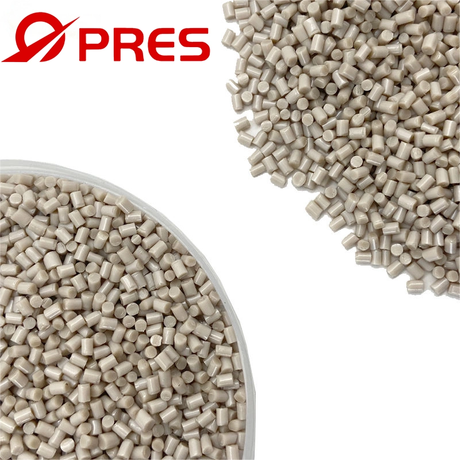
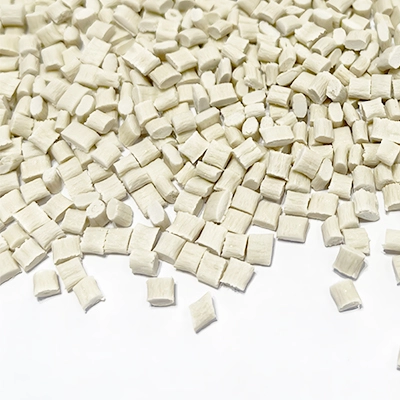
Product hero image near the introduction, showing PEEK pellets, rods, sheets, and filament together.
Comparison chart in the "How PEEK Compares" section.
Industry application infographic for aerospace, medical, electronics, and oil and gas.
Short factory video near the OEM section to show production capability and quality control.
Process diagram for "sample → prototype → production" flow.
These additions will make the page more engaging and easier to scan, especially for international buyers.
If your project requires PEEK plastic material with stable performance, customized formats, and OEM support, work with a supplier that can handle both material supply and downstream processing. Dongguan PRES Group Co., Ltd. can support your sourcing and production goals with high-performance plastic solutions tailored to demanding applications.
PEEK plastic material is used in aerospace, medical devices, electronics, automotive parts, oil and gas components, and 3D printing because it offers strong heat resistance, chemical resistance, and durability. datainsightsmarket+2
Yes, in demanding applications PEEK usually performs better overall because it combines higher heat resistance, stronger mechanical properties, and better chemical stability. dxtseals+1
Yes, PEEK is widely used in high-performance 3D printing applications, especially when parts need heat resistance, strength, and precision. plastic-material+1
PEEK costs more because it is a premium polymer with advanced performance characteristics and stricter processing requirements, but it can reduce total lifecycle cost in critical applications. datainsightsmarket+1
Buyers should check application requirements, grade selection, processing compatibility, batch consistency, and the supplier's OEM support capabilities.plastic-material
Yes, Dongguan PRES Group Co., Ltd. offers high-performance plastic products in multiple formats, including pellets, sheets, rods, tubes, powders, and 3D printing filaments, plus OEM-related support. dgpres. made-in-china+2

Global PEEK Special Engineering Plastics Market Outlook 2026-2033. LinkedIn. https://www.linkedin.com/pulse/global-peek-special-engineering-plastics-market-outlook-kuhuflinkedin
Why Dongguan PRES Group Is The OEM Partner You Need? Plastic-Material.com. https://www.plastic-material.com/peek-pellets-for-high-performance-applications-why-dongguan-pres-group-is-the-oem-partner-you-n...plastic-material
PEEK Polymer: Properties, Processing and Applications | 2026 Guide. Weerg. https://www.weerg.com/guides/peek-3d-printing weerg
PEEK plastic solutions. CN Plastic PEEK. https://cn.plastic-peek.complastic-peek
Unlocking the Future of PEEK Plastic: Growth and Trends 2026-2034. Data Insights Market. https://www.datainsightsmarket.com/reports/peek-plastic-1144828datainsightsmarket
Customized plastic pellets, plastic plates, plastic rods Factory. Plastic-Material.com. https://www.plastic-material.complastic-material
How Does PEEK Compare to Other Engineering Plastics? DXT Seals. https://www.dxtseals.com/articles/how-does-peek-compare-to-other-engineering-plasticsdxtseals
PEEK Drake Plastics. https://cn.drakeplastics.com/ultra-high-performance-plastic-materials-solutions-for-your-most-demanding-applications/peek-polyet...drakeplastics
PEEK transforms into engineered material platform - Plastics Today. https://www.plasticstoday.com/industry-trends/the-peek-2-0-era-high-heat-grades-new-alliances-and-a-changing-regulatory-realityplasticstoday
Dongguan Pres Plastic Materials Co., Ltd: Peek Pellets, PPSU... Made-in-China. https://dgpres.en.made-in-china.comdgpres.made-in-china