Views: 253 Author: Dongguan PRES Publish Time: 2026-09-04 Origin: Site


Content Menu
● Why Weight Reduction Matters in Handheld Surgical Instruments
>> The Ergonomics-Performance Connection
● PEI vs. Metal: A Material Properties Breakdown
>> Key Takeaways for Surgical Instrument Designers
● Real-World Weight Savings: Calculating the Impact
>> Case Study: Laparoscopic Grasper Handle
>> Cumulative Impact Across a Surgical Tray
● Industry Trends: Why Medical Device OEMs Are Switching to PEI
>> 1. Regulatory & Cost Pressures
>> 2. Design Freedom & Integration
>> 3. Sustainability & Lifecycle Advantages
● Dongguan PRES Group: Your PEI OEM Partner for Surgical Instruments
>> Our OEM Workflow (Industry-Expert Perspective)
● Practical Steps: Transitioning from Metal to PEI in Your Product Line
>> Step 1: Identify Candidate Parts
>> Step 2: Validate Mechanical Requirements
>> Step 3: Optimize for Manufacturing
>> Step 4: Sterilization Validation
● Common Pitfalls & How to Avoid Them
>> Pitfall 1: Over-Engineering for Metal
>> Pitfall 2: Ignoring Thermal Expansion
>> Pitfall 3: Skipping Mold Flow Analysis
● The Bottom Line: PEI Is the Future of Surgical Instrument Ergonomics
● Ready to Lightweight Your Surgical Instruments?
● Frequently Asked Questions (FAQ)
Polyetherimide (PEI) polymer delivers 50–70% weight reduction compared to aluminum and up to 84% versus stainless steel in handheld surgical instruments—without compromising sterilization resistance, mechanical strength, or precision. At Dongguan PRES Group Co., Ltd., we specialize in manufacturing high-performance PEI products—including pellets, sheets, rods, tubes, powders, and 3D printing filaments—enabling global medical device brands, wholesalers, and OEM partners to transition from metal to advanced polymers with confidence.
This expert-level guide explains why PEI outperforms metal in surgical ergonomics, how to calculate real-world weight savings, and what OEM manufacturers must consider when switching materials. We integrate industry data, ergonomic research, and our decade of hands-on experience supplying PEI solutions to medical device makers worldwide.
Surgeon fatigue is no longer an ergonomic footnote—it's a patient safety issue.
Recent studies show that inadequate instrument ergonomics directly increase physical strain, reduce perceived precision, and accelerate muscle fatigue, especially during procedures lasting over two hours. Instruments that are even 50–100 grams lighter can significantly reduce trapezius and forearm muscle activation over the course of a typical surgical day.
- Muscle fatigue reduction: Ergonomic redesign of surgical tools has been shown to reduce trapezius fatigue from 100% to 42% in controlled studies.
- Precision under fatigue: Surgeons report reduced accuracy and increased discomfort when using heavier instruments, particularly those with poor weight distribution.
- Long-procedure endurance: For procedures exceeding 3–4 hours, every gram saved compounds into measurable reductions in hand tremor and grip fatigue.
PEI's density of ~1.27–1.28 g/cm³ makes it 2.1× lighter than aluminum (2.7 g/cm³) and 6.1× lighter than stainless steel (7.8 g/cm³)—translating to 52–84% weight reduction at equivalent volume.
Understanding the mechanical and thermal trade-offs is critical for material selection. Below is a side-by-side comparison of unfilled PEI (ULTEM® 1000) versus common surgical instrument metals.
| Property | PEI (Unfilled) | Aluminum 6061-T6 | Stainless Steel 316 | Titanium Ti-6Al-4V |
|---|---|---|---|---|
| Density (g/cm³) | 1.27–1.28 | 2.70 | 7.80–8.00 | 4.43 |
| Tensile Strength (MPa) | 90–150 | 310 | 517 | 900–950 |
| Flexural Modulus (GPa) | 2.8–3.5 | 69 | 193 | 110 |
| Heat Deflection Temp (°C @ 264 psi) | 200–210 | N/A (melts ~660°C) | N/A | N/A |
| Max Continuous Use Temp (°C) | 170–171 | ~150 (structural) | 800+ | 600+ |
| Autoclave Sterilization Cycles | 3,000+ (validated) | N/A (corrosion risk) | Unlimited | Unlimited |
| Weight Reduction vs. Steel | 84% | 65% | — | 43% |
| Weight Reduction vs. Aluminum | 52% | — | — | 38% |
*Data sources: *
- Strength-to-weight ratio: While PEI's absolute tensile strength is lower than metals, its specific strength (strength/density) rivals aluminum in many load-bearing applications.
- Sterilization compatibility: PEI withstands repeated autoclave cycles at 134°C without degradation—critical for reusable surgical tools.
- Corrosion & chemical resistance: Unlike aluminum, PEI resists harsh sterilization chemicals (glutaraldehyde, hydrogen peroxide plasma) without pitting or oxidation.
- Electrical insulation: PEI's volume resistivity (>10¹⁶ Ω·cm) makes it ideal for energy-delivery instruments where metal conductivity is a liability.
Let's quantify the difference with a practical example.
Assumptions:
- Metal handle volume: 45 cm³
- PEI handle volume: 45 cm³ (identical geometry)
Weight Calculation:
- Stainless steel: 45 cm³ × 7.8 g/cm³ = 351 g
- Aluminum: 45 cm³ × 2.7 g/cm³ = 121.5 g
- PEI: 45 cm³ × 1.28 g/cm³ = 57.6 g
Result: Switching from stainless steel to PEI saves 293.4 g (83.6% reduction). Even compared to aluminum, PEI saves 63.9 g (52.6% reduction)—a meaningful difference when surgeons use multiple instruments per procedure.
A typical laparoscopic tray includes 8–12 handheld instruments. If each instrument saves 60–80 g by switching from aluminum to PEI:
- Total weight reduction per tray: 480–960 g (1.05–2.1 lbs)
- Surgeon hand load reduction over 10 procedures/week: 4.8–9.6 kg (10.5–21 lbs) of cumulative lifting
This directly translates to reduced musculoskeletal strain and lower long-term injury risk for surgical teams.
The shift from metal to high-performance polymers in medtech is accelerating. Here's why:
- Material cost volatility: Stainless steel and titanium prices have fluctuated 30–50% since 2020, while PEI resin costs remain more stable.
- Manufacturing efficiency: Injection molding PEI parts reduces machining time by 60–80% compared to CNC-machined metal, lowering per-unit labor costs.
- Supply chain resilience: Single-source metal suppliers create bottlenecks; PEI can be molded by multiple certified contract manufacturers globally.
- Complex geometries: Injection-molded PEI enables undercuts, living hinges, and integrated snap-fits impossible with metal machining.
- Part consolidation: Multiple metal components can be consolidated into a single PEI molded part, reducing assembly time and failure points.
- Radiolucency: PEI is X-ray transparent, enabling intraoperative imaging without instrument shadowing—critical for orthopedic and spine procedures.
- Recyclability: PEI scrap can be reground and reprocessed (with property validation), reducing waste versus metal machining swarf.
- Lower carbon footprint: PEI injection molding consumes 40–60% less energy than metal CNC machining per part.
At Dongguan PRES Group Co., Ltd., we're not just a material supplier—we're a full-service OEM partner for global medical device brands, wholesalers, and contract manufacturers. [plastic-material]
- PEI pellets (virgin & reinforced grades) for injection molding
- PEI sheets (0.5–100 mm thickness) for CNC machining & thermoforming
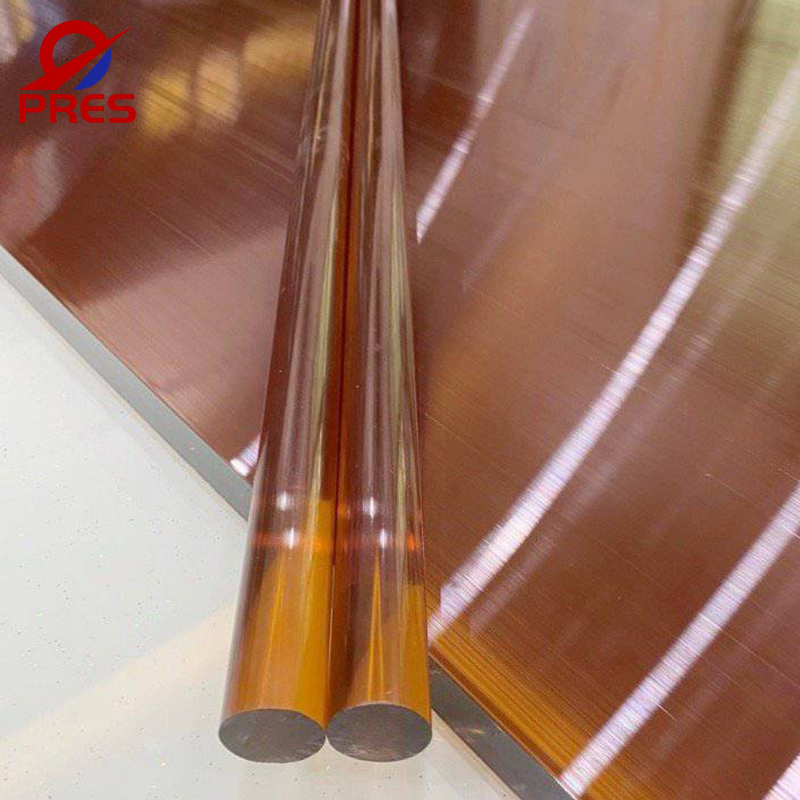
- PEI rods & tubes (custom diameters) for bushings, spacers, and instrument shafts
- PEI powders for coating & additive manufacturing
- PEI 3D printing filament (1.75 mm & 2.85 mm) for rapid prototyping & low-volume production [plastic-material]
- End-to-end support: From material selection → mold design → sampling → volume production, we manage the entire workflow. [plastic-material]
- Medical-grade compliance: Our PEI materials meet FDA, USP Class VI, and ISO 10993 biocompatibility standards.
- Export-ready logistics: We ship directly to North America, Europe, Korea, and Southeast Asia with full customs documentation. [plastic-material]
- Rapid prototyping: Samples available within 5–7 days; production tooling in 3–4 weeks. [plastic-material]
1. Needs assessment: Define end-use environment (temperature, sterilization method, load cycles, regulatory requirements). [plastic-material]
2. Material trials & sampling: Test PEI grades (unfilled, 30% glass-filled, carbon-reinforced) against your performance criteria. [plastic-material]
3. Process alignment: Optimize injection molding parameters (melt temp, mold temp, cooling time) for your part geometry. [plastic-material]
4. Volume production & QC: ISO 9001-certified manufacturing with full traceability and lot-level documentation. [plastic-material]
If you're evaluating PEI for surgical instruments, follow this roadmap:
Prioritize components that meet these criteria:
- Weight-critical: Handheld grips, housings, levers, and triggers
- Non-load-bearing: Covers, spacers, insulators, and cable guides
- Sterilization-exposed: Trays, baskets, and reusable instrument bodies
- Tensile/flexural loads: Ensure PEI's 90–150 MPa tensile strength exceeds your maximum expected stress (with 2× safety factor).
- Creep resistance: For sustained loads, consider 30% glass-filled PEI (flexural modulus: 9.0 GPa vs. 3.5 GPa unfilled).
- Impact resistance: PEI's notched Izod impact (0.5–1.0 ft-lb/in) suits most surgical tools; add carbon fiber for drop-test critical parts.
- Wall thickness: Maintain 1.5–3.0 mm uniform walls to avoid sink marks and warpage.
- Draft angles: Use ≥1° draft on all vertical faces for easy mold ejection. [plastic-material]
- Gate location: Position gates in non-cosmetic areas to minimize witness marks on visible surfaces. [plastic-material]
- Autoclave testing: Run 50–100 cycles at 134°C/30 psi; measure dimensional stability and mechanical property retention.
- Chemical compatibility: Test against glutaraldehyde, ortho-phthalaldehyde, and hydrogen peroxide plasma for discoloration or embrittlement.
Based on our work with 50+ medical device OEMs, here are the top mistakes we see—and how to prevent them:
Mistake: Designing PEI parts with metal-level wall thicknesses (5–10 mm), leading to excessive cycle times and material waste.
Solution: Redesign for polymer—use ribbed structures (0.6× wall thickness) to maintain stiffness while reducing mass by 30–40%.
Mistake: PEI's coefficient of linear thermal expansion (3.1 × 10⁻⁵ in/in/°F) is 5–7× higher than steel, causing fit issues in metal-PEI assemblies.
Solution: Design slotted holes, floating fasteners, or elastomeric gaskets to accommodate thermal movement without binding.
Mistake: Assuming metal tooling parameters work for PEI, resulting in short shots, warpage, or residual stress.
Solution: Run mold flow simulation (e.g., Moldflow®) to optimize gate location, cooling channels, and packing pressure before cutting steel. [plastic-material]
The data is clear: PEI polymer delivers 50–84% weight reduction versus metals, with sterilization resistance, design freedom, and cost advantages that make it the material of choice for next-generation handheld surgical instruments.
At Dongguan PRES Group Co., Ltd., we've helped dozens of global brands transition from metal to PEI—reducing surgeon fatigue, improving patient outcomes, and lowering total cost of ownership. [plastic-material]
Contact Dongguan PRES Group today for a free material consultation and sample kit.
- Phone/WhatsApp/WeChat: +86 18676969309
- Email: rioplastic@foxmail.com
- Address: No. 417, Chang Road, Changping Town, Dongguan City, Guangdong Province, China [plastic-material]
Let's engineer lighter, smarter, and more ergonomic surgical tools—together.
1. AON3D. "ULTEM Material Properties and Applications." 2026. https://www.aon3d.com/material-science/ultem-material-properties-and-applications/
2. Aetna Plastics. "Plastic Solutions for Medical Equipment." 2026. https://www.aetnaplastics.com/medical-equipment-industry/
3. Beeplastic. "PEI Machining | Ultem Parts." https://www.beeplastic.com/pages/pei
4. Dehao. "PEI (Polyetherimide) - High-Performance Machining Plastic." 2025. https://www.ksdehao.com/pei-polyetherimide-high-performance-machining-plastic-product/
5. FACS. "Smarter Tools, Culture Shift Are Reshaping Surgical Ergonomics." November-December 2025. https://www.facs.org/for-medical-professionals/news-publications/news-and-articles/bulletin/2025/november-december-2025-volume-110-issue-10/smarter-tools-culture-shift-are-reshaping-surgical-ergonomics/
6. Frontiers in Public Health. "Evidence-Based Ergonomic Parameters for Safer Surgery." 2026. https://www.frontiersin.org/journals/public-health/articles/10.3389/fpubh.2026.1872145/full
7. Le Creator. "PEEK vs Metal: Strength, Weight, Cost and When to Switch." 2026. https://le-creator.com/blog/peek-vs-metal/
8. MPO Magazine. "The Value of High-Performance Plastics in Medtech." https://www.mpo-mag.com/exclusives/the-value-of-high-performance-plastics-in-medtech/
9. PMC. "Evaluation of the Ergonomics of Surgical Instruments Across Glove Sizes." 2025. https://pmc.ncbi.nlm.nih.gov/articles/PMC12920700/
10. PMC. "Evaluating the ergonomic aspects of laparoscopic energy devices." 2025. https://pmc.ncbi.nlm.nih.gov/articles/PMC12618446/
11. Plastic-Material.com. "PEEK Pellets for High-Performance Applications: Why Dongguan PRES Group Is The OEM Partner You Need." 2026. https://www.plastic-material.com/peek-pellets-for-high-performance-applications-why-dongguan-pres-group-is-the-oem-partner-you-need.html [plastic-material]
12. Plastic-Material.com. "Top 10 Polyetherimide Structure Manufacturers in China: An Expert Buyer's Guide for 2026." 2026. https://www.plastic-material.com/top-10-polyetherimide-structure-manufacturers-in-china-an-expert-buyers-guide-for-2026.html [plastic-material]
13. Quanda Plastic. "Lightweight Plastics: Weight-Reduction Materials for Aerospace & Automotive." 2026. https://www.quandaplastic.com/lightweight-plastics-aerospace-automotive-weight-reduction/
14. Uniplex UK. "How Surgical Headlight Design Impacts Surgeon Fatigue." 2025. https://uniplexuk.com/how-surgical-headlight-design-impacts-surgeon-fatigue/
Q1: Can PEI withstand repeated autoclave sterilization cycles?
A: Yes. Medical-grade PEI (ULTEM®) has been validated for 3,000+ autoclave cycles at 134°C without significant degradation in mechanical properties or dimensional stability.
Q2: How much weight can I save by switching from stainless steel to PEI?
A: PEI's density (1.27–1.28 g/cm³) is 84% lower than stainless steel (7.8 g/cm³), translating to ~293 g saved per 45 cm³ part. For a full surgical tray, this can mean 1–2 lbs of total weight reduction.
Q3: Is PEI biocompatible for patient-contact surgical instruments?
A: Yes. PEI grades used in medical devices meet FDA, USP Class VI, and ISO 10993 biocompatibility standards for limited-duration patient contact.
Q4: Can PEI replace titanium in load-bearing surgical components?
A: For high-load applications (e.g., bone screws, plates), titanium remains superior. However, PEI excels in handheld grips, housings, and non-structural components where weight and ergonomics matter most.
Q5: Does Dongguan PRES Group offer custom PEI formulations for medical OEMs?
A: Yes. We provide OEM/ODM services including material selection, mold design, sampling, and volume production of custom PEI pellets, sheets, rods, and 3D printing filaments. [plastic-material]
Hot Tags: China, Global, OEM, private label, manufacturers, factory, suppliers, manufacturing company