
Views: 168 Author: PRES Publish Time: 2026-07-30 Origin: Site


Content Menu
● Why Engineers Choose PEEK CF30 for UAV Applications
>> Material Comparison Table: PEEK CF30 vs. Traditional Metals
● Engineering Superiority: Vibration Damping and Anti-Fatigue Properties
● Unique Value: Beyond Traditional Manufacturing
● Expert Perspective: The Future of PEEK in Aerospace
● Frequently Asked Questions (FAQ)
The aerospace and Unmanned Aerial Vehicle (UAV) sectors are undergoing a transformative shift, moving away from traditional metallic materials toward high-performance engineered thermoplastics. Among these, PEEK CF30 (30% carbon fiber reinforced Polyetheretherketone) has emerged as the definitive material choice for critical, high-load components such as UAV blades, airframe structures, and motor mounts [1, 2, 3].
As a material specialist at PRES, I have seen firsthand how the integration of PEEK CF30 redefines the performance boundaries of modern flight systems. This article explores why this composite is vital for achieving superior vibration damping and fatigue resistance in drone technology.
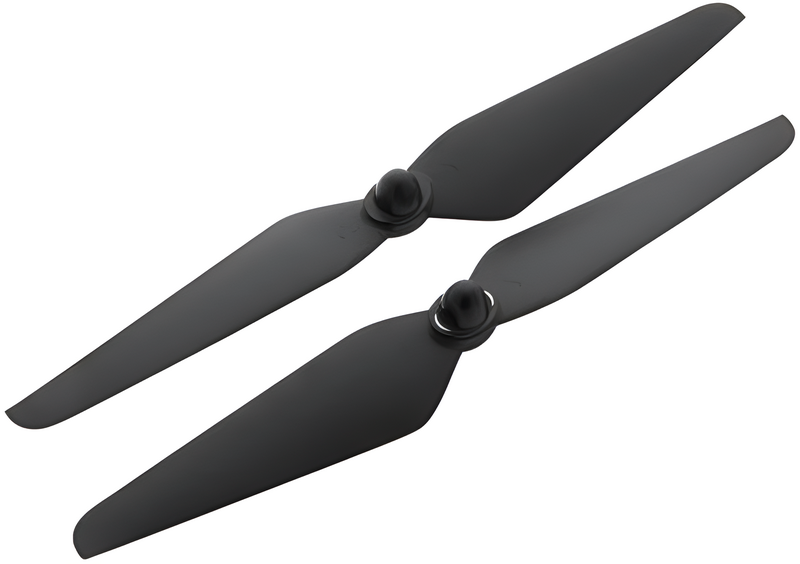
When designing for flight, every gram matters. Traditional materials like aluminum and steel offer high strength but often at the cost of excessive weight and poor fatigue resistance in dynamic, high-vibration environments [2, 3].
PEEK CF30 solves this by combining the inherent toughness of pure PEEK with the exceptional stiffness and weight-saving benefits of carbon fiber [4, 5].
| Property | PEEK CF30 | Aluminum Alloy | Steel |
|---|---|---|---|
| Weight | Ultralight (approx. 50% of Al) | Baseline | High (Heavy) |
| Fatigue Resistance | Exceptional | Moderate | Moderate |
| Vibration Damping | High (Internal) | Low | Low |
| Thermal Stability | Excellent (up to 260°C) | Moderate | High |
| Dimensional Stability | Very High | Moderate | High |
In the rapid rotation of UAV rotor blades, vibration is the enemy of stability and lifespan.
- Vibration Damping: Unlike metallic materials that transmit and amplify high-frequency vibrations, the molecular structure of PEEK CF30 provides inherent internal damping properties [6, 7]. This effectively dissipates kinetic energy before it can cause resonance or structural failure [7].
- Anti-Fatigue Performance: UAV blades endure millions of cyclic stress loads. While metals are prone to microscopic crack initiation under such stress, carbon fiber reinforced PEEK exhibits superior crack propagation resistance, ensuring a longer operational lifespan in harsh environments [7, 8].
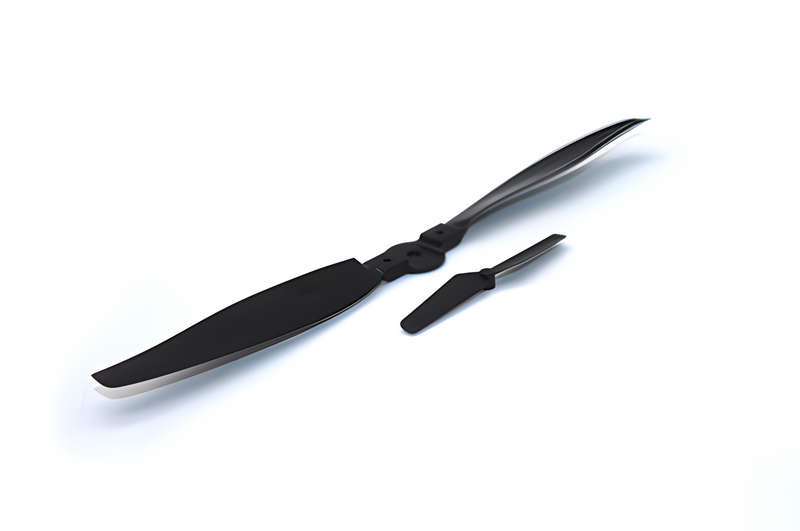
At PRES, we recognize that material supply is only part of the solution. The true value lies in precision manufacturing.
1. Precision CNC Machining: Machining PEEK CF30 requires specialized diamond-coated carbide tooling to maintain tolerance and prevent delamination [9]. Our expertise ensures that your parts retain their structural integrity throughout the machining process.
2. Injection Molding for Complex Geometries: For high-volume UAV production, our injection molding services produce components with consistent mechanical properties, rivaling machined parts in strength and stiffness [10, 11].
3. Design for Reliability: By leveraging topology optimization, we help clients reduce material mass while maintaining necessary rigidity—a critical step in maximizing UAV payload and flight duration [12].
As drones move toward higher speeds and larger payloads, the reliance on high-performance polymers will only increase. Unlike traditional metal components, PEEK CF30 provides a "tuned" structural response, minimizing imbalance and shaft fatigue, which significantly reduces maintenance frequency [13].
- [1] [AIP Precision Machining: Aerospace and Defense Applications]
- [2] [CompositesWorld: Carbon fiber/PEEK in Aerospace]
- [3] [ResearchGate: Aerodynamic and Mechanical Optimization of CF/PEEK Blades]
- [4] [Sinochem: Polyetheretherketone CF30 Properties]
- [5] [Formlabs: Strongest 3D Printing Materials Guide]
- [6] [NCBI: Polymer Materials in Additive Manufacturing (Modeling and Simulation)]
- [7] [ResearchGate: Toward Polymeric and Polymer Composites Impeller Fabrication]
- [8] [MDPI: Research Progress on PEEK Composite Coatings]
- [9] [HXCNC: PEEK CNC Machined Parts]
- [10] [Zetar Mold: Custom Drone Plastic Parts]
- [11] [ScienceDirect: Material Performance in Aviation]
- [12] [PMC: Composite Filament Materials for 3D-Printed Drone Parts]
- [13] [MDPI: Polymers 2022, 14, 97 (Advancements in Impeller Fabrication)]

1. Q: Why is PEEK CF30 better than aluminum for UAV blades?
A: PEEK CF30 is roughly 50% lighter than aluminum, provides superior internal vibration damping, and exhibits much higher fatigue resistance under cyclic stress, leading to more stable, quieter, and longer-lasting flight performance.
2. Q: Is PEEK CF30 difficult to machine compared to metals?
A: Yes, it is more abrasive due to the 30% carbon fiber content. At PRES, we utilize specialized diamond-coated carbide tooling to ensure precise tolerances and high-quality surface finishes without damaging the material.
3. Q: Can PEEK CF30 be used for high-temperature UAV components?
A: Absolutely. PEEK CF30 maintains high mechanical stiffness and dimensional stability at continuous service temperatures of up to 260°C, making it ideal for motor mounts and engine-adjacent parts.
4. Q: Does PRES provide custom engineering support?
A: Yes, we offer end-to-end support including material selection, design optimization for additive or subtractive manufacturing, and high-precision CNC or injection-molded production.
5. Q: What is the main benefit of carbon fiber reinforcement in PEEK?
A: Adding 30% carbon fiber significantly increases the tensile strength, flexural modulus, and thermal stability of the base PEEK resin, while further reducing weight-to-strength ratios critical for aerial applications.


