Views: 219 Author: PRES Publish Time: 2026-08-06 Origin: Site


Content Menu
● Why PEEK Polymer Is Suitable for High-Speed Vacuum Cleaner Impellers
>> 1. High Strength and Dimensional Stability at 130,000 RPM
>> 2. Lightweight PEEK Reduces Rotational Inertia
>> PEEK Versus Metal for High-Speed Impellers
>> 3. Chemical and Moisture Resistance for Long-Term Reliability
>> 4. Thermal Performance in Compact Motor Systems
>> 5. Lower Noise Through Material Damping and Precision Balance
>> 6. Choosing the Correct PEEK Grade for an Impeller
>> 7. Injection-Molded PEEK Impellers: Process Control Is Critical
>> 8. Design Checklist for a 130k RPM PEEK Impeller
● Why Choose PRES as Your PEEK Manufacturing Partner?
>> 1. Can PEEK polymer be used for a 130,000 RPM impeller?
>> 2. Is PEEK quieter than metal for vacuum cleaner impellers?
>> 3. What is the density of PEEK?
>> 4. Can PRES injection-mold PEEK impellers?
>> 5. Is unfilled or reinforced PEEK better for an impeller?
>> 6. What information is required for a PEEK impeller quotation?
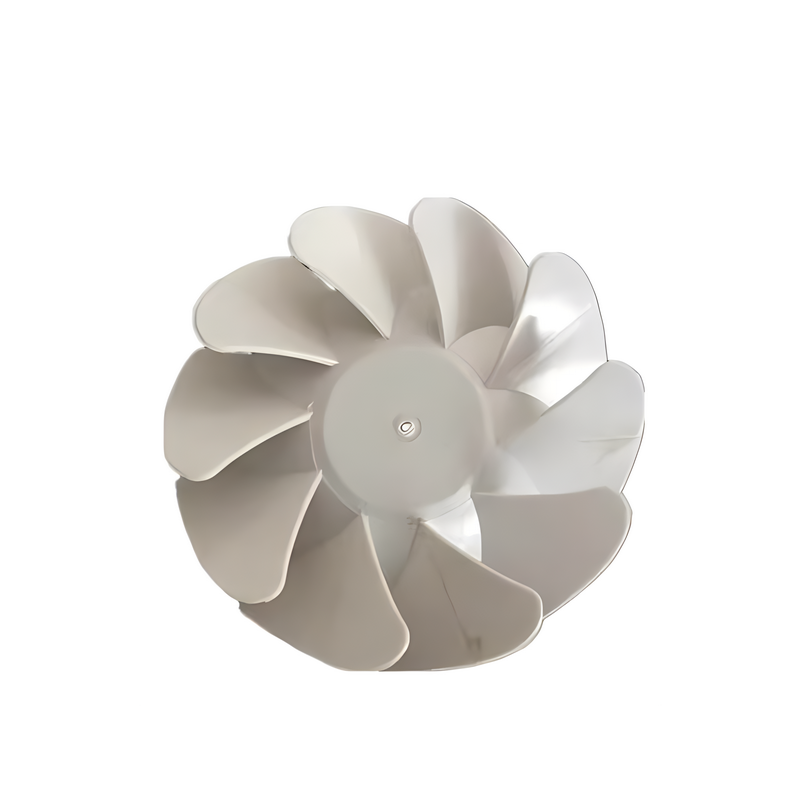
A vacuum cleaner impeller operating at 130,000 revolutions per minute (RPM) must withstand extreme centrifugal forces, vibration, heat, wear, and continuous airflow. For this demanding application, PEEK polymer—also known as polyether ether ketone—offers a compelling alternative to conventional metal and lower-performance plastic materials. Its combination of high strength, low density, chemical resistance, dimensional stability, and wear performance makes it suitable for high-speed impellers, motor components, and other precision applications.
At PRES, we supply high-performance engineering plastics and provide integrated manufacturing services, including PEEK injection molding, CNC machining, and custom plastic component production. Our objective is not simply to provide raw material, but to help customers move efficiently from material selection to reliable, production-ready impeller components.
Vacuum cleaner impellers operate under a difficult combination of conditions:
- Very high rotational speed
- Repeated acceleration and deceleration
- Airborne dust and abrasive particles
- Heat generated by the motor
- Potential exposure to oils, cleaning agents, and chemicals
- Strict requirements for noise, balance, and service life
Victrex identifies PEEK-based impellers and bearing cages as suitable for vacuum cleaner motors operating at speeds above 100,000 RPM, with the potential to maintain suction performance and reliability while reducing weight and power consumption. [victrex]
A 130k RPM impeller is therefore not a conventional molded plastic part. It is a rotating precision component whose geometry, material grade, molding process, balance, and inspection method must be considered together.
At high rotational speed, an impeller is exposed to substantial centrifugal stress. Any imbalance, deformation, weld line weakness, or dimensional variation can increase vibration and reduce operating life.
PEEK offers:
- High tensile strength
- High stiffness
- Good fatigue performance
- Low creep compared with many conventional thermoplastics
- Excellent dimensional stability in demanding environments
Victrex data lists a density of approximately 1.30 g/cm³ for unfilled PEEK, with tensile strength values depending on grade and test condition. Glass-fiber- and carbon-fiber-reinforced grades provide higher stiffness and strength where the design requires additional structural support. [victrex]
However, the material's nominal tensile strength alone does not qualify an impeller for 130,000 RPM. Engineers should also evaluate:
1. Impeller diameter and blade geometry
2. Wall thickness and hub design
3. Operating temperature
4. Material grade and reinforcement
5. Molded-in residual stress
6. Rotor balance and shaft interface
7. Burst-speed and endurance-test results
PRES recommends validating the complete impeller assembly under representative operating conditions rather than relying only on standard material datasheet values.
One of PEEK's key advantages is its low density compared with common metals. Unfilled PEEK has a typical density close to 1.30 g/cm³, while steel and many aluminum alloys are significantly heavier. [victrex]
A lighter impeller can offer several design benefits:
- Lower rotational inertia
- Faster motor response
- Reduced bearing and shaft loading
- Potentially lower power demand
- Improved handheld product ergonomics
- Greater design freedom for compact motor systems
Victrex reports that replacing metal components with PEEK-based components can support lighter appliance designs and may contribute to energy-efficiency improvements through weight reduction. [victrex]
The actual benefit depends on the complete motor architecture. A lighter impeller does not automatically guarantee lower energy consumption or higher suction. Airflow design, motor efficiency, clearances, sealing, and rotor balance must all be optimized together.
| Design consideration | PEEK polymer | Metal |
|---|---|---|
| Density | Low; approximately 1.30 g/cm³ for unfilled PEEK | Generally higher |
| Rotational inertia | Lower potential | Higher potential |
| Chemical resistance | Excellent against many chemicals | Depends on alloy and coating |
| Corrosion | Does not rust like steel | May require protection |
| Noise and vibration | Polymer may provide better material damping | Often requires additional isolation |
| Processing | Injection molding or CNC machining | Machining, casting, or stamping |
| Thermal capability | High for an engineering thermoplastic | Usually higher, depending on alloy |
| Design flexibility | Complex integrated geometry possible | Strong but potentially heavier |
| Validation requirement | High-speed testing remains essential | High-speed testing also essential |
Vacuum cleaners may encounter dust, oils, household residues, cleaning chemicals, and moisture. Materials used near the motor and airflow path must resist chemical attack and dimensional change.
PEEK is known for:
- Broad chemical resistance
- Resistance to many common solvents
- Hydrolysis resistance
- Low moisture absorption
- Good performance in harsh environments
Victrex describes PEEK as resistant to a wide range of chemicals, wear, creep, hydrolysis, and elevated-temperature conditions. [victrex] A Victrex technical data summary reports approximately 0.50% water absorption after 24 hours at 23°C for a representative unfilled grade, with lower values reported for certain reinforced grades. [victrex]
This matters because moisture absorption can affect:
- Dimensional accuracy
- Rotor balance
- Blade-to-housing clearance
- Mechanical stiffness
- Long-term repeatability
Material compatibility should still be verified against the customer's actual cleaning agents, oils, temperature range, and exposure duration. "Chemical resistant" does not mean universally resistant to every substance or operating condition.
High-speed motors generate heat through electrical losses, bearing friction, aerodynamic effects, and airflow restrictions. A compact impeller may experience elevated temperatures for extended periods.
PEEK has a glass-transition temperature in the approximate range of 143–162°C, depending on polymer type, and certain PEEK grades are specified for continuous use temperatures approaching 260°C, subject to grade, load, environment, and test method. [victrex] [victrex]
For impeller design, engineers should distinguish between:
- Short-term temperature capability
- Continuous-use temperature
- Mechanical strength at temperature
- Creep resistance under load
- Actual temperature at the hub and blade root
The most critical region is often the blade-to-hub transition, where geometry and stress concentration can combine with heat and centrifugal loading.

Consumers often judge vacuum cleaner quality by sound and vibration as much as by suction performance. A high-speed impeller can generate tonal noise, broadband airflow noise, and mechanical vibration.
PEEK may help reduce perceived noise because polymer components can provide greater material damping than many metals. A lighter impeller can also reduce the energy associated with acceleration and deceleration. Nevertheless, the final acoustic result depends on the entire system:
- Impeller blade profile
- Air inlet and outlet geometry
- Motor electromagnetic noise
- Bearing condition
- Housing resonance
- Rotor concentricity
- Dynamic balancing
- Assembly tolerance
PRES treats balance as a manufacturing requirement, not an afterthought. For a high-speed impeller, recommended controls may include:
1. Dimensional inspection of the hub and blade geometry
2. Concentricity and runout measurement
3. Weight consistency between production parts
4. Dynamic balancing at an appropriate test speed
5. Overspeed or burst-speed validation
6. Endurance testing under thermal load
7. Noise and vibration comparison against the customer's baseline
A molded impeller that is visually acceptable may still fail functional testing if it contains uneven shrinkage or unbalanced mass distribution.
Not every PEEK grade is suitable for every impeller. The choice should be based on mechanical loading, wear, temperature, electrical requirements, and production method.
| PEEK grade direction | Potential benefit | Key consideration |
|---|---|---|
| Unfilled PEEK | Lower density, good chemical resistance, strong overall balance of properties | May require more conservative structural design |
| Glass-fiber-reinforced PEEK | Higher stiffness and dimensional stability | Greater anisotropy and possible abrasive behavior |
| Carbon-fiber-reinforced PEEK | Higher stiffness, lower thermal expansion, improved strength-to-weight ratio | Can affect electrical conductivity and tool wear |
| Wear-modified PEEK | Better performance in bearing or sliding interfaces | Must be validated for high-speed rotating geometry |
| ESD or conductive grade | Helps manage electrostatic requirements | Electrical properties and balance must be assessed |
A material supplier should review the application before recommending a grade. Important input data includes RPM, impeller diameter, operating temperature, pressure, airflow, duty cycle, shaft design, and expected service life.
PRES uses injection molding to support high-precision, one-piece PEEK impeller production. Injection molding can offer:
- Consistent repeatability
- Shorter production cycles after tooling validation
- Integrated blades and hub features
- Reduced secondary assembly
- Efficient high-volume manufacturing
- Tight control of part-to-part geometry
PEEK injection molding is more demanding than molding standard commodity plastics. The material requires appropriate drying, melt-temperature control, mold-temperature control, filling analysis, and crystallization management.
Our recommended development workflow is:
1. Review the 3D model, drawings, and operating conditions.
2. Select unfilled or reinforced PEEK based on stress, stiffness, and wear requirements.
3. Analyze gate location, weld lines, shrinkage, and fiber orientation.
4. Design tooling for the required mold temperature and cooling strategy.
5. Validate first articles through dimensional, balance, and performance testing.
6. Establish production inspection criteria and traceability.
7. Move to controlled batch production after approval.
For low-volume projects, design changes, or complex tolerances, CNC machining from PEEK sheet, rod, or billet may be more appropriate. PRES can support both prototype and production requirements through material supply and custom machining.
Before finalizing the design, engineers should confirm:
- Maximum operating RPM: Is 130,000 RPM continuous, peak, or overspeed?
- Temperature: What are the steady-state and transient temperatures?
- Rotor geometry: Are the blade roots free from sharp stress concentrations?
- Balance target: What are the allowable residual unbalance and runout values?
- Clearance: Will thermal expansion or moisture change affect the housing gap?
- Material grade: Is reinforcement necessary, or could it increase anisotropy?
- Molding orientation: Could weld lines intersect critical stress regions?
- Testing: Has the finished assembly passed endurance and overspeed testing?
- Traceability: Can material batches and process conditions be recorded?
These questions help prevent a common mistake: selecting PEEK solely because it is a high-performance polymer, without validating the complete rotating assembly.

PRES combines engineering plastic supply with precision component manufacturing. Customers can source PEEK in multiple forms, including:
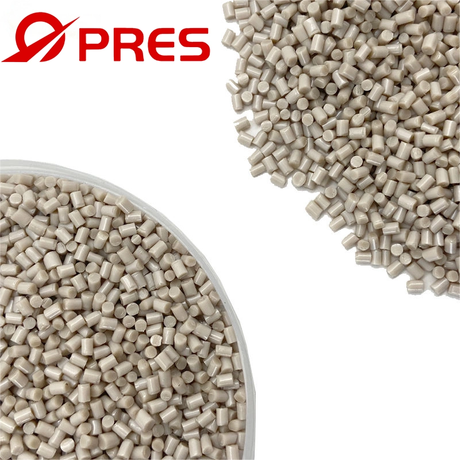
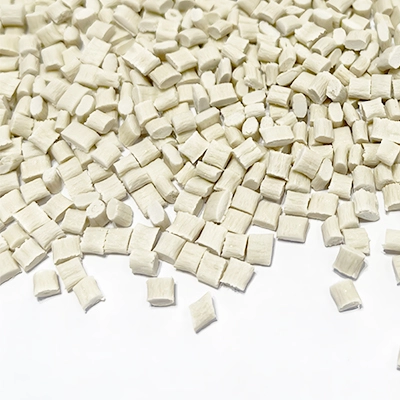
- PEEK pellets
- PEEK sheets
- PEEK rods
- PEEK tubes
- Custom injection-molded parts
- CNC-machined plastic components
Our value is the ability to coordinate material selection, tooling, machining, molding, inspection, and delivery through one manufacturing partner. This can reduce communication gaps and help align the raw-material specification with the final component's performance requirements.
For a PEEK impeller project, please provide the 2D drawing, 3D model, target RPM, operating temperature, application environment, annual volume, and required validation standard. PRES can then review the design and recommend a practical production route.
Yes, PEEK can be considered for high-speed impellers, but suitability must be confirmed through engineering analysis and testing. Victrex reports PEEK-based vacuum-cleaner components operating at speeds above 100,000 RPM. [victrex]
PEEK may help reduce vibration and structure-borne noise because of its lower density and damping behavior. However, acoustic performance also depends on blade design, motor bearings, housing resonance, airflow, and dynamic balance.
A representative unfilled PEEK grade has a density of approximately 1.30 g/cm³. Reinforced grades are denser, so the final choice should balance stiffness, strength, weight, and balance requirements. [victrex]
Yes. PRES provides PEEK injection molding for precision components and can also support CNC machining from PEEK sheet, rod, and tube materials.
There is no universal answer. Unfilled PEEK may offer lower density and a more isotropic structure, while glass- or carbon-fiber-reinforced PEEK can provide greater stiffness and dimensional stability. The correct grade depends on speed, geometry, temperature, and stress.
The most useful information includes the 3D model, 2D drawing, RPM, impeller diameter, operating temperature, airflow, pressure, duty cycle, annual volume, material preference, and testing requirements.
3. [Victrex — PEEK Polymer for High-Performance Applications]
4. [SpecialChem — VICTREX PEEK 450GL30 technical information and processing overview]