
Views: 256 Author: Dongguan PRES Publish Time: 2026-07-10 Origin: Site


Content Menu
● Why Humanoid Robots Demand Lightweighting
● PEEK: The "Crown Jewel" of Engineering Plastics
>> Superior Performance at a Glance
● Accelerating the Future of Robotics
● Expert Insight: The Path Forward
● FAQ
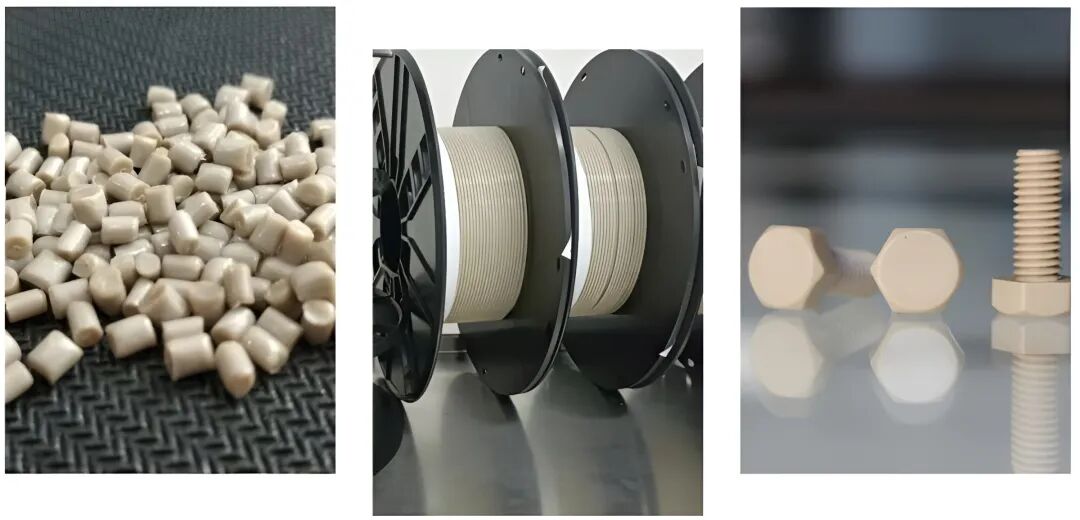
As the humanoid robotics industry accelerates, lightweighting has shifted from an optional design goal to a functional necessity. Among the advanced materials shaping this future, Polyetheretherketone (PEEK) has emerged as the definitive "king of engineering plastics." At Dongguan PRES Group Co., Ltd., we are at the forefront of this transformation, providing the high-performance PEEK solutions—from granules to custom 3D printing filaments—that enable the next generation of agile, energy-efficient robots.
Lightweighting is the "advanced course" for humanoid robot commercialization. As robot applications in logistics, service, and industrial settings expand, solving core performance bottlenecks is critical:
* Extended Battery Life: By reducing gravitational potential energy and rotational inertia, weight reduction lowers static and dynamic power consumption. This directly extends operational time, reducing charging frequency and increasing throughput.
* Reduced Component Load & Heat: Lighter robots place less mechanical stress on actuators, bearings, and joints. Lower torque requirements reduce motor power demands, effectively mitigating overheating and minimizing wear, which significantly extends the robot's service life.
* Enhanced Agility: Lower inertia allows for faster acceleration, deceleration, and more complex maneuvers—essential for robots navigating dynamic human environments.
* Operational Cost Efficiency: Optimization through advanced materials often reduces the total amount of raw material needed. Lighter robots are also easier to transport, assemble, and maintain.

PEEK is a semi-crystalline thermoplastic characterized by exceptional heat resistance (long-term use at 250°C), mechanical strength, and chemical durability. For robotics, its standout feature is its density—only 1/3 to 1/4 that of metal—which offers a drop-in solution for structural lightweighting without sacrificing integrity.
| Property | Why it Matters for Robots |
|---|---|
| High Strength-to-Weight | Enables robust, lightweight structural components |
| Wear & Self-Lubrication | Essential for joints and transmission gears |
| Heat Resistance | Maintains stability near high-load motors |
| Chemical Resistance | Suitable for operating in diverse industrial environments |
| Biocompatibility | Unmatched safety for service robots interacting with humans |
The market is currently witnessing a rapid push toward commercialization, highlighted by landmark industry orders—such as the massive 1.24 billion RMB humanoid robot order placed by China Mobile—and the high-profile lightweighting success of robots like Tesla's Optimus-Gen2, which utilized PEEK to shed 10kg without compromising performance.
At Dongguan PRES Group Co., Ltd., we bridge the gap between material science and robotic innovation. As a premier Chinese manufacturer, we provide OEM services to global brands, wholesalers, and producers, offering:
- Comprehensive Product Range: High-purity PEEK granules, precision-machined plates, rods, tubes, powders, and advanced 3D printing filaments.
- Tailored OEM Solutions: Our deep technical expertise helps our partners optimize PEEK components for specific robotic joint and structural requirements.
While PEEK currently faces challenges regarding initial material costs and complex processing requirements, the long-term ROI is clear. As production volumes increase and supply chains mature, the integration of PEEK will continue to drive down the total cost of ownership for high-performance humanoid robots.
Are you ready to optimize your robot's performance with PEEK?
[Contact Dongguan PRES Group Co., Ltd. today](#) to discuss your custom material requirements and discover how our high-performance engineering plastics can give your robotics project a competitive edge.

* *Dawn Group:* [Key Material Solutions for Simulation Design in Humanoid Robots] [dawnpolymermaterial]
* *Shandong Junhao:* [PEEK Helps Humanoid Robots Achieve Mass Production] [jhchinapeek]
* *Plastic Extrusion Customization:* [Future of PEEK Compound Materials in AI Humanoid Robots] [moomoo]
* *Yize Mould:* [PEEK Injection Molding Services] [gefera]
* *LS Manufacturing:* [Precision Manufacturer for High-Temperature Applications] [en.made-in-china]
1. Why is PEEK considered better than metal for robot joints?
PEEK offers a strength-to-weight ratio superior to many metals, is self-lubricating, and significantly reduces inertia, which improves agility and energy efficiency in robotic joints.
2. How does Dongguan PRES Group support robot manufacturers?
We offer comprehensive OEM services, providing high-performance PEEK granules, plates, rods, and 3D printing filaments tailored to the specific mechanical requirements of humanoid robotics.
3. What is the impact of PEEK on robot battery life?
By reducing the weight of joints and structural parts, PEEK lowers the power required for movement, thereby reducing energy consumption and extending battery life.
4. Can PEEK handle high-temperature environments in robots?
Yes. PEEK possesses high thermal stability, with a glass transition temperature of 143°C, and can operate long-term at temperatures up to 250°C.
5. How is PEEK processed for robotic components?
PEEK can be processed using injection molding, extrusion, or precision machining. For rapid prototyping or complex geometries, high-performance PEEK 3D printing filaments are increasingly preferred.
Hot Tags: China, Global, OEM, private label, manufacturers, factory, suppliers, manufacturing company


