Views: 247 Author: Dongguan PRES Publish Time: 2026-10-27 Origin: Site


Content Menu
● What Is PEI Plastic Material?
● PEI Material Properties: Read the Numbers Correctly
>> Glass Transition Is Not Continuous Service Temperature
● Where PEI Adds Value—and Where to Be Cautious
● Choosing PEI Pellets, Sheets, Rods, and Filament
>> Unfilled or Glass-Reinforced PEI?
● Processing PEI Plastic Material: Control Moisture and Heat
>> Drying Before Injection Molding
>> Machining PEI Sheets and Rods
>> PEI 3D Printing Requires a Qualified System
● An Illustrative Application: Qualifying a Heated Electrical Housing
● A Six-Step OEM Purchasing Workflow
● What Should Buyers Ask a PEI Supplier?
● Start Your PEI OEM Project with PRES
● Frequently Asked Questions About PEI Plastic Material
>> 1. What is PEI plastic material used for?
>> 2. Is PEI the same as ULTEM?
>> 3. Can PEI operate continuously at 217°C?
>> 4. Does PEI need drying before processing?
>> 5. Is PEI suitable for 3D printing?
>> 7. What information does PRES need for a quotation?
Dongguan PRES Group Co., Ltd. (PRES) provides high-performance plastic products and OEM services for international brand owners, wholesalers, and manufacturers. Our broader portfolio includes pellets, sheets, rods, tubes, powders, and advanced 3D printing filaments. For buyers evaluating PEI plastic material, the starting point is not simply a product form or price. It is matching the grade, manufacturing route, and documentation to the finished application.
At PRES, we recommend a specification-first approach: define the operating environment, identify the required material evidence, and validate representative samples before committing to production.
This guide explains polyetherimide properties, processing considerations, and practical sourcing decisions so your team can move from a promising material to a qualified component.
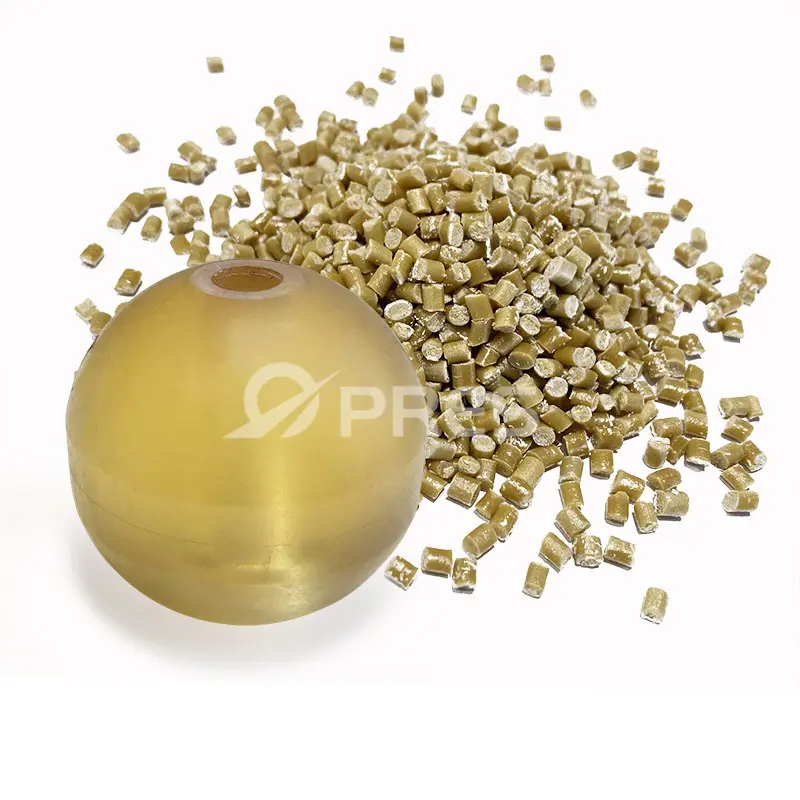
PEI stands for polyetherimide, an amorphous engineering thermoplastic valued for heat resistance, stiffness, electrical insulation, and dimensional stability.
"Amorphous" means its polymer structure lacks the ordered crystalline regions found in semicrystalline materials. PEI therefore has a glass transition temperature rather than a crystalline melting point.
Natural, unfilled PEI typically has a transparent amber appearance. Reinforcement, pigments, and other modifications can change its appearance and performance.
PEI is the polymer name. ULTEM™ is SABIC's branded resin family.
This distinction matters in purchasing. A specification for "PEI" does not automatically require or establish genuine ULTEM resin. Likewise, a general-purpose PEI material should not be presented as a particular branded grade without supporting traceability.
When brand identity matters, specify the producer, complete grade designation, color, and acceptable documentation in the purchase agreement.
The following figures describe SABIC ULTEM 1000, an unreinforced PEI reference grade. They are typical published values, not guaranteed specifications for every PEI product or a PRES-specific material certificate.
| Property | Published reference value | Test method or condition |
|---|---|---|
| Glass transition temperature | 217°C | Manufacturer's grade description |
| Density | 1.27 g/cm³ | ISO 1183 |
| Tensile stress at yield | 110 MPa | ISO 527, 50 mm/min |
| Tensile modulus | 3,200 MPa | ISO 527 |
| Heat deflection temperature | 192°C | ISO 75/Af, 1.8 MPa |
| Water absorption | 0.25% | ISO 62-1, 23°C, 24 hours |
| Dielectric strength | 25 kV/mm | IEC 60243-1, in oil, 1.6 mm |
| Flame classification | V-0 at 0.75 mm | UL 94, published grade listing |
A useful comparison must preserve the test method, specimen thickness, conditioning, and loading conditions. Otherwise, apparently different numbers may describe different tests rather than different material quality.
A 217°C glass transition temperature does not mean a PEI component can operate continuously at 217°C under load.
Glass transition describes a change in polymer behavior. Heat deflection temperature measures deformation under specified short-term conditions. Relative thermal index addresses long-term property retention within a defined evaluation framework.
For ULTEM 1000, the published relative temperature indices are 170°C for electrical and listed mechanical categories. Even this is not a universal finished-part operating limit.
Actual suitability depends on stress, exposure time, geometry, chemicals, and the consequences of failure.
PEI becomes attractive when several requirements overlap: elevated temperature, structural stiffness, electrical performance, and controlled dimensions.
Potential applications include:
- Electrical connectors, insulating supports, and sensor housings.
- Industrial fixtures and components exposed to heat.
- Selected aircraft interior components requiring specific fire-performance evidence.
- Laboratory and healthcare equipment components using appropriately qualified grades.
These are application categories, not automatic approvals.
For electrical insulation, dielectric strength alone does not establish safe working voltage. Creepage, clearance, tracking resistance, humidity, and component geometry also matter.
For aerospace applications, a resin-level flame rating does not certify a finished assembly. Medical, food-contact, and other regulated uses similarly require application-specific documentation.
Chemical compatibility also needs careful review. "Chemical resistant" is not a universal promise. Test the actual fluid, concentration, temperature, exposure duration, and mechanical stress.
Choosing the right stock form can reduce processing steps and qualification risk.
| Product form | Typical purchasing purpose | Important specification |
|---|---|---|
| PEI pellets | Injection molding or extrusion | Grade identity, moisture, flow characteristics |
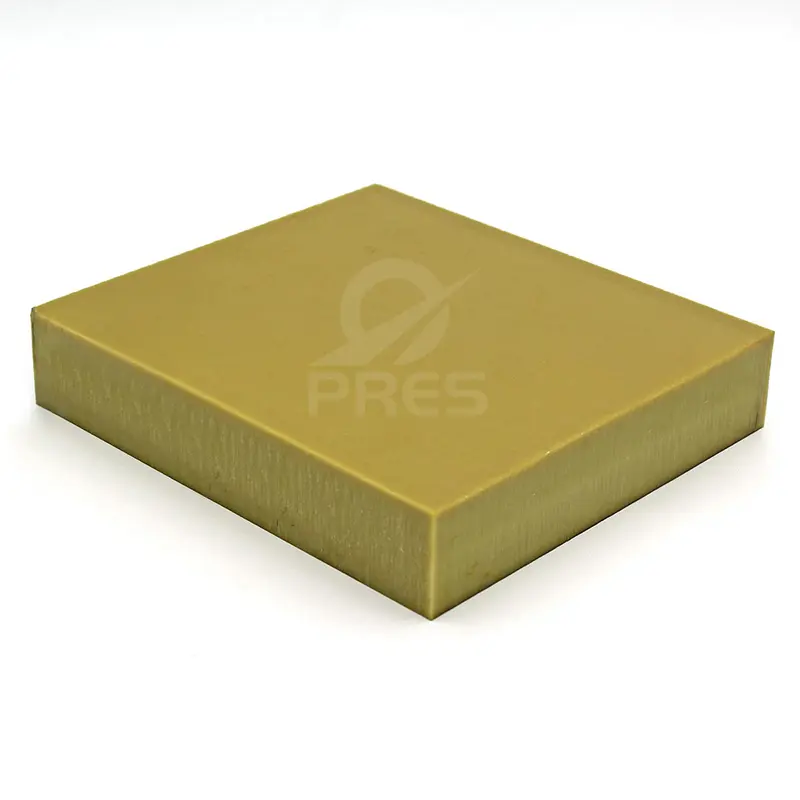
| PEI sheets | Machined plates, fixtures, insulating components | Thickness tolerance, flatness, residual stress |
| PEI rods | Turned sleeves, spacers, precision components | Diameter tolerance, straightness, internal quality |
| PEI tubes | Hollow machined parts | Wall consistency, concentricity, dimensions |
| PEI filament | Additive manufacturing | Formulation, diameter consistency, moisture control |
PRES supplies a broader range of high-performance plastic formats. Confirm the availability, grade, dimensions, minimum order quantity, and qualification requirements of each proposed PEI format before ordering.
Do not assume that every polymer is commercially suitable in every format. In particular, PEI powder availability does not establish compatibility with a powder-bed printing process.
Unfilled PEI is often a starting point when electrical insulation, natural translucency, and general mechanical performance are important.
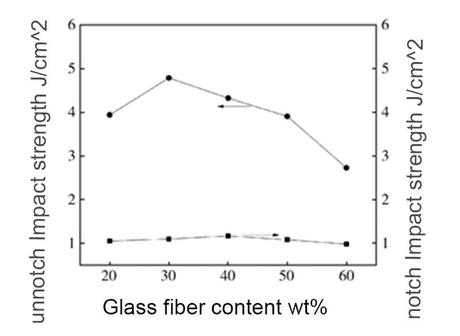
Glass-reinforced grades can increase stiffness and reduce thermal expansion. However, reinforcement changes flow behavior, surface finish, machining requirements, and directional properties.
The practical question is not "Which grade is strongest?" It is "Which grade meets the component's requirements with acceptable manufacturing variability?"
High-performance resin cannot compensate for an unsuitable processing window.
SABIC's published injection-molding guidance for ULTEM 1000 includes:
- Drying temperature: 150°C.
- Drying time: four to six hours.
- Maximum moisture content: 0.02%.
- Melt temperature: 350–410°C.
- Mold temperature: 135–180°C.
These are grade-specific starting guidelines, not universal settings for every PEI formulation.
Verify the selected supplier's current technical instructions. Drying time alone is insufficient evidence of moisture control; equipment performance, storage conditions, and handling after drying also affect the result.
For production qualification, record moisture measurements, actual melt conditions, residence time, and observed defects.
For machined parts, manage heat generation, clamping pressure, and stress release.
A practical sequence is to rough-machine the blank, evaluate movement, and finish critical dimensions under controlled conditions. Sharp tools and suitable workholding help avoid unnecessary heating and distortion.
Agree in advance on inspection temperature and conditioning. A dimension measured immediately after machining may differ from one measured after the component reaches equilibrium.
Any annealing procedure should follow material-specific guidance and be validated for the geometry.
PEI filament should be evaluated as part of a complete printing system, not as a simple replacement for commodity filament.
Confirm nozzle capability, heated-chamber requirements, build-surface compatibility, drying instructions, and the supplier's recommended process window.
Do not copy injection-molding settings into a printer profile.
Printed components also depend on orientation, layer bonding, toolpath, and conditioning. A molded-resin datasheet cannot establish the mechanical properties or flame classification of a printed part.
Consider an OEM developing a small electrical housing exposed to elevated temperature and cleaning chemicals. This is an illustrative workflow, not a reported PRES customer project.
The initial screening suggests PEI because the component needs stiffness and electrical insulation. However, selection should proceed through three gates.
1. Define exposure: record normal temperature, peak temperature, duration, cleaner chemistry, humidity, and electrical conditions.
2. Evaluate the design: review wall thickness, screw bosses, assembly stress, creepage distances, and dimensional tolerances.
3. Validate representative parts: test thermal cycling, chemical exposure, insulation performance, and assembly retention.
This approach can reveal problems that a room-temperature tensile value cannot predict.
For example, a housing may remain mechanically intact yet fail dimensional requirements after exposure. Alternatively, assembly stress may make chemical compatibility more demanding than an unstressed coupon test suggests.
Our recommended sourcing process connects procurement requirements with measurable acceptance criteria.
1. Define the duty cycle. State temperatures, loads, exposure times, fluids, and expected service life.
2. Lock material identity. Specify the polymer, producer requirements, reinforcement, color, and permitted substitutions.
3. Choose the manufacturing route. Compare machining, molding, extrusion, or printing against volume and geometry.
4. Request supporting evidence. Obtain the current technical datasheet, safety information, and relevant compliance documentation.
5. Qualify representative samples. Use realistic geometry and production-equivalent processing where possible.
6. Agree on production controls. Define tolerances, sampling, packaging, traceability, and change-notification requirements.
A sample that looks correct is not necessarily qualified. Acceptance should depend on agreed measurements and application-relevant tests.
For repeat business, retain approved reference samples and inspection records. This creates a clearer basis for resolving variation than descriptions such as "same quality as before."
A useful quotation should explain what is being supplied and how conformity will be demonstrated.
Ask:
- What is the exact resin grade and material origin?
- Is reinforcement or reprocessed content present?
- Which properties are typical, and which are contractual acceptance criteria?
- What batch identification will accompany the shipment?
- Which dimensions and inspection conditions are guaranteed?
- Will formulation, resin source, or processing changes require approval?
- Which documents apply to the exact grade, color, and product form?
Do not assume that a certificate of analysis includes every property shown on a technical datasheet. Establish which tests are performed per batch and which rely on the resin producer's published characterization.
A lower unit price can lose its advantage if machining scrap, requalification, or assembly failures increase.
PRES serves overseas brands, wholesalers, and manufacturers seeking high-performance plastic products and OEM support.
Send us your drawing or target dimensions, preferred PEI grade, required product form, estimated volume, operating conditions, and documentation requirements.
Request a grade-specific quotation and sample evaluation plan. Before placing a production order, confirm the material identity, inspection criteria, packaging, and approval process in writing.
The objective is straightforward: purchase a defined material solution that your team can inspect, process, and qualify—not an ambiguous material label.
PEI is considered for electrical components, heat-resistant housings, industrial fixtures, and selected aerospace or healthcare equipment applications. Suitability depends on the specific grade, manufacturing process, and qualification requirements.
No. PEI is the generic polymer designation; ULTEM is SABIC's branded resin family. Buyers requiring a particular ULTEM grade should verify resin identity and traceability rather than relying on a general PEI description.
Not on the basis of glass transition temperature alone. Continuous-use suitability requires evaluation of long-term thermal data, loading, exposure, geometry, and application-specific acceptance criteria.
Yes, moisture control is important for melt processing. Follow the selected grade's drying instructions and verify moisture where required. Storage and handling after drying also need control.
Appropriate PEI formulations can be used in compatible high-temperature printing systems. Validate the filament, equipment, process settings, and printed-part properties together rather than relying solely on molded-resin data.
Certain PEI grades have published flame classifications. Ratings depend on grade and specimen conditions, including thickness. They should not be transferred automatically to a different formulation, printed component, or finished assembly.
Provide the grade or performance requirements, product form, drawing, dimensions, tolerances, quantity, operating conditions, and required documentation. Include packaging or private-label requirements where relevant.
Hot Tags: China, Global, OEM, private label, manufacturers, factory, suppliers, manufacturing company