
Views: 215 Author: PRES Publish Time: 2025-09-23 Origin: Site


Content Menu
● Understanding PEEK Crystallinity: The Molecular Foundation
● Comparative Performance: High vs. Low Crystallinity
● Expert Insight: Why Crystallinity Management Matters
● Optimizing Your Application: Beyond the Basics
>> 1. The Role of Post-Processing (Annealing)
>> 2. Influence of Processing Parameters
>> 3. PEEK Blends: Modulating Crystallinity
● Frequently Asked Questions (FAQ)
For engineers and procurement professionals in the aerospace, medical, and industrial sectors, selecting the right material grade is often the difference between a mission-critical success and a costly failure. When it comes to PEEK (Polyetheretherketone) films, the conversation rarely centers on chemistry alone—it centers on crystallinity.
As experts at PRES, we understand that PEEK is a semi-crystalline thermoplastic, meaning its performance is dictated by how its molecular chains are organized . Understanding the divergence between high-crystalline and low-crystalline PEEK films is essential for optimizing components for extreme thermal, mechanical, and chemical demands.
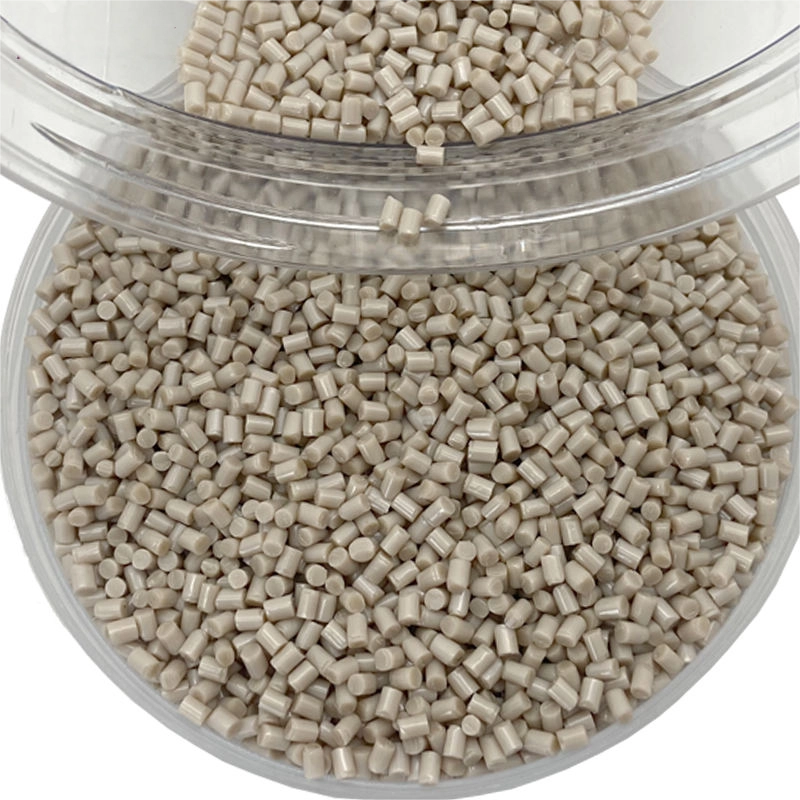
PEEK consists of ordered (crystalline) regions and disordered (amorphous) regions . Crystallinity refers to the proportion of the polymer that has crystallized during the cooling process from its melt state .
- High-Crystalline PEEK: Undergoes controlled, slower cooling, allowing molecules to pack tightly into a highly ordered lattice.
- Low-Crystalline (or Amorphous-leaning) PEEK: Formed through rapid cooling (quenching), which "freezes" the molecular chains in a more disordered state before they can organize .
The degree of crystallinity significantly alters the bulk material's behavior. The following table summarizes how these differences manifest in real-world engineering applications.
| Property | High-Crystalline PEEK | Low-Crystalline PEEK |
|---|---|---|
| Mechanical Strength | Superior stiffness and tensile strength | Higher toughness and ductility |
| Chemical Resistance | Excellent; highly resistant to harsh solvents | Moderate; more susceptible to chemical attack |
| Thermal Stability | Maintains properties well above Tg | Diminishes faster near Tg |
| Dimensional Stability | Superior, especially at elevated temperatures | Subject to greater deformation |
| Transparency | More opaque due to light scattering by crystals | Often more transparent or translucent |
From our experience at PRES, the most common pitfall for new users of high-performance polymers is ignoring the post-processing effects on crystallinity. If a component is extruded or molded without proper thermal management (annealing), it may exhibit decreased properties that fall short of design requirements .
For instance, in medical device applications, PEEK is often used as a replacement for stainless steel . A low-crystalline part might suffer from premature fatigue or deformation under stress, whereas a properly optimized high-crystalline part provides the necessary structural integrity for long-term implantation .
Annealing is the bridge between raw material and performance. By holding the part at temperatures between 200°C and 250°C for several hours, you can effectively increase the degree of crystallinity . This process is critical for achieving tight tolerances (e.g., ±0.0002") and ensuring the material's structural integrity remains stable under thermal stress .
Crystallization kinetics are highly sensitive to cooling rates. Research indicates that rapid cooling—greater than 100°C/s—can lead to crystallinity fluctuations of ±15% and tensile strength variations of ±20% . For high-performance PEEK components, consistent thermal management during manufacturing is not optional—it is a functional necessity.
In advanced applications where pure PEEK does not meet all requirements, we often see the use of PEEK blends (e.g., PEEK/PEI alloys). These blends can intentionally suppress PEEK's crystallization kinetics, offering a unique trade-off between the high-temperature stability of PEEK and the dimensional ease-of-use of amorphous polymers .
Choosing between high-crystalline and low-crystalline PEEK films depends entirely on your application's demand for chemical resistance, structural load, and thermal stability. While high-crystalline films offer unmatched performance for extreme environments, low-crystalline grades provide advantages in specific processing or aesthetic contexts.
As your integrated manufacturing partner, PRES provides not only the high-performance raw materials but also the technical expertise in CNC machining and injection molding to ensure your components achieve the exact crystallinity profile required for your project.
1. [DuPont™ Spectrum™: PEEK & Crystallinity]
2. [Victrex: Polymer Crystallinity Explained]
3. [Nature Scientific Reports: Effects of Molding on PEEK Crystallinity]
4. [Criterion Precision: PEEK Machining Guide]
5. [PEEKCHINA: PEEK Performance and Crystallinity]
Q1: How do I know if my PEEK part has the right crystallinity?
A: Crystallinity can be measured using Differential Scanning Calorimetry (DSC), which determines the degree of order in the polymer chains.
Q2: Is high-crystalline PEEK always better?
A: No. While it offers superior strength and chemical resistance, high-crystalline PEEK can be more brittle and harder to process than lower-crystallinity grades.
Q3: Can I change the crystallinity of a finished PEEK part?
A: Yes. Through post-processing techniques like annealing (controlled heat treatment), you can increase the crystallinity of a semi-finished or machined part.
Q4: Does 3D printing affect PEEK crystallinity?
A: Yes. Due to rapid cooling and thermal gradients during printing, 3D-printed PEEK often requires post-annealing to achieve full crystallinity and optimal mechanical strength.
Q5: Which industry uses low-crystalline PEEK most often?
A: Applications requiring specific optical transparency or unique toughness profiles, such as certain precision electrical films or customized medical prototypes, may prioritize low-crystalline PEEK.


